Game-Improvement vs Players’ Distance Irons: Who Needs Which?
Let the category suggest a starting point; let your normal shots decide the shortlist.
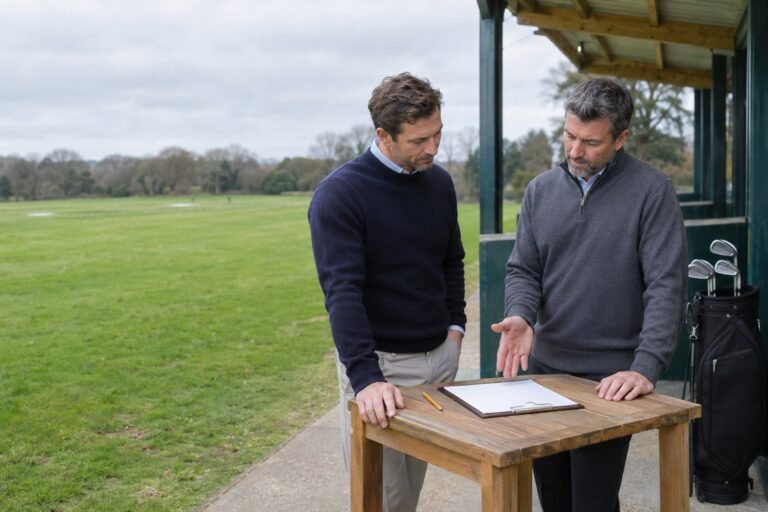
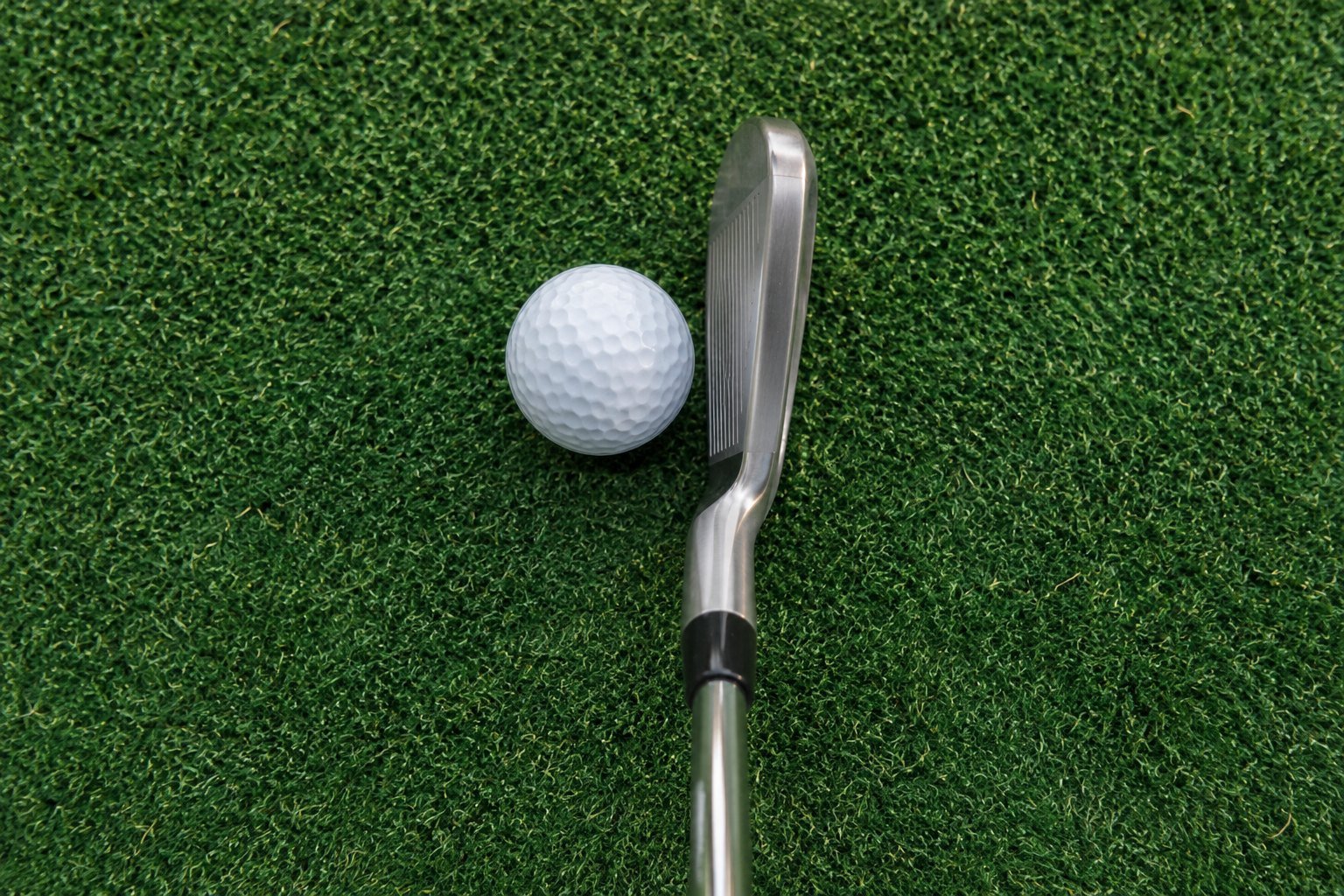
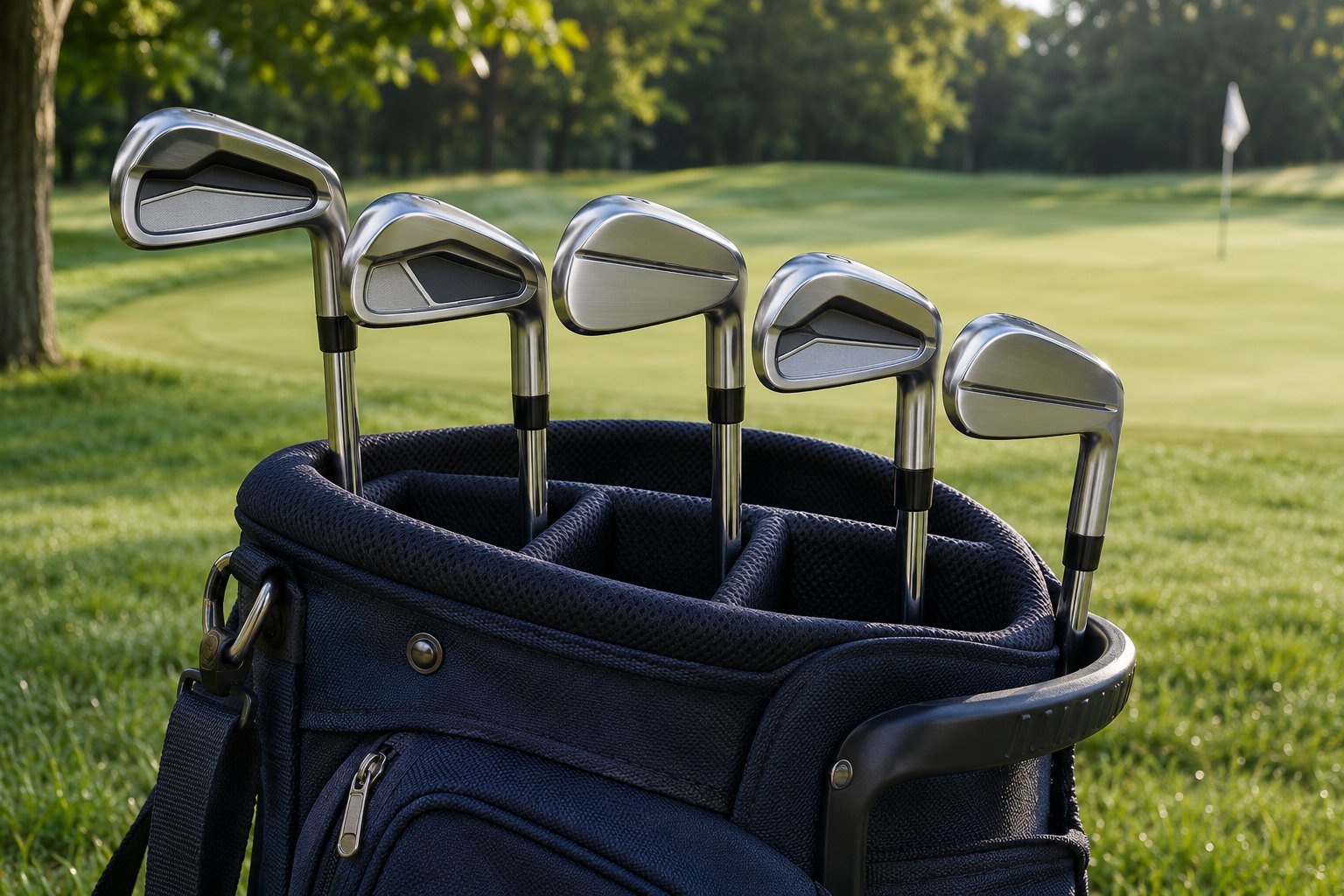
AI illustration: head appearance helps frame a comparison, but it does not establish performance or a fitting result.
The choice between game-improvement and players’ distance irons is easy to turn into a judgement about how good a golfer is. A more useful question is what the next set needs to do: help with ordinary misses, produce a usable flight, inspire confidence at address, or combine those priorities.
This research-led comparison uses current manufacturer descriptions as examples, then separates those design intentions from the evidence a fitting should produce. The decision matrix and trial worksheet are editorial tools for your own comparison; no named iron has been personally tested for this guide.
Ad – includes affiliate links. If you buy through these links, Taylor’s Trailblazing Golf may earn a commission at no extra cost to you.
Name the problem
Describe the miss or shot you want the next set to improve.
Try both where useful
A category suggests candidates; it does not exclude a golfer.
Keep normal misses
Judge the ordinary shot pattern, not a highlight reel.
Choose a complete set
Confirm the long end, turf response and exact build before ordering.
Game-improvement vs players’ distance irons: the design brief
Titleist’s category guide describes players’ distance irons as a players-style shape with added performance technology, and game-improvement irons as larger heads focused on launch and consistent mis-hits. Treat those as useful design priorities, not results promised to every golfer. [1]
| Question | Game-improvement starting point | Players’ distance starting point |
|---|---|---|
| What is the central brief? | Help with launch and the consequences of common off-centre strikes. | Combine a more compact appearance with distance and forgiveness technology. |
| What should I check? | Whether the head looks comfortable and its help appears in my normal shots. | Whether the appearance I prefer comes with enough help on my normal misses. |
| What does the name leave unresolved? | My shaft, length, lie, grip, turf response and complete set. | The same questions; the word players does not answer them. |
Do not turn this into a progression ladder. The category that fits your current needs remains a valid choice when your scoring improves. Equally, liking a smaller head is a preference to investigate, not evidence that it produces better shots.
Read specific models without adopting the marketing verdict
The following examples show how manufacturers use the labels. The documented emphasis column describes their design claims; the final column is the question those claims leave for your trial. This is not a ranking or a statement that the models are interchangeable.
| Example | Maker’s category and emphasis | Question still to answer |
|---|---|---|
| Titleist T250 [2] | Players’ distance; Titleist describes a compact profile with stability and consistent carry as design goals. | Does the size suit your eye, and how costly are your normal misses? |
| Titleist T350 [3] | Game improvement; Titleist emphasises high launch and forgiveness across the face. | Does that help appear in your strike pattern, with a flight you can use? |
| Callaway Apex Ai200 [4] | Players’ distance; Callaway describes a hollow-body design aimed at power and consistency. | Are the typical results controlled enough for your approach shots? |
| Callaway Apex Ai300 [5] | Game improvement; Callaway describes a cavity-back design with a slightly larger profile. | Does the larger profile work for you through address, contact and the result? |
Words such as consistency, distance and forgiveness appear on both sides of the comparison. They do not establish which club will produce the smaller miss for you. Ask what was compared, under what conditions and in which configuration before treating any performance claim as your expected gain.
Also identify the exact generation and variant on the quotation. A familiar family name on an older listing is not enough to show that the club matches the specification or head you tried.
Back to top ↑Use the need-first decision matrix
Pick the row closest to the problem you would like to solve. The starting point gives the fitter a brief; the last column prevents the label from making the decision in advance.
| What you observe | Useful starting trial | What could change the choice |
|---|---|---|
| Ordinary toe or low-face strikes lose too much useful carry. | Begin with a game-improvement option and retain a suitable players’ distance comparison. | Choose the build that reduces the costly miss without creating another problem. Head size alone does not settle it. |
| A compact appearance helps you settle over the ball. | Include a players’ distance head early, alongside a game-improvement shape you find acceptable. | If the preferred look comes with a larger ordinary miss, decide whether the visual preference is worth that cost. |
| The longest intended irons rarely produce a flight you can use. | Ask for options aimed at easier launch from either category, and try the long end explicitly. | A different build, a later starting iron or another club type may answer the problem better than changing the whole category. |
| You already have enough distance but approach results vary. | Compare both categories for predictable front-to-back and sideways outcomes. | Reject a distance gain that does not make the intended shot more useful. |
| Your current irons feel awkward through the ground. | Request a grass comparison of specific heads and builds. | Let contact and the resulting shots inform the choice; a category name cannot complete a turf trial. |
| Your handicap makes one category sound too advanced or too basic. | Describe your strike pattern and the shots you need before discussing labels. | Keep the model that meets the brief. A scoring number is not a substitute for the comparison. |
Read the matrix as permission to investigate. A new golfer can shortlist a compact design; an accomplished golfer can value more help. Neither decision needs defending if the complete set works for the shots that person actually plays.
Make forgiveness a question you can observe
“I need forgiveness” becomes more useful when you describe what happens on a normal miss. Does the ball finish too short, lose a usable flight, or spread too far to one side? Start with the consequence that most often leaves you a difficult next shot.
Separate that from the best strike. Two candidates may produce pleasing centre contact yet leave different decisions when the strike moves. Retain ordinary misses in the comparison; otherwise you remove the shots that motivated the purchase.
There is also no need to choose a club as a badge of future ability. If you want to learn to shape shots, discuss that goal, but do not assume a category label demonstrates the control you need. Try the intended shot and assess the result.
Handicap can help start a conversation about your game, but add the context it omits: your iron confidence, typical contact, how often you practise and the courses you play. A player who scores well through short-game skill may have different iron needs from another player with the same score.
Back to top ↑A practical way to compare the complete clubs
Titleist’s fitting approach considers distance control, dispersion control and descent angle together. That supports a broader question than which iron flies furthest: can you produce a predictable shot that arrives usefully at the target? [6]
Agree the comparison before hitting
Tell the fitter the main problem and identify a shot you want to play. Include your current iron if you have one. Use the same ball type and a comparable hitting environment for the candidates, and record what the launch monitor is measuring or estimating.
Have the fitter manage suitable shaft, length and lie choices. If these change between candidates, you are comparing two complete builds. That may be exactly what you need, but it does not isolate an effect of the head category.
Use equal opportunities and ordinary swings
Warm up, then give each candidate equally sized short blocks, alternating the order. Include breaks. Do not give one head all your fresh swings and judge the other only after fatigue or frustration arrives.
Keep an obvious mis-read separate from an ordinary poor strike. Agree any exclusions in advance rather than deleting shots because they damage the preferred club’s average. If a pattern changes when you repeat the comparison, mark it for another look.
| Record | What to write down | How it informs the decision |
|---|---|---|
| Exact build | Model, generation, tested iron, shaft, length, lie and grip. | Lets you identify what produced the result and what would be ordered. |
| Typical useful carry | The usual result and range across representative shots, including normal misses. | Shows whether the club performs its intended job. |
| Direction and costly miss | Where the main pattern finishes and what happens on the miss you wanted help with. | Keeps the comparison connected to your original brief. |
| Flight and landing | Observed flight, relevant measured values and the fitter’s explanation. | Tests whether the shot can arrive usefully, rather than merely travel farther. |
| Address, contact and feel | A short note made before looking at the headline distance. | Preserves your own response without allowing one number to rewrite it. |
| Confidence in the result | Repeated, still variable, or not yet checked; note ball and hitting surface. | Makes the next step explicit instead of forcing a winner. |
Try a mid-iron and the longest iron you genuinely expect to carry; add a short iron if that is where a decision remains. The set has to work beyond the most flattering demo club. A longer result from a club carrying the same number is one observation, not a verdict on the whole category.
Resolve turf response and set composition before ordering
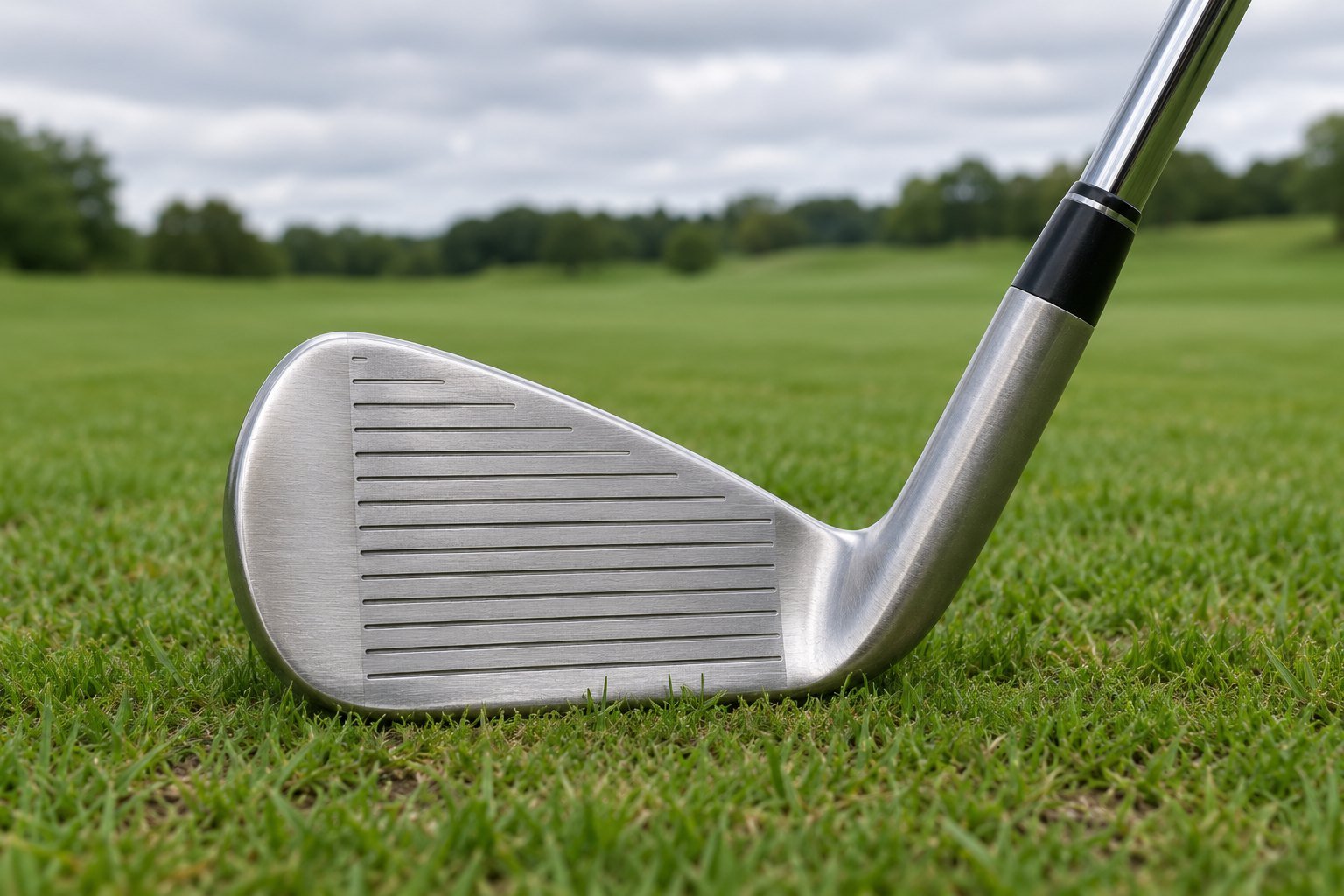
If the comparison happened only from a mat, record grass response as unconfirmed. Where a suitable trial is available, use the lies you commonly face and ask the fitter to watch the relationship between contact and the resulting shot. A photograph of a wider or narrower sole cannot supply that evidence.
Describe feel in your own terms: comfortable, hard to locate, noisy, or difficult to repeat. Keep that observation beside the shot record. It is a preference worth considering, but it is not a measurement of future scores or a shortcut to declaring one category superior.
A blended set combines more than one iron model. Titleist’s guide discusses this as a way to compose a bag rather than requiring one model throughout. [1]
Consider a blend when the short irons of one model and the longer irons of another each solve a clear part of the brief. Then test the clubs around the changeover together and confirm the complete specification. Do not pick a changeover point simply because that combination looks appealing in a catalogue.
Keeping a single model is equally valid if it does the job. A mixed set adds another decision to check, not an automatic performance upgrade.
Buy the result of the comparison
Before asking for a price, finish a short decision note:
- Problem: the ordinary miss or missing shot I wanted to address.
- Evidence: what repeated in the comparison and which clubs were tried.
- Trade-off: the compromise I accept in appearance, feel, flight or cost.
- Open question: anything that still needs a grass trial, another session or a different long club.
- Order: the exact clubs and complete build, with a total price.
Proceed when a repeatable result meets the brief and the set checks are complete. Re-test when the apparent difference changes between blocks or a relevant condition remains unknown. Keep the current clubs when neither candidate produces a useful reason to change.
If the Titleist examples belong on your shortlist, compare the current T250 options at Clubhouse Golf and T350 options at Clubhouse Golf. For the Callaway examples, inspect the UK Apex Ai200 configuration and UK Apex Ai300 configuration. Check the selected clubs, handedness and build against your fitting record; an entry price is not a quote for every configuration.
The fitting-fees guide helps you ask what evidence and written specification an appointment includes. Resolve that before paying for a session intended to choose an entire set.
Back to top ↑A few final questions
Can a low-handicap golfer use game-improvement irons?
Yes. Use the category as a source of candidates if its design priorities answer the golfer’s needs. Compare the ordinary shot pattern, flight, turf response and complete set; a low handicap does not make additional help irrelevant.
Are players’ distance irons automatically longer?
No category label establishes your distance with a particular club. Compare the specific builds and the shots you need them to cover. The longest single result is especially weak evidence for choosing an approach-iron set.
Do game-improvement irons prevent progress?
Do not schedule a category change simply because you expect to improve. Continue with the clubs while they meet your needs, and revisit them when a specific, repeatable limitation gives you a useful comparison brief.
What to do next
Choose the design that earns its place in your shot record. Game-improvement and players’ distance are helpful starting descriptions, but the decision belongs to the particular heads, builds and golfer. Name the problem, give suitable candidates a fair trial and accept a change only when you can explain what it improves and what it costs.
Sources and further reading
Sources checked on 22 November 2026. Product descriptions and terms can change; confirm the details for the exact item before buying.
Illustrations in this article were created for Taylor’s Trailblazing Golf. Third-party photographs, where used, are credited beside the image or in the source list.