Golf Balls for Beginners: Consistency, Cost and Replacement
Choose a familiar ball, understand the repeat cost and make the next purchase for a clear reason.
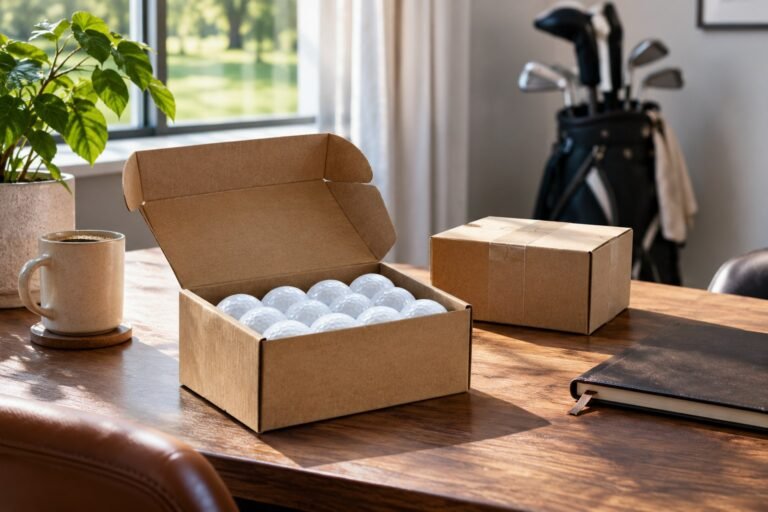
Choose a ball you can recognise, afford to replace and keep using while you learn. AI-generated illustration of generic golf equipment.
Golf balls for beginners should make the next round easier to prepare for. A sensible first choice is a recognisable model you can afford to replace, in a colour you can follow, with a response you are comfortable using around the green.
You do not need a particular handicap before trying a more expensive ball. Equally, losing an expensive ball should not make you reluctant to play a shot. This guide puts the repeat-purchase cost first, then helps you choose an initial box, keep useful notes and decide when a change is worth considering.
Ad – includes affiliate links. Taylor’s Trailblazing Golf may earn a commission from qualifying purchases. Our recommendations follow the reader’s needs and the available evidence. Read our disclosure.
Price the next box
Choose a cost you can repeat after the introductory offer ends.
Know the contents
Record the exact model, generation where stated and quantity.
Start small
Try a manageable quantity before committing to a large multibuy.
Keep a buying record
Separate losses, damage and usable stock before reordering.
Set a golf-ball budget you can repeat
The cost of your first dozen is only part of the decision. The more useful question is how comfortably you can buy the next one. Keep a count of losses over several rounds of the same length, then use that figure to plan. A difficult first outing is a starting observation, not a permanent forecast.
For example, losing three balls on each of six rounds means replacing 18 balls. At £18 a dozen, those losses represent £27 of balls. If you start with none and buy whole dozens, you need two boxes costing £36; six balls remain after the 18 losses, before allowing for damage or other use.
Swipe or scroll the table to see all columns.
| Illustrative price per dozen | Price per ball | Value of 18 lost balls | Two-dozen purchase |
|---|---|---|---|
| £18 | £1.50 | £27 | £36 |
| £30 | £2.50 | £45 | £60 |
| £48 | £4.00 | £72 | £96 |
These are example prices, excluding delivery. Replace them with the offers you are considering and your own loss count. If you lose one ball per round instead, six rounds account for six balls; one dozen covers those losses. If losses rise, the next order arrives sooner.
Compare the amount you will actually pay
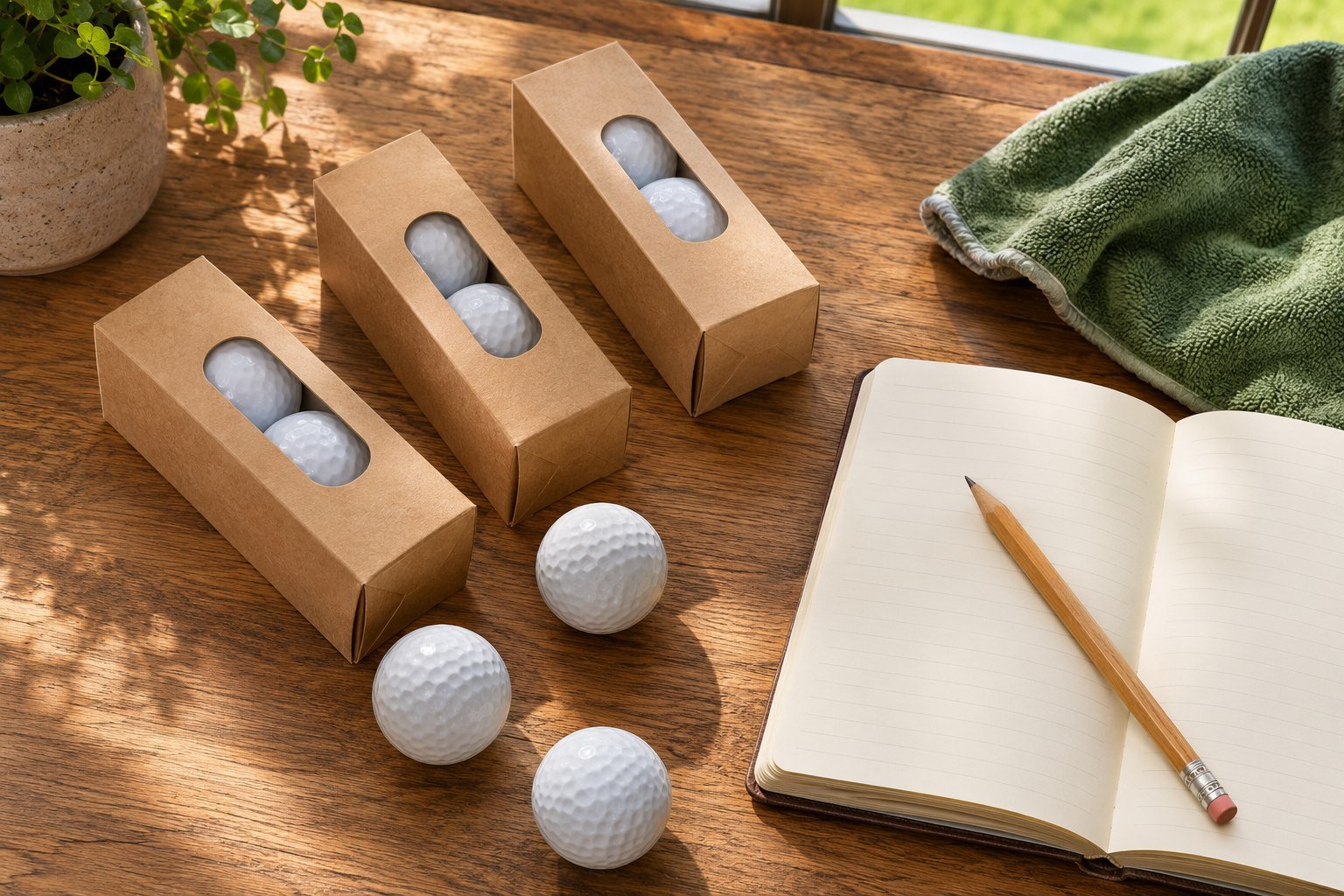
Divide the delivered order total by the number of balls in the pack. Check whether a listing contains 12, 24, 36 or another quantity, and whether a low advertised price depends on buying several boxes. A sleeve, a dozen and a double-dozen box are different purchases.
Delivery can reverse a small apparent saving. A £20 dozen with £4 delivery costs £24, while a £22 dozen collected locally costs £22. Those example prices are worth comparing before adding another box just to reach a delivery threshold.
Choose a first model without treating the label as a fitting
Being new to golf does not tell a shop how you launch a ball, what impact feels pleasant to you or how much you are willing to spend. Titleist’s fitting guidance says ball fitting can help golfers across skill levels and considers more than driver distance, including launch, spin and stopping behaviour. It does not make a low handicap an entry requirement. [1]
For a first purchase, narrow the decision to a few practical checks. You can learn more about your preferences after using a manageable quantity.
Swipe or scroll the table to see all columns.
| Check | Useful question | Reason to pause |
|---|---|---|
| Replacement cost | Can I comfortably buy this model again at the normal delivered price? | The first box is affordable only because of a one-off offer. |
| Exact identity | Can I record the model, generation where stated, colour and pack size? | The seller promises a brand assortment without identifying the contents. |
| Feel and response | Am I comfortable putting and playing a few simple chips with it? | I am buying a large quantity before trying its response. |
| Visibility | Can I follow and locate this colour in the conditions I play? | I am assuming a bright colour will work equally well against every background. |
| Condition | Is it new, or is the used condition and model mix clearly described? | The description leaves repainting, grading or actual condition unclear. |
Two documented starting points to compare
The examples below are modestly priced named models with a soft-feel emphasis. They provide a concrete place to begin comparing costs and descriptions; the selection does not establish that a soft-feeling ball suits every beginner.
Swipe or scroll the table to see all columns.
| Exact listing | Displayed single-pack price | Per ball, rounded | What the maker describes |
|---|---|---|---|
| Callaway 2025 Supersoft, standard dozen | £26.99 for 12 [2] | £2.25 | A soft-feel design using Callaway’s Hybrid Cover. Its speed, control and durability benefits are manufacturer claims. [2] |
| Titleist TruFeel, white dozen at Clubhouse Golf | £24.99 for 12 [4] | £2.08 | Titleist presents TruFeel as its softest-feeling ball, with a lower flight and a soft TruFlex cover. [3] |
Prices and available options can change. Select the standard pack you intend to buy and check the final total; personalisation and multibuy offers can change it. The listed price does not confirm that every colour or option is available.
You can check the Supersoft dozen at Callaway UK or check the white TruFeel dozen at Clubhouse Golf. If neither response appeals, ask a shop or coach for a different option within your replacement budget rather than buying more of either.
Keep one useful reference while you learn
Using one model removes a changing piece of equipment from your observations. It will not make every strike consistent, but it makes a question such as “Why did that chip run farther?” easier to discuss than when the ball model changes too.
Record the exact name from the box, not just the brand. Two balls bearing the same manufacturer’s logo may belong to different product families. Keep a photograph of the box or save the retailer’s product details so the next order is a deliberate repeat.
Make the ball easy to identify
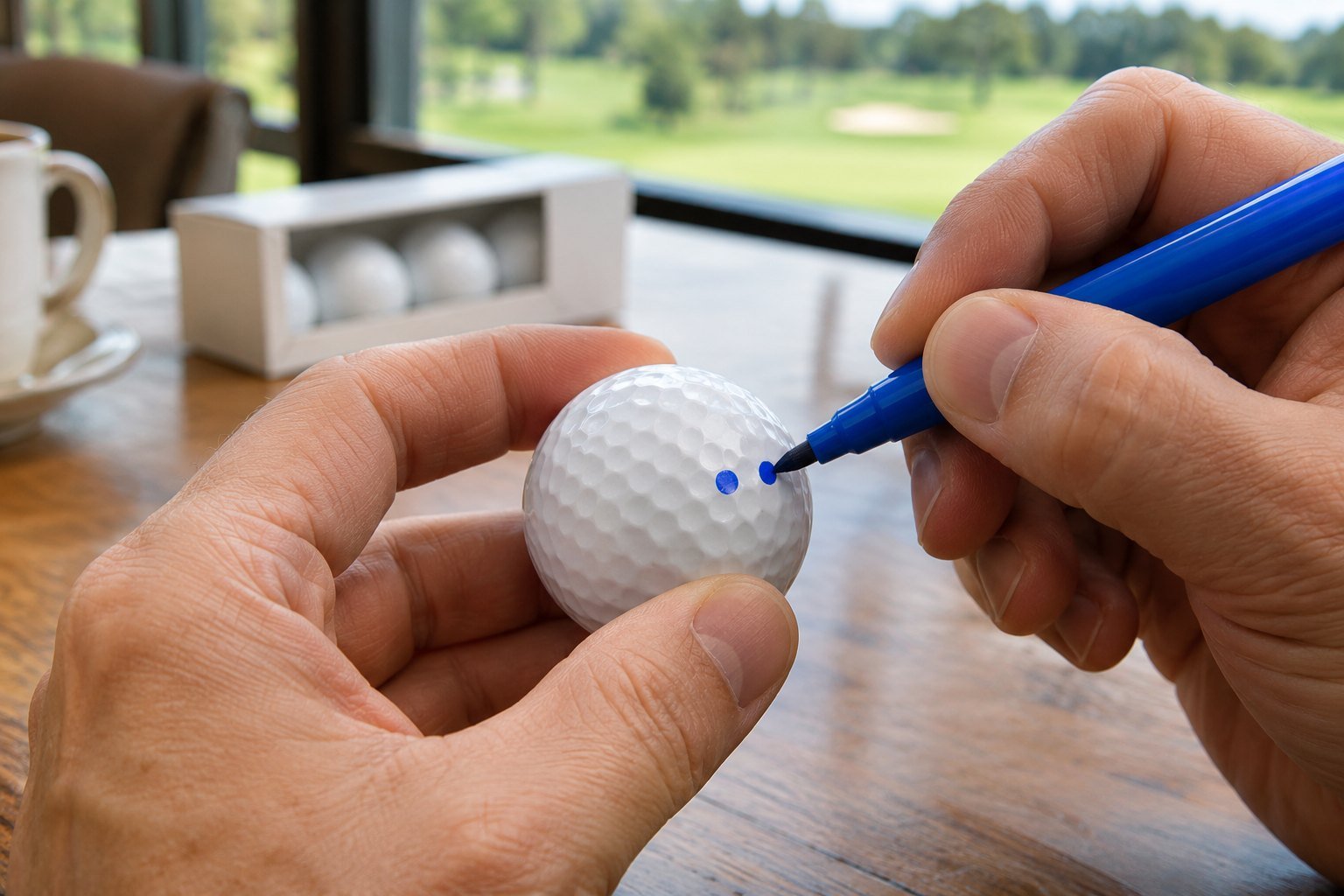
Use a simple identifying mark that you can recognise. R&A Rule 6.3a encourages a player to mark the ball, and its equipment guidance permits felt-tip markings provided the original markings remain discernible. The printed number alone may match somebody else’s ball. [5][6]
Colour is another preference to check for yourself. Put a white ball and the alternative colour on the grass, then look from the distances and in the light you normally encounter. Our matte-versus-gloss guide explains the separate visibility and surface-finish questions.
Decide what you need from new, used and mixed balls
A new box of one named model is the simplest way to establish what you are playing and what it costs to replace. A used pack may cost less, but it needs a clearer description than an attractive photograph and a grade such as “premium”. Ask what that grade means for that seller.
Check whether the pack contains one exact model or a mixture of generations and product families. Ask whether the balls have only been cleaned or have been repainted or refinished. If the answer is unclear, a beginner has little basis for judging whether the apparent saving preserves the consistency they wanted.
Swipe or scroll the table to see all columns.
| Purchase route | Potential use | Check before paying |
|---|---|---|
| New, single model | A clear starting reference and straightforward repeat order. | Pack size, delivered cost and whether you have tried the response. |
| Used, identified model | A possible lower-cost option when the condition is acceptable to you. | Exact contents, grading definition, treatment and return terms. |
| Mixed assortment | General practice where comparing one model’s response is not the aim. | Actual condition and whether the practice venue permits your own balls. |
| Large multibuy | A repeat purchase after you know the model suits your needs. | Total spend, storage needs and the likelihood of using the quantity. |
A clean-looking photograph cannot establish a used ball’s entire history. You also do not need to assume that every used ball is unusable. The decision is whether the seller gives you enough information for the purpose and price.
Competition requirements need a separate check. The R&A explains that a Committee may adopt a Local Rule requiring balls to appear on the current conforming list. Check the event’s requirements instead of treating every discount pack as automatically eligible. [6]
Build replacement into your routine
Before a round, check how many usable balls are in your bag and allow a sensible reserve based on recent losses and the course you are playing. Count what you already own before ordering; spare boxes in a cupboard still belong in your stock total.
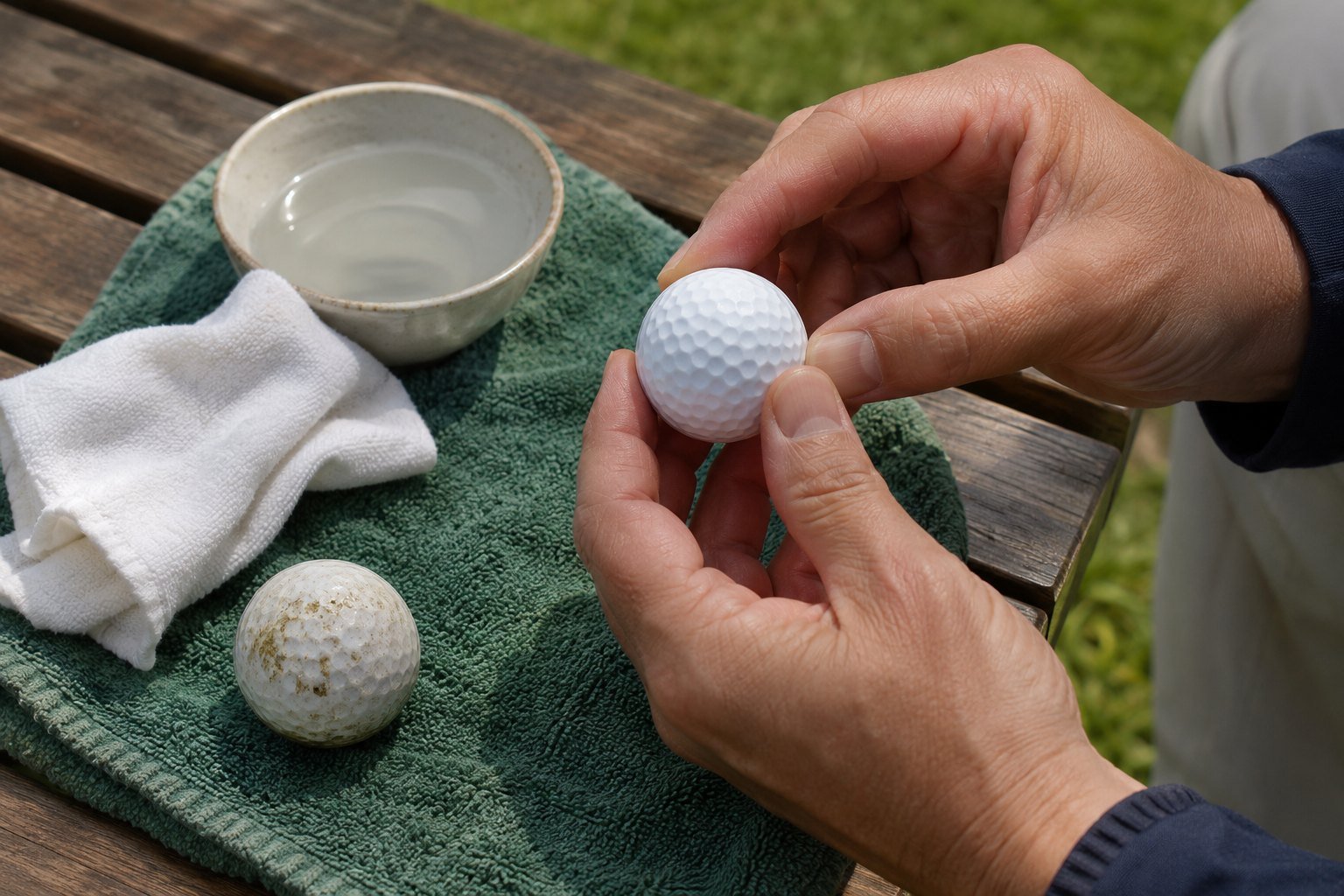
Afterwards, note losses separately from balls you have set aside because of damage. Clean off loose dirt using appropriate gentle care, let the ball dry and inspect it in good light. If a ball is cracked, cut or has damage you cannot assess confidently, remove it from your next-round playing stock and seek advice. Do not try to sand or repair the cover to make it usable again.
That stock decision is separate from permission to substitute a ball during a hole. Under Rule 6.3a you may change balls between holes; during a hole, substitution must be allowed by the applicable Rule. Do not simply swap a disappointing ball for another one before your next shot. [5]
Keep a short replacement record
Swipe or scroll the table to see all columns.
| Entry | Your record | How to use it |
|---|---|---|
| Exact model and colour | ________________ | Order the same specification deliberately. |
| Pack quantity and delivered cost | ________________ | Calculate the real cost per ball. |
| Round length used for comparison | 9 holes / 18 holes / other | Avoid mixing unlike outings in the loss average. |
| Balls lost in rounds 1–6 | ___ / ___ / ___ / ___ / ___ / ___ | Estimate how often a repeat order is needed. |
| Balls set aside for damage | ________________ | Keep replacement reasons separate from loss. |
| Usable balls remaining | ________________ | Subtract existing stock before buying more. |
| One recurring concern | ________________ | Take a specific question to your coach or next comparison. |
Review a clear problem before changing models
Once you have used the ball for a few outings, ask what you want to change. The answer might be the ongoing cost, difficulty following a colour, an impact sound you dislike or an uncertainty about how a chip releases. These lead to different comparisons.
One poorly struck shot does not establish that the ball is unsuitable. Keep ordinary misses in your notes, but ask a coach whether contact or technique explains a repeated result before attributing it to the cover or price. A more expensive model cannot answer a question that has not yet been identified.
If you are ready to compare response around the green, use the existing structured golf-ball fitting guide without a launch monitor. It gives the practical testing sequence; the buying record here helps you decide what quantity and replacement cost you can sustain.

A sensible first purchase
Buy a manageable quantity of one named ball within your repeat-purchase budget. Keep its details, mark it, record losses and reorder only when needed. Choose a larger pack once you have a reason to keep the model; choose a different ball when you can explain what you want it to do differently.
Explore the wider Golf Balls collection for the next equipment question as your preferences become clearer.
Sources
Product pages, displayed UK prices and governing-body guidance checked on 23 November 2026. Manufacturer descriptions explain the products’ intended positioning; this research-led guide does not report personal ball testing. Cost scenarios are labelled examples, with delivery excluded unless stated.
- Titleist Learning Lab: What Is Golf Ball Fitting and Who Should Do It? — fitting across skill levels and the use of launch, spin and stopping information.
- Callaway UK: 2025 Supersoft, dozen — standard £26.99 listing and manufacturer’s Hybrid Cover and soft-feel descriptions; optional configurations differ.
- Titleist UK: Inside the Titleist Golf Ball Lineup — TruFeel positioning, flight, feel and cover description.
- Clubhouse Golf: Titleist TruFeel, white dozen — product code GBTIT245 and displayed £24.99 single-pack price; delivery and multibuy conditions checked separately at purchase.
- The R&A: Rule 6, Playing a Hole — identifying marks, changing balls between holes and the requirement for permitted substitution during a hole.
- The R&A: The Golf Ball Playing Rules — felt-tip markings, conforming balls and the conforming-list Local Rule.
Illustrations in this article were created for Taylor’s Trailblazing Golf. Third-party photographs, where used, are credited beside the image or in the source list.