
Golf Trolley Wheels: Tread, Width and Soft-Ground Conditions
Winter wheels can solve a particular compatibility or course-access problem. Start with the trolley you own and the course’s instructions, then compare the tread you can actually use.
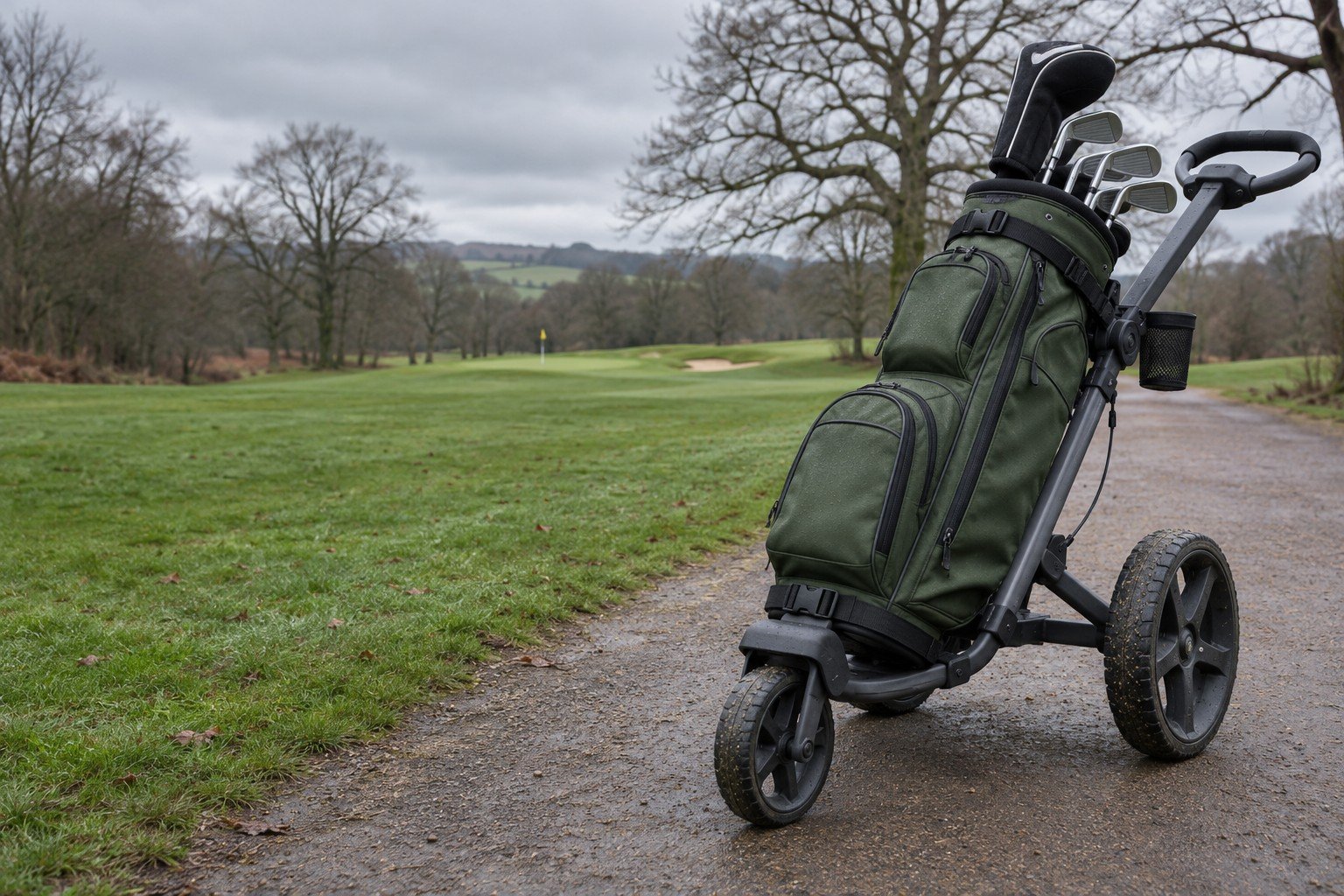
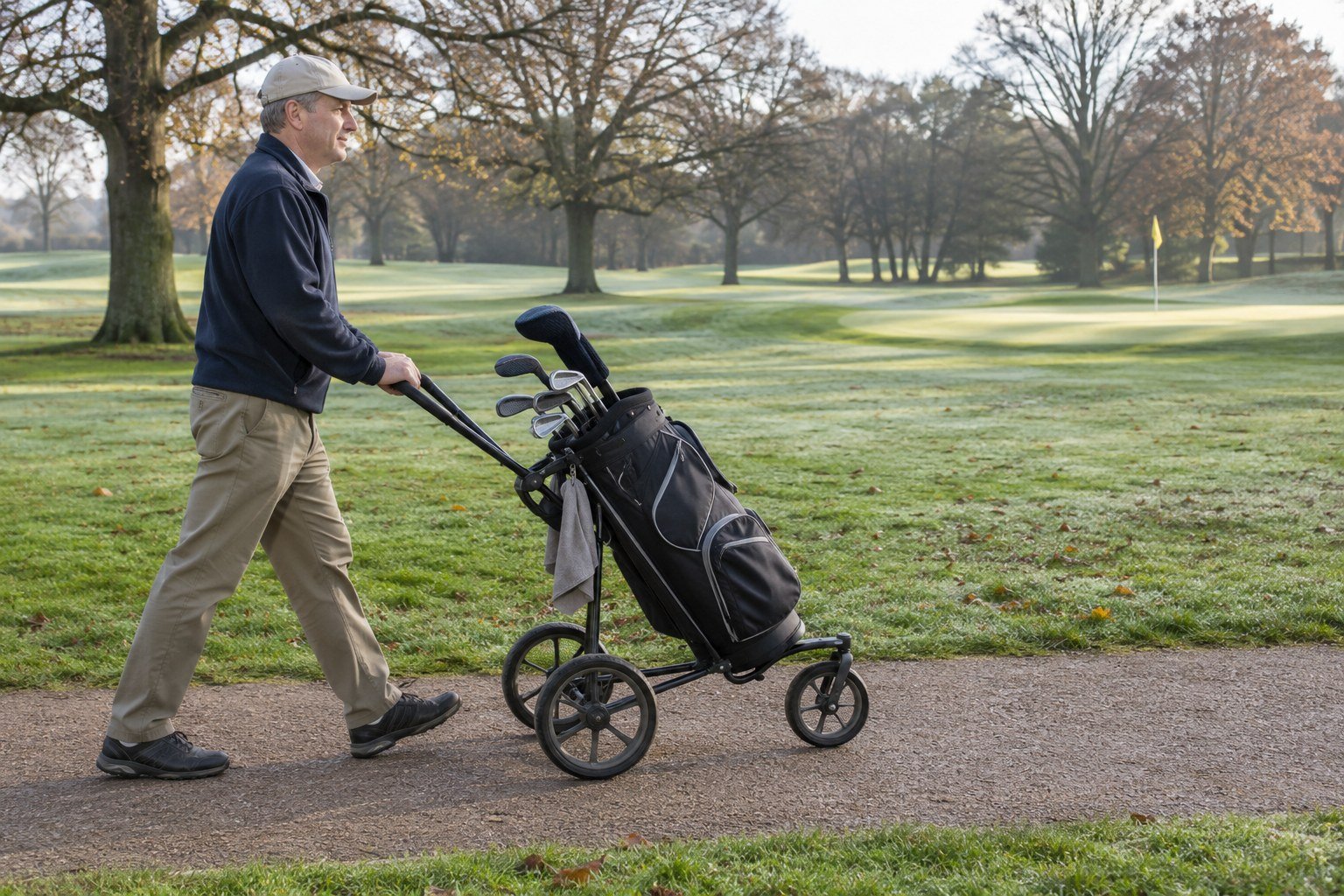
AI illustration. Consider the permitted route and current ground conditions.
This guide contains affiliate links. If you buy through them, Taylor’s Trailblazing Golf may receive a commission at no extra cost to you.
Wheel choice begins with the surfaces you actually encounter and the equipment your trolley manufacturer permits. Tread and width tell part of the story; the correct mounting, course restrictions and condition of the wheel matter too.
Research-led guidance for UK golfers. Read how we assess golf equipment for the distinction between documented features and hands-on testing.
A winter-wheel label does not grant access to restricted ground.
Generation, DHC and remote mode can change compatibility.
Mud, worn tread and a wheel attachment fault need different responses.
Buy a replacement only when it solves an identified need.
Golf trolley wheels: check course permission first
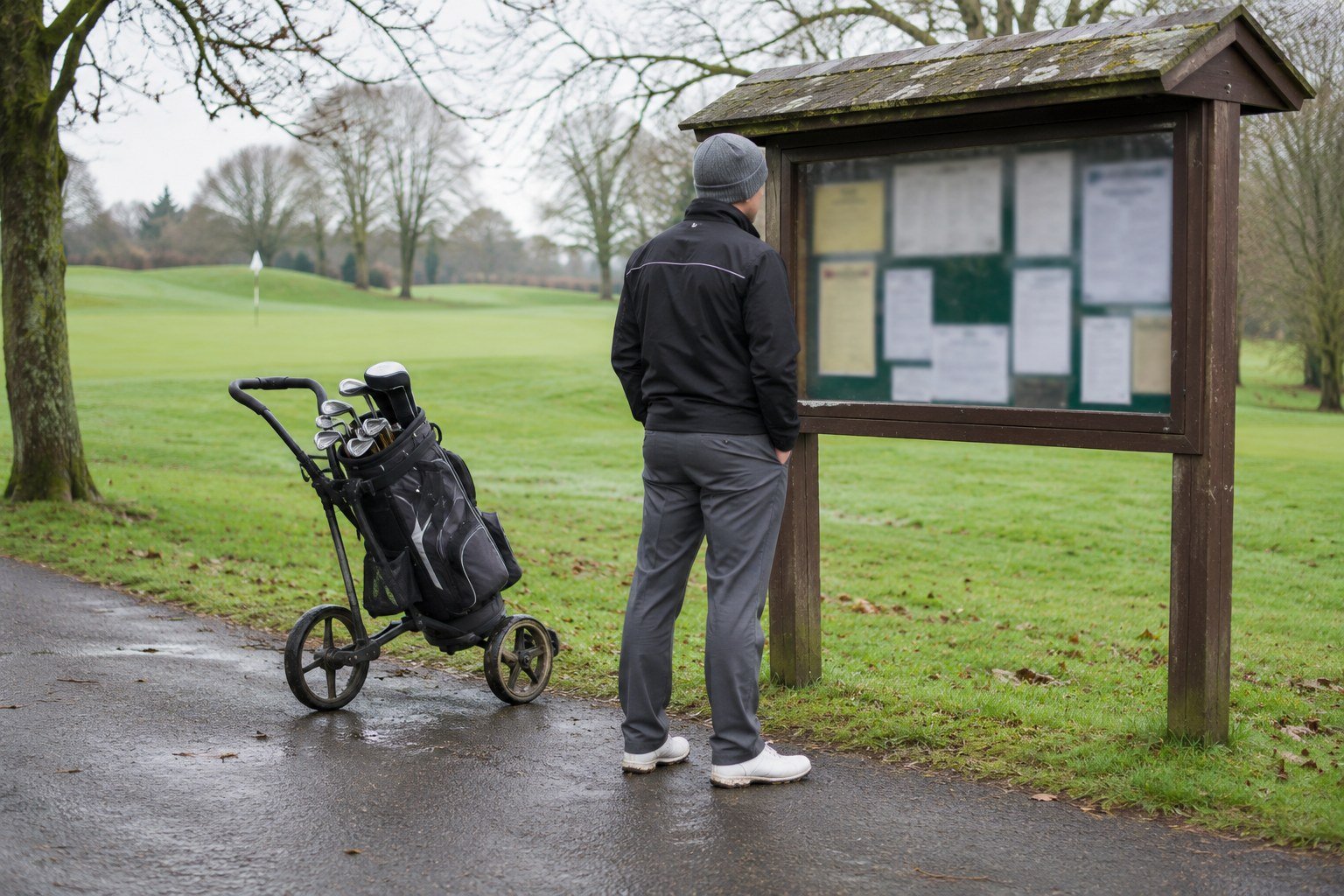
The first useful question is whether your trolley, with its proposed wheels, may be used on the course today. An open course does not automatically mean unrestricted trolley access. Ask about the current notice, permitted routes, any winter-wheel requirement and whether it applies differently to push and electric trolleys.
A published policy can also require a judgement from the club. Mardyke Valley’s October 2024 code, for example, allows trolley restrictions when conditions require them and directs players to the pro shop to check whether their wheels comply. That is an example of a club policy, not a statement about today’s conditions there or elsewhere.[1]
Before buying a set specifically for winter access, show the club the exact product and ask what it accepts. “Winter wheels” can describe a replacement wheel or a sleeve fitted over an existing tyre. A photograph of an open tread is less useful than the product name and application.
If trolleys are restricted altogether, arrange a permitted alternative with the club. Do not assume that carrying is manageable for you or that an exemption applies automatically. The decision may be to change the plan for the day. Buying a more pronounced tread does not answer that question.
Back to the start ↑Read tread, width and diameter as separate features
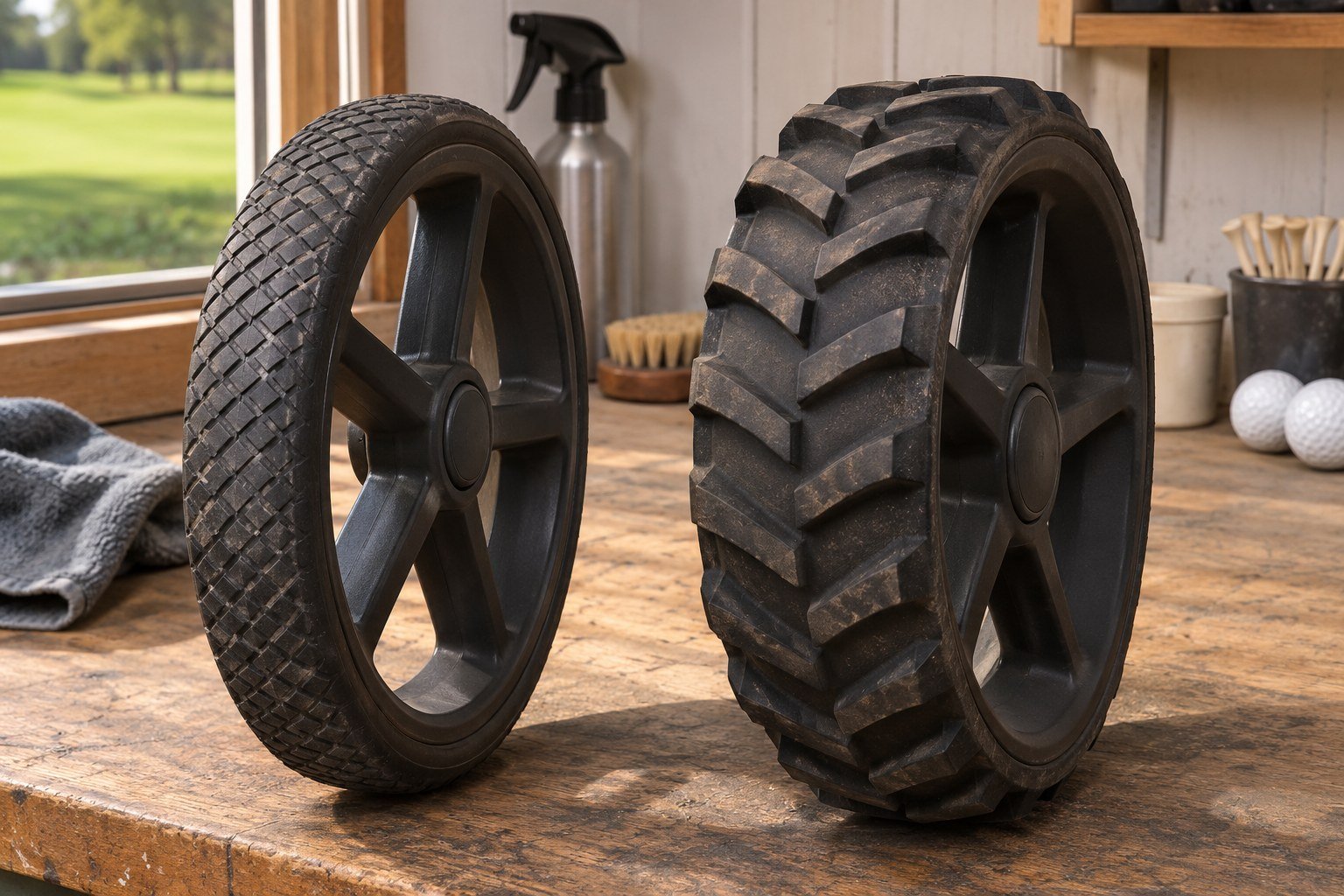
Width describes how broad a wheel is. Tread describes its contact surface and the spaces between its raised sections. Diameter describes the wheel’s overall size. Keep these descriptions separate when comparing photographs and specifications; one conspicuous feature can otherwise distract from the actual fit.
On a small screen, swipe inside the table to read every column.
| Feature | Useful observation | What it cannot establish alone |
|---|---|---|
| Wheel or tyre width | The published width, or a clearly described measurement requested by the supplier. | Course permission, ground pressure or a safe operating slope. |
| Tread pattern | Open spaces, raised sections and their visible condition. | Guaranteed grip on wet grass, mud, frost or a path. |
| Overall diameter | The specified size of the replacement wheel or sleeve. | Correct axle engagement or clearance around the frame. |
| Hub and mounting | The exact compatible trolley and any variant restrictions. | That a similar-looking wheel from another generation will work. |
PowaKaddy describes its winter-wheel tread as open and clog-resistant. Treat that as the manufacturer’s design claim; it does not mean a wheel needs no cleaning or can be used on every wet surface.[4] We have not measured traction or turf effects for the wheel designs discussed here.
A wider replacement also needs space to operate. Check the specified application before measuring gaps around the trolley yourself. A sleeve must fit the existing tyre correctly; it is not a way to conceal a split tyre, distorted wheel or loose hub. For pneumatic tyres, use the exact maker’s pressure instructions rather than changing pressure to improvise a soft-ground setting.
Match the model, generation and operating mode
Write down the full trolley name, approximate year and identifying serial details before shopping. Include DHC or other suffixes and whether you intend to use remote control. A familiar brand name and a matching colour are insufficient.
On a small screen, swipe inside the table to read every column.
| Wheel product | Published application | Buying implication |
|---|---|---|
| Motocaddy 28V Hedgehog Winter Wheels | Listed for 28V M-Series from 2018 and 28V S-Series from 2022; DHC and M7 REMOTE are excluded.[2] | Confirm the generation and standard drive configuration. |
| Motocaddy 28V DHC Hedgehog Winter Wheels | Listed for the corresponding DHC families; the M7 Remote entry specifically permits Manual Mode only.[3] | Do not translate a wheel’s physical fit into permission for remote operation. |
| PowaKaddy Winter Wheels | The current page lists FX, CT, RX, FW, C2, SPORT and Freeway Digital families.[4] | Confirm the exact trolley and fitting procedure with the supplier. |
| Motocaddy Hedgehog Push Trolley Rear Wheel Sleeves | The published push-trolley application excludes S1 Lite models before 2017.[5] | Check both the sleeve and the existing rear wheel. |
These are compatibility examples, not a ranking or a complete wheel catalogue. Older products and retailer names may use S-Series or M-Series shorthand differently. Send the exact trolley details to the retailer and request confirmation of the item being supplied.
Ask what the pack includes, which wheels it replaces or covers, whether additional approved parts are necessary and whether your usual operating mode remains available. Keep that answer with the purchase record. Do not choose an almost-matching set and plan to alter the hub or retention mechanism later.
Back to the start ↑Use a terrain and cleaning matrix before the round
Start from the route the club permits, then consider what you can observe without deliberately driving into a difficult patch. The following matrix is an editorial planning aid. It does not assign a safe gradient or certify any wheel for a particular soil.
On a small screen, swipe inside the table to read every column.
| Situation | Check first | Response |
|---|---|---|
| Firm ground and ordinary paths | Current permission, wheel condition and normal movement. | Keep an approved, sound set if it meets your needs. |
| Damp grass with mud collecting in tread | Whether debris is accumulating and the route remains permitted. | Pause in a suitable place; clean as instructed before judging the tread. |
| Soft ground showing ruts or standing water | Course notices and an approved alternative route. | Avoid the affected area. Do not use it as a wheel comparison test. |
| Frost, thaw or a temporary winter restriction | The club’s instructions for that day and trolley type. | Use only an expressly permitted arrangement or change your plan. |
| Persistent drag on an ordinary permitted surface | Visible debris, damage and correct wheel installation. | Stop if operation is abnormal; seek support if normal cleaning does not resolve it. |
Record the symptom in ordinary language: “mud collects around the front wheel” is more informative than “the trolley needs better tyres”. Avoid diagnosing a motor, bearing or brake from the tread alone.
Fit an approved set and check ordinary operation
Use the wheel manufacturer’s instructions alongside the trolley manual. Identify any left/right marking, specified mounting position and retention check before removing the original wheels. If those details are missing or conflict, stop and ask the supplier. This guide does not provide a universal axle or quick-release procedure.
Work on firm, level ground with the trolley stable and power isolated as its instructions require. Inspect the replacement for damage and remove loose debris from the relevant surfaces using the approved cleaning method. Keep fingers clear of moving joints and do not force a wheel onto an axle that appears to fit poorly.
After fitting, complete the maker’s normal attachment check. Check clearance with the bag and accessories in their usual positions, and confirm that the wheel is in the intended operating configuration. Do not judge drive engagement simply by trying to spin a wheel; read how your particular system should behave.
If the installation is sound, observe a short, ordinary movement on a firm, level, clear area using the prescribed controls. Listen for an unfamiliar scrape and look for a sleeve shifting or a wheel approaching another component. Stop if anything is abnormal. Do not seek a steeper slope, wetter patch or deliberate skid to prove that the new wheels work.
Retain the original sound wheels if you expect to change seasonally. Label the sets by their intended application and keep their instructions together. A successful fitting check is useful preparation, not a guarantee for every course condition.
Back to the start ↑Clean accumulated mud before blaming the wheel design
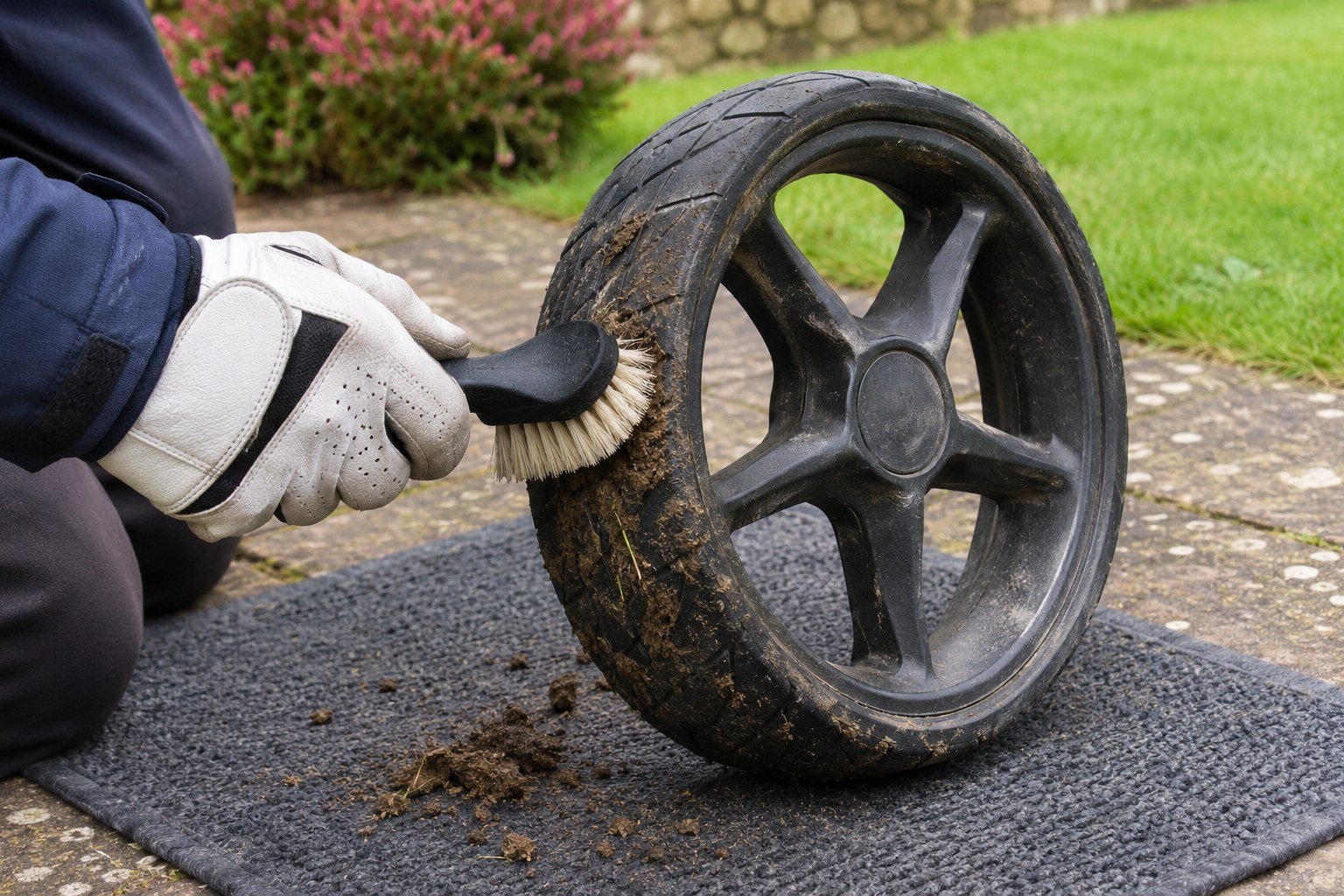
Photograph a recurring build-up before cleaning it away. A simple record can show whether the problem centres on one tyre, the front-wheel clearance or a sleeve that has moved. Avoid scraping blindly around a brake, cable or electrical connection.
PowaKaddy’s care guidance specifies a damp cloth, mild detergent and warm water; its removable main wheels can be washed separately. It warns against jet washing, steam cleaning and compressed-air cleaning. Use your own model’s instructions where the details differ.[6]
Prepare a soft brush, cloth and a place for removed wheels to dry. Use only the removal method intended for the trolley, and keep the powered frame and battery out of any wheel-washing area. Do not direct water into hubs or electronics simply because the trolley is used outdoors.
Once clean, check the tread and mounting surfaces for visible damage. A missing tread section, distorted rim, insecure latch or sleeve that will not stay in place calls for a compatibility or repair enquiry. Cleaning will not correct those faults. Similarly, persistent resistance deserves investigation rather than a stronger push or a higher motor setting.
Wheel condition also belongs in runtime planning. For the separate question of completing a longer day on one charge, see our guide to trolley battery capacity and its conditions. A new wheel set is not an evidence-based promise of extra holes.
Decide whether to keep, replace or add winter wheels
Keep the existing wheels when they are sound, correctly fitted, accepted by the course and behaving normally in your usual conditions. A seasonal purchase makes sense when a confirmed compatible set meets a particular course requirement or addresses a clearly identified use case.
Compare the full changeover task: the approved set, any required parts, fitting instructions, storage and the time needed to clean and swap it. Check whether your trolley still fits its usual storage arrangement, but do not assume every winter wheel can be inverted or stored like the original.
Owners of a confirmed compatible PowaKaddy can view the PowaKaddy Winter Wheels pair at Clubhouse Golf. The retailer lists the same main trolley families as the manufacturer.[7] Use this buying route after confirming compatibility; the listing does not establish that this tread performs best.
For a Motocaddy, identify the exact standard, DHC or push-trolley application with the supplier before ordering; do not substitute a wheel because its tread looks similar. Seek a repair first when the underlying problem is retention, damage or abnormal operation. There is no reason to replace the whole trolley solely because an appropriate wheel or sleeve is available separately.
Back to the start ↑Keep a short wheel and course record
Use this note when contacting the pro shop or retailer. It keeps course permission separate from mechanical compatibility and makes a future seasonal change easier to repeat.
- Trolley: make, full model, year or serial identification, and drive suffix.
- Existing wheels: product or part number where known, wheel position and any visible issue.
- Proposed set: exact product, supplier and confirmation of the intended operating mode.
- Course: current trolley notice, accepted wheel type, route restrictions and who confirmed them.
- After fitting: attachment check completed, clearance observed and any abnormal movement reported.
For example, a note that says “winter wheels requested by the club; exact model still awaiting supplier confirmation” identifies the missing decision. It should not be treated as approval to fit a visually similar set. Keep unanswered questions visible until the relevant person resolves them.
Our recommendation is to start with permission and compatibility, then assess everyday use with clean, sound wheels. Choose a different tread for a specific documented reason, and let current course instructions determine where it may go. For other equipment decisions, browse the Trolleys & Course Accessories guides.
Questions before you decide
Does a winter-wheel sleeve repair a worn tyre?
No. Treat the sleeve and its supporting wheel as separate parts that both need to be suitable and sound. Ask the supplier about replacement of a damaged or heavily worn original tyre before adding a sleeve.
Can I keep winter wheels fitted throughout the year?
Check the wheel and trolley instructions, the routes you use and the course’s current policy. Year-round suitability is not established by the winter label; retain a practical way to change to the prescribed alternative when needed.
Do larger rear wheels solve a front wheel that clogs?
They do not identify or resolve the cause. Inspect the front-wheel area using the normal care instructions and report persistent blockage, damage or abnormal clearance. Avoid buying a rear-wheel upgrade as a substitute for investigating that symptom.
Sources and editorial checks
Manufacturer specifications and instructions inform this guide. The comparison and checklists are editorial decision aids, not results of hands-on product testing.
- Mardyke Valley Golf Club — Members and Visitors Code of Conduct21 October 2024 document, page 3. Example of a club policy and pro-shop approval; not a live course-status report. Consulted 23 November 2026.
- Motocaddy UK — 28V Hedgehog Winter WheelsStandard wheel application and exclusions, checked 23 November 2026.
- Motocaddy UK — 28V DHC Hedgehog Winter WheelsDHC application and M7 Remote Manual Mode qualification, checked 23 November 2026.
- PowaKaddy — Winter WheelsListed trolley families and attributed open-tread design claim, checked 23 November 2026.
- Motocaddy UK — Hedgehog Push Trolley Rear Wheel SleevesPush-trolley application and pre-2017 S1 Lite exclusion, checked 23 November 2026.
- PowaKaddy — FAQs and TechnicalTrolley cleaning guidance, consulted 23 November 2026.
- Clubhouse Golf — PowaKaddy Winter Golf Trolley Wheels (Pair)Exact retailer listing and application families, checked 23 November 2026. No price or stock claim.
Illustrations in this article were created for Taylor’s Trailblazing Golf. Third-party photographs, where used, are credited beside the image or in the source list.


