Carry Bag vs Pencil Bag: When Less Storage Is Enough
Choose the structure and storage your round needs, then compare the weight of the complete load.
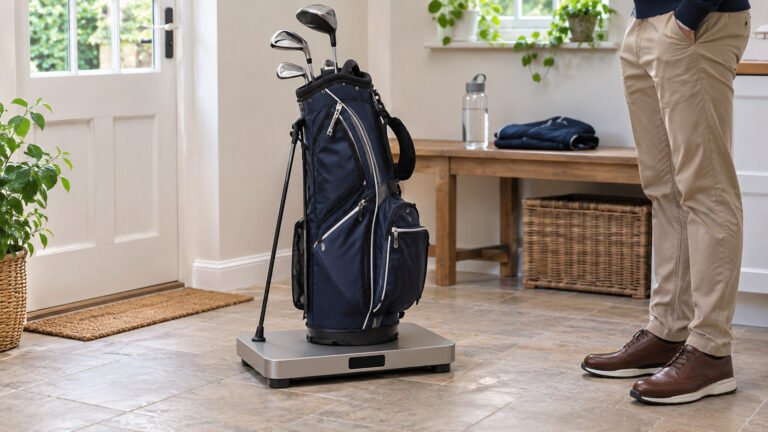
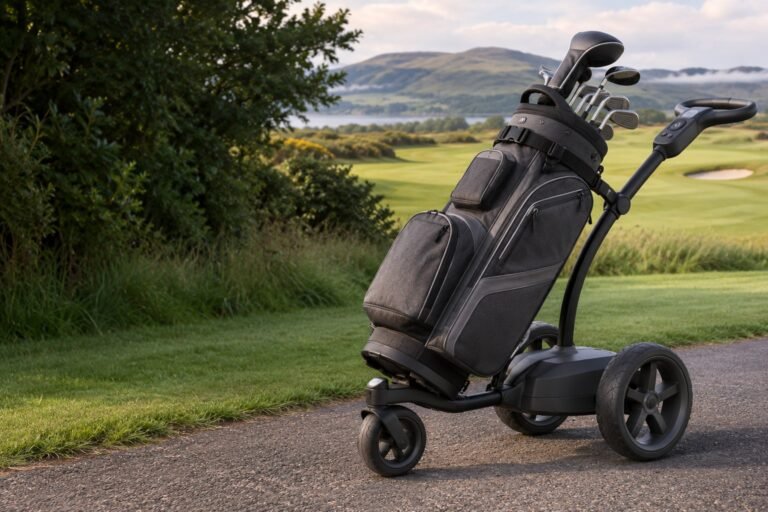
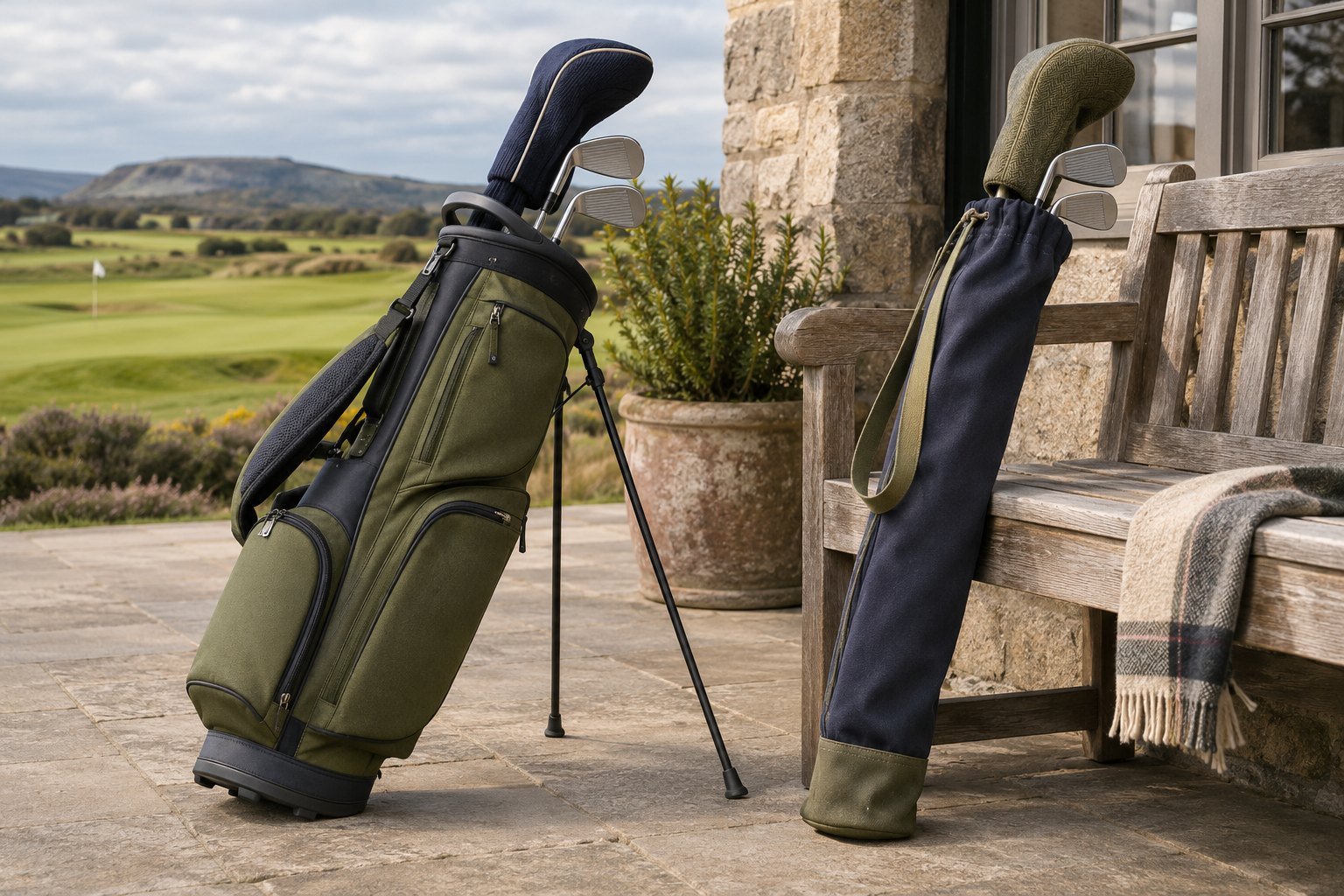
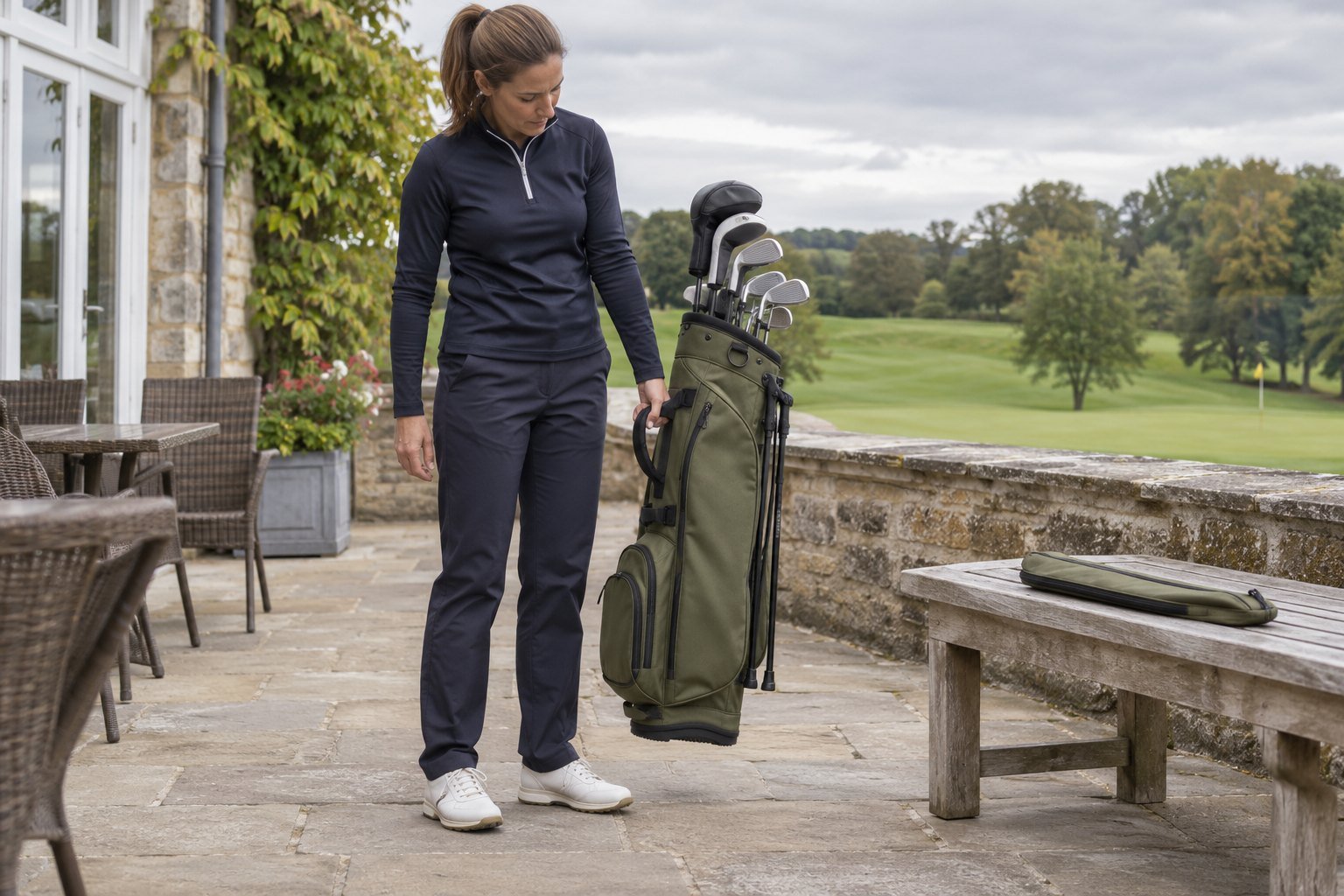
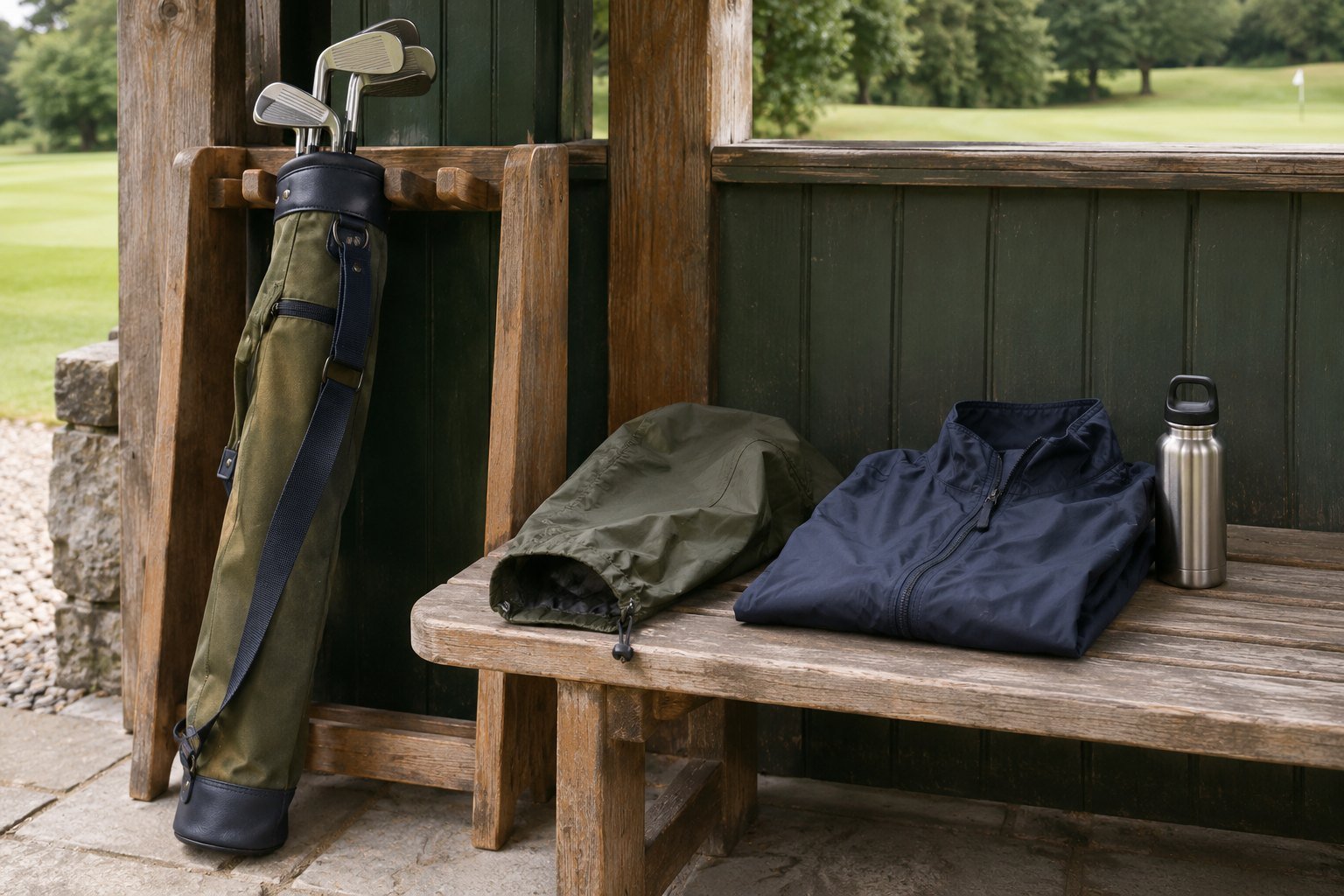
AI illustration of contrasting bag structures. These generic designs are not photographs of the named product examples.
The carry bag vs pencil bag decision starts with what you need to take and how you want to set it down. A smaller bag is useful when it holds that load conveniently. It becomes a poor compromise when the jacket will not fit, the clubs need rearranging at every stop or essential equipment ends up hanging from improvised attachments.
The names overlap. PING describes both its compact Moonlite and its larger Moonlander as carry bags, while Clubhouse Golf lists the Moonlite as a pencil bag. The practical differences sit in the specifications and construction, not in a tidy division between those words. [1] [2] [3]
This research-led guide helps you choose a bag type. Published examples illustrate the trade-offs; the load calculation and decision matrix are planning aids, not reported carry tests.
This guide contains affiliate links. If you buy through them, Taylor’s Trailblazing Golf may receive a commission at no extra cost to you.
The useful saving is in the complete loaded bag, after all required kit is included.
A coat that fits and can be removed matters more than the headline pocket count.
No legs, short legs and a full stand create different set-down routines.
Try a deliberate reduced load in your existing bag before paying for a second one.
Carry bag vs pencil bag: compare the structure
Use “carry bag” as a broad description of a bag intended to be carried. For this comparison, “pencil bag” means the slimmer, simpler end of that range. It does not mean every example is legless, every strap is single or every bag takes the same number of clubs.
Start with three physical arrangements. They are useful shopping distinctions rather than official product categories.
Scroll within the table to see every column.
| Arrangement | Useful when | Compromise to check |
|---|---|---|
| Slim bag without a stand | You want few parts and can accept the intended ground-resting position. | Where do the body, strap and pockets rest when you put it down? |
| Compact bag with short legs | You want a small bag with some support at the top. | The resting angle and pocket height may differ from a full stand. |
| Carry bag with a full stand | You value raised club access and a more upright resting position. | Check its loaded weight, actual pocket space and stand operation. |
Look at the exact bag from the side with its support deployed. A photograph of an upright empty bag tells you little about where it rests during normal use. Ask how the stand operates and whether a rain hood and the intended strap are included.
Keep your priorities explicit. If you dislike putting a bag on the ground, a very low empty weight will not remove that inconvenience. If you carry only a few clubs to practice and have little extra kit, a large storage system may be unnecessary.
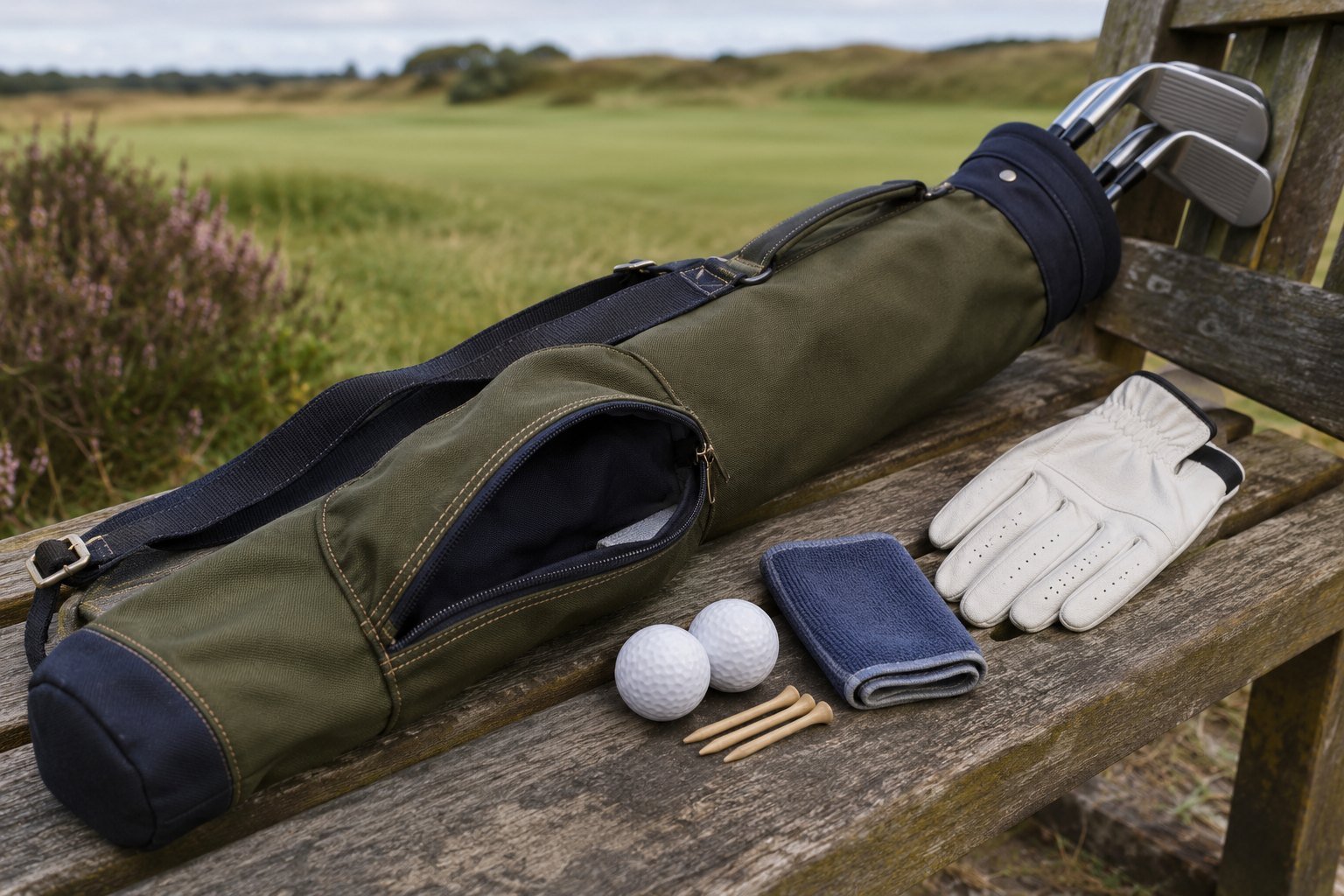
Two carry bags, different storage allowances
These PING models show why the label alone is insufficient. The figures below are the manufacturer’s published specifications, checked on 23 November 2026. Kilogram values are rounded conversions, not independent weighings. [1] [2]
Scroll within the table to see every column.
| Specification | PING Moonlite, current compact design | PING Moonlander |
|---|---|---|
| Published bag weight | 2 lb, approximately 0.91 kg | 4.5 lb, approximately 2.04 kg |
| Top layout | Two-way | Four-way |
| Pocket count and volume | Three pockets; 7 litres | Six pockets; 15 litres |
| Strap configuration | Single | Convertible between single and double |
| Capacity or storage description | PING describes space for 7–9 clubs. | PING identifies storage for light apparel and other essentials. |
Those figures make the trade-off visible: the Moonlite has the lower listed weight and less pocket volume. They do not establish which bag will feel better to you. Nor do seven litres describe one seven-litre cavity; the space is divided between pockets, so an awkwardly shaped item still needs checking.
For a small, single-strap option, view the PING Moonlite in Heather Grey/Black at Clubhouse Golf. Match article number 37111-02 and check your actual club selection; a stated club range is not a guarantee for every grip and headcover combination. [3]
If you need the stand-bag arrangement and larger storage allowance, view the PING Moonlander in White/Mr Ping at Clubhouse Golf. The retailer identifies the stand design and included rain hood. Confirm the supplied configuration before comparing a shop weighing with a published figure. [4]
Back to the top ↑Compare the weight you will actually carry
A bag-weight saving carries through to the total only when you compare like with like. Put the same intended equipment beside each candidate. Include headcovers, the bottle and its contents, clothing and any supplied accessories you will carry. Use your own weighing results where available.
Suppose two bags weigh 0.9 kg and 1.9 kg and take the identical load below. Every figure in this example is assumed for planning; none is a measurement of the named products.
Scroll within the table to see every column.
| Item | Minimal bag example | Larger carry bag example |
|---|---|---|
| Bag with its carrying strap | 0.9 kg | 1.9 kg |
| Chosen clubs and headcovers | 3.1 kg | 3.1 kg |
| Balls, glove and small accessories | 0.4 kg | 0.4 kg |
| Drink and container | 0.8 kg | 0.8 kg |
| Clothing and weather kit | 0.7 kg | 0.7 kg |
| Total | 5.9 kg | 6.9 kg |
The smaller bag saves 1.0 kg in this example. If it needs an additional 0.2 kg pouch to accommodate essential equipment, its total becomes 6.1 kg and the saving falls to 0.8 kg. Include the pouch in the comparison and check that the maker provides an appropriate attachment; do not assume any clip can carry it.
Write the calculation as: bag and included carrying parts + clubs and headcovers + everything else. Do not count a strap or hood twice. Quoted bag weights can be presented differently, so ask what was included if a close comparison affects your purchase.
This arithmetic does not define a safe or comfortable load. It shows where the weight sits and what a purchase would change. Removing forgotten spare equipment from your present bag is worth considering before paying to save a similar amount in the bag itself. Keep the items the round actually requires.
Decide what “enough storage” means for your round
Set the minimum load before looking at pockets. Name the round or session: a few clubs at the range, a short round with a settled forecast, or a longer walk with clothing changes. “Only nine holes” is not a complete packing brief; the route, conditions and available facilities still matter.
Put your required equipment into three groups: clubs and protection; drink and clothing; small items you expect to use. Add personal essentials. A smaller bag passes only if all three groups have a sensible home at the same time. An empty apparel pocket can look generous until the neighbouring ball pocket is filled.
Check the largest necessary item first. It may be your folded jacket rather than your clubs. Place it in the intended pocket without stretching the zip, then close the other occupied pockets. If it fits only when carefully compressed, consider what happens when you need to put it away quickly or return it damp. Do not delete needed weather kit to make the bag appear suitable.
There is no need to buy the maximum possible capacity. A little usable spare room can be helpful; several permanently empty compartments may not be. Write down the item that forces you towards the larger bag. If you cannot identify one, the smaller option deserves a closer look.
For a practice-only second bag, leave the round’s full inventory out of the comparison and name the narrower job honestly. A bag that is adequate for the range has not thereby passed as your only walking-round bag.
Include access and support in the weight trade-off
Storage capacity and convenient access are different questions. Consider the tasks the bag must make easy: taking a club, reaching your drink, removing a layer and lifting the bag again. You do not need an elaborate pocket map to notice that one arrangement repeatedly obstructs a task you value.
Assess each candidate in its intended resting position. With a legless bag, decide whether you accept its contact with the ground. With short legs, look at what remains close to the surface. With a full stand, check that the loaded bag rests securely as the maker intends. No support arrangement guarantees stability on every slope.
A rain hood, lined pocket or water-resistant underside does not answer every weather question. Check the exact construction and care information for the chosen model, then decide whether its protection matches the conditions in which you plan to use it.
Strap count alone is not a comfort rating. Once the category and capacity look right, use the separate loaded golf-bag harness check for the model-specific fitting and walking assessment. A low published weight cannot compensate for an arrangement that does not work for you.
Back to the top ↑Use an essential-capacity and carry-weight matrix
Complete the first two columns using your planned load, then use the result to shortlist a structure. These are conditional purchase decisions, not product scores.
Scroll within the table to see every column.
| Your requirement | Evidence to obtain | Likely decision |
|---|---|---|
| Few clubs and genuinely little extra kit | Everything fits and remains accessible; the resting position is acceptable. | A pencil or similarly minimal bag is a sensible candidate. |
| Reduced set, but a stand is important | The exact short-leg or full-stand arrangement works with the packed bag. | Choose a compact supported bag; do not buy by the pencil label alone. |
| Weather layers or drink storage are the limiting items | The required load fits simultaneously without strained closures. | Allow more storage even if the empty bag weighs more. |
| The load changes between practice and full rounds | One configuration works only after required items are left out. | Keep a separate practice role or choose a more adaptable main bag. |
| Current bag feels unnecessarily heavy | A deliberate repack removes unwanted contents and leaves a useful setup. | Keep the bag unless a replacement offers a worthwhile remaining benefit. |
| Capacity passes but carrying remains unsuitable | The correctly configured, realistic load still does not suit you. | Reconsider carrying rather than buying a smaller label as a cure. |
Two honest answers are possible: “small enough for this job” and “too restrictive for this job”. Neither is a verdict on all pencil bags or all golfers. A bag that you enjoy using for a brief practice visit may still be the wrong choice for your main round.

Buy for a defined load, or keep the bag you have
Before ordering, record the exact model and variant, published weight and what it includes, intended strap configuration, stand arrangement and rain-hood provision. Add your loaded total and the essential item that is hardest to accommodate. Keep any seller clarification with that record.
For an online purchase, read the actual returns conditions before trying it. Confirm how you may inspect club fit indoors and what condition the seller requires. Do not assume a completed outdoor round is an acceptable trial. In a shop, ask to assess the real load or arrange a suitable demonstration; an empty display bag is only a starting point.
Choose the minimal option when its smaller structure removes weight or bulk while preserving the equipment and access you need. Choose the larger carry bag when its stand or storage solves a problem you can name. If both choices merely reproduce what your current bag already does, repack that bag and keep your money for a more useful change.
Browse the Golf Bags guides for other specific buying checks as your shortlist develops.
Back to the top ↑Sources and research
Research reviewed on 23 November 2026. Manufacturer descriptions, official guidance and retailer information are distinguished from the original planning worksheets and editorial recommendations in this guide.
- PING — Moonlite carry bagCompact design, listed weight, pocket volume, top, strap and stated club range. Checked 23 November 2026.
- PING — Moonlander carry bagListed weight, top, pocket volume, convertible straps and apparel storage. Checked 23 November 2026.
- Clubhouse Golf — PING Moonlite, Heather Grey/BlackExact pencil-bag listing and article number 37111-02. Checked 23 November 2026.
- Clubhouse Golf — PING Moonlander, White/Mr PingExact stand-bag listing and included rain hood. Checked 23 November 2026.
Find more equipment guidance in Golf Bags.
Illustrations in this article were created for Taylor’s Trailblazing Golf. Third-party photographs, where used, are credited beside the image or in the source list.