Golf Bag Weight: Empty vs Fully Loaded Carrying Comparison
Make the contents visible before deciding how much a lighter bag would change your carry.
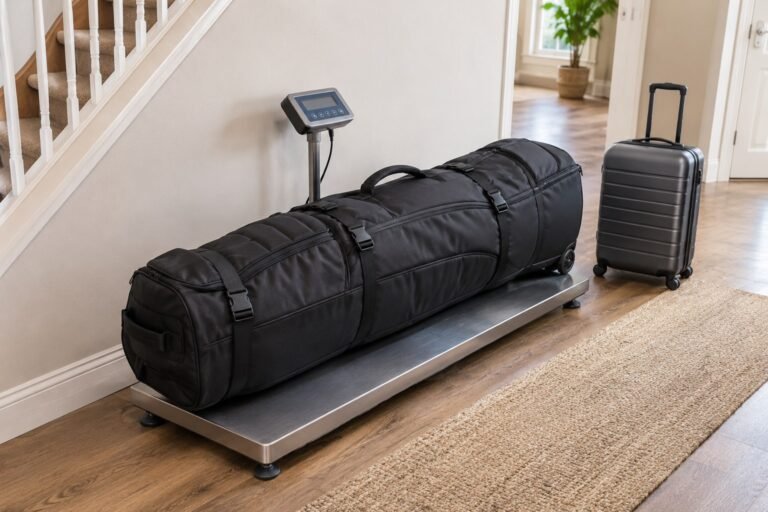
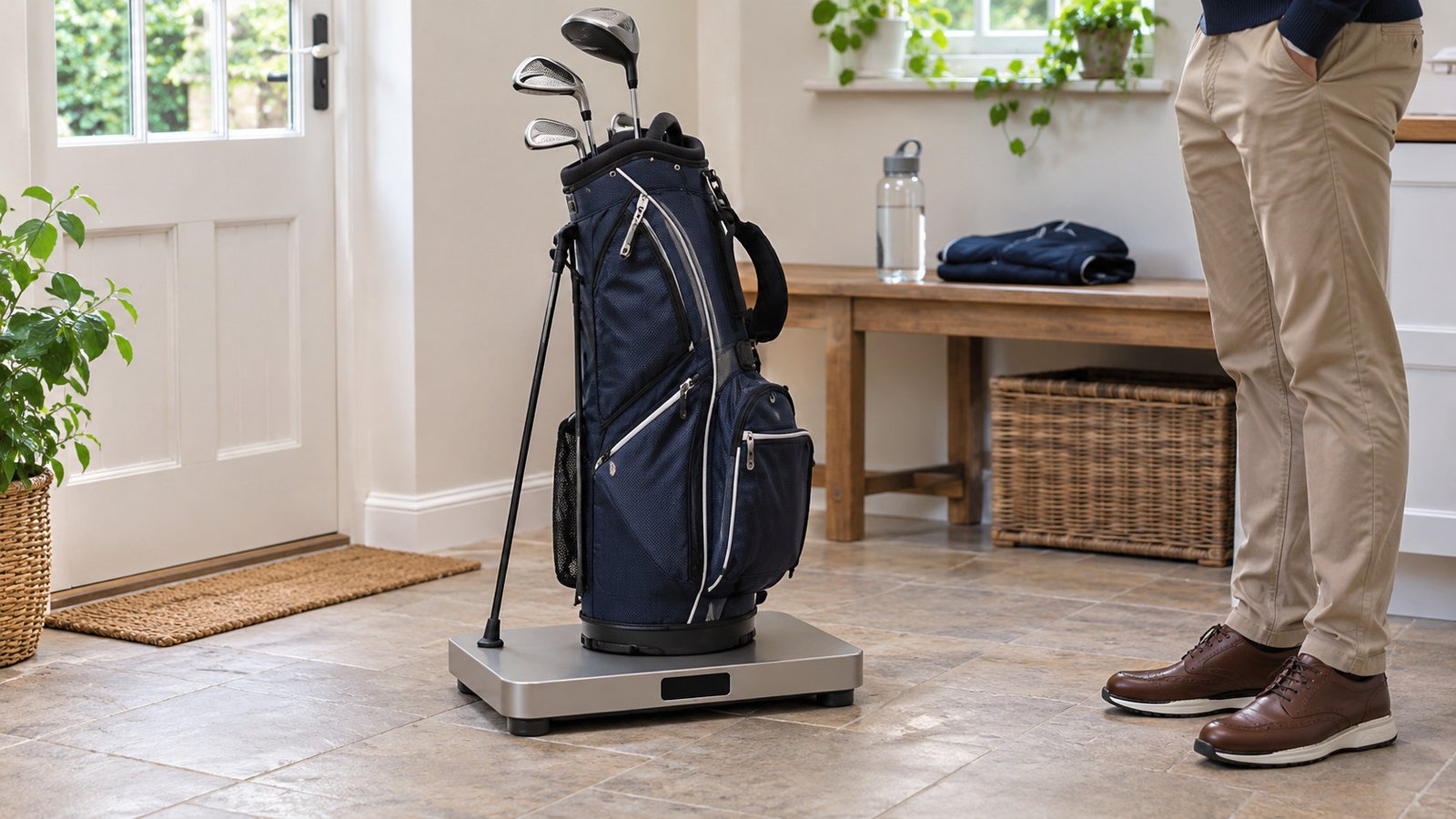
AI illustration: a generic loaded bag is supported on a scale; no weighing result is shown.
Some links in this guide are affiliate links. If you buy through them, Taylor’s Trailblazing Golf may earn a commission at no extra cost to you.
Golf bag weight is most useful when it describes the bag you will take to the first tee. An empty-bag figure leaves out your clubs, drinks, clothing and the small items that remain in the pockets between rounds. It may also leave questions about the strap or other removable parts.
Start with your existing setup. Establish what it weighs ready to carry, then compare another bag using the same equipment. This guide provides a packing worksheet and an illustrative calculation; it does not report a weighing test or prescribe a safe load for every golfer.
Weigh or account for the bag with its actual strap, hood and attached accessories before adding the playing load.
Changing clubs, drinks or clothing between candidates prevents a clean comparison of the bags themselves.
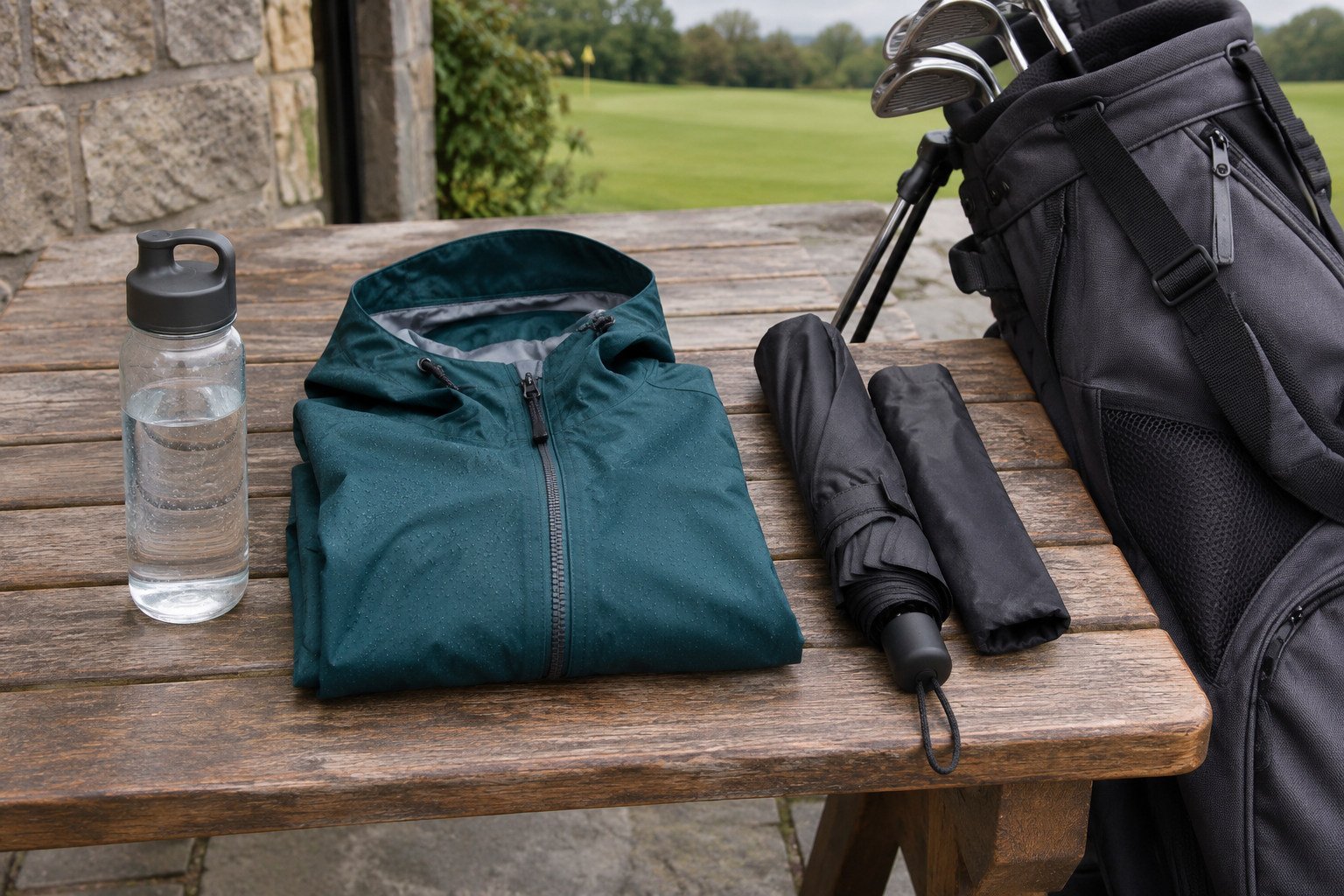
Remove forgotten duplicates before reconsidering the water and weather kit needed for the intended round.
Define the weight you are comparing
Use a short description beside every number. “Empty” could mean the bag body as supplied, the bag without a detachable strap, or the bag with its strap and hood but no playing equipment. Those are different starting points.
Motocaddy makes one distinction explicit on its HydroFLEX page: 2.3 kg without the strap and 2.5 kg with it. For a carrying comparison, the strap cannot disappear merely because the smaller number appears in the headline. That published difference is 0.2 kg; it says nothing about the weight of your clubs or clothing. [1]
Keep three entries in your notes
- Published figure: copy the exact model, unit and any footnote.
- Your empty carrying setup: include the fitted strap, hood and any accessories that remain attached.
- Your starting load: add everything going into or onto that bag for the intended round.
Put an item in only one entry. If the hood is already inside the bag for the empty measurement, do not add it again under weather kit. Apply the same rule to a detachable pocket, towel ring or permanently clipped accessory.
A bag-capacity statement is a separate specification. Available pocket space does not tell you how much to pack, and a bag’s quoted weight does not establish how much you should carry.
Golf bag weight: build one complete packing worksheet
The following example shows how to compare two bags without quietly changing their contents. Every weight is invented for the calculation, including the clubs and accessories. These are not averages, measurements of the named products later in the guide, or a recommended load.
Copy the categories and replace the example figures with your own observations. Write down the club selection and the quantities of balls, gloves and drinks so that you can repeat the comparison.
Swipe within the table to see all columns.
| Item and inclusion | Bag A example | Bag B example | What to record for your setup |
|---|---|---|---|
| Empty bag, fitted strap and hood | 2.0 kg | 2.7 kg | Exact bag and attached parts; confirm the hood is counted here. |
| Clubs with their normal headcovers | 5.0 kg | 5.0 kg | List the actual clubs and covers, rather than assuming a standard set weight. |
| Balls, tees, gloves and small accessories | 0.6 kg | 0.6 kg | Record quantities and include the contents of the small pockets. |
| Drink and its bottle | 1.1 kg | 1.1 kg | Weigh the filled container; do not count only the liquid. |
| Food and packaging | 0.2 kg | 0.2 kg | Include the container or wrapper going into the bag. |
| Carried clothing | 0.5 kg | 0.5 kg | List the layers packed, separate from clothing being worn. |
| Rangefinder and its case | 0.2 kg | 0.2 kg | Include straps or cases that travel with the device. |
| Complete starting load | 9.6 kg | 10.3 kg | Add the entries, then check the complete load where practical. |
The contents add 7.6 kg to either example. The 0.7 kg difference between the empty bags remains a 0.7 kg difference once both are packed. It does not disappear because the clubs are heavier than the bag, and it does not become a larger saving just because you walk farther.
Make the list complete before making it lighter
Check the umbrella holder, valuables pocket, ball pocket and any clip-on pouch. If an item moves from the bag to your jacket, the bag reading falls but the item still travels with you. Record that as a change in where it is carried, not as equipment you have removed.
Leave out things you genuinely do not take. This is a record of your intended setup, not an invitation to buy or pack every item in the example. A missing category can be marked “not carried”; an unknown weight should remain unknown until measured or clearly estimated.

Make the weighing method repeatable
Use suitable scales within their rated capacity and follow their instructions. A stable platform that accommodates the load is preferable to balancing a tall bag precariously. Keep the bag clear of walls or furniture that could support part of its weight. If you cannot place or lift it comfortably, ask a retailer or another appropriate helper rather than improvising a difficult lift.
You can also weigh manageable groups separately and add them. Use a container where the scale’s instructions permit it, subtract or tare the container, and keep the units consistent. A component total is still useful, but label it as a sum rather than a direct measurement of the complete bag.
- Record the scale, unit and the smallest change its display shows.
- Measure the empty carrying setup with the same attachments each time.
- Add the listed equipment, or weigh the groups separately without double counting.
- Repeat the reading after removing and replacing the load safely.
- Note any difference between the component sum and a complete-bag reading.
If repeated readings vary by about as much as the difference between two candidates, the equipment has not established a dependable weight ranking. Do not add extra decimal places to make the result look more precise. Recheck the method or report the two loads as too close for that setup to distinguish.
Use the starting load for the starting decision
A measurement after a round may contain less drink and food, but also wet clothing or newly collected items. It is a different observation. Record whether the bag is dry and whether bottles are full. Comparing one bag before play with another afterwards would mix the bag difference with a contents difference.
Compare the same round, then the different round
Once the baseline is clear, make a second packing list only when the planned outing changes. A short practice visit and a wet full round do not need identical equipment. Their totals answer different questions.
Return to the invented example. Adding an extra 0.8 kg of weather equipment to Bag A makes its starting load 10.4 kg. That is slightly more than Bag B’s original 10.3 kg, despite A being the lighter empty bag. The arithmetic shows why the packing list must accompany the number; it does not show that either bag is inherently easier to carry.
If both bags receive that same extra 0.8 kg, their totals become 10.4 kg and 11.1 kg. The bag-only difference is still 0.7 kg. Use the first comparison to plan different outings and the second to compare the bags fairly.
Remove accidental weight first
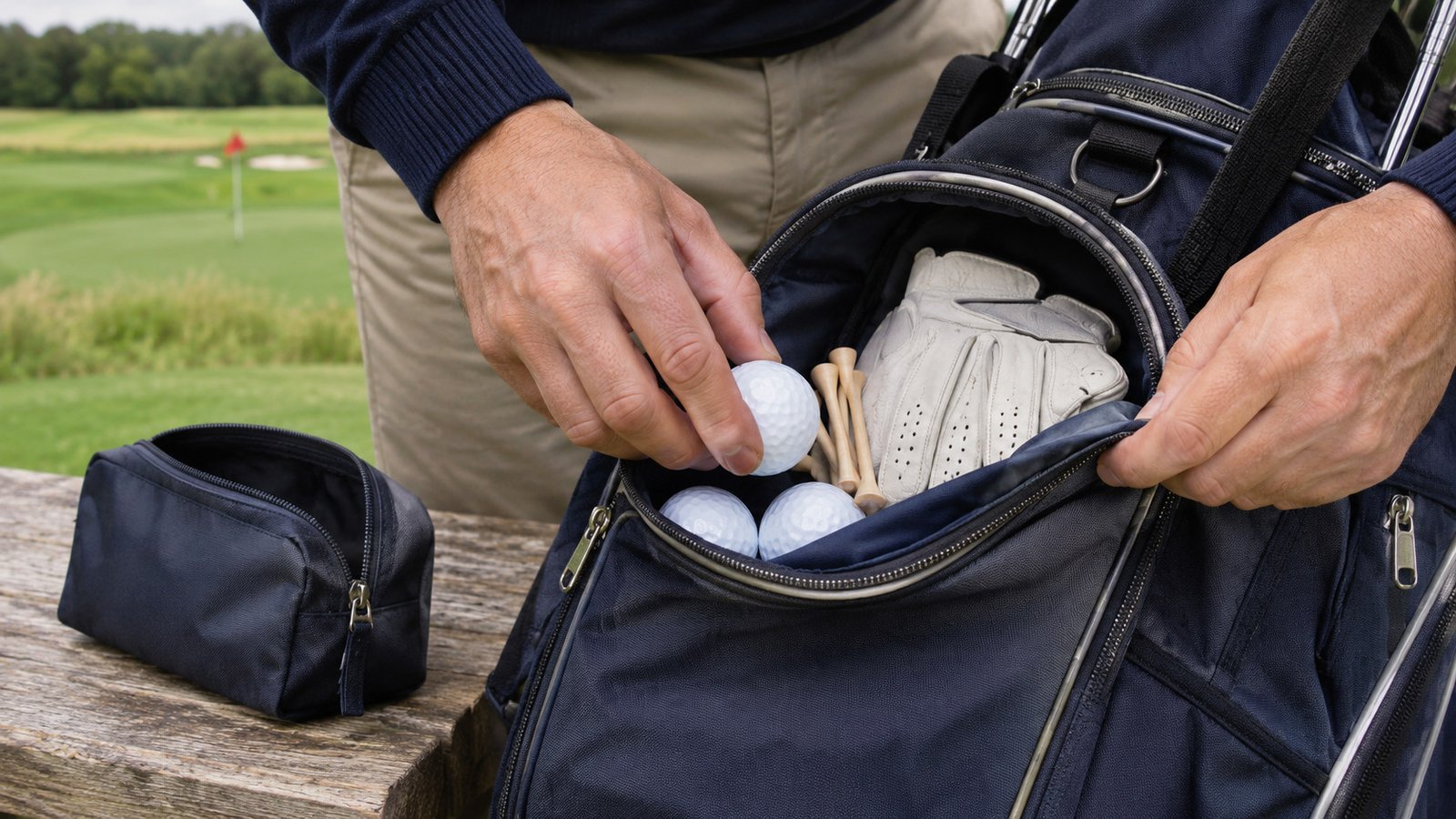
Empty the pockets onto a clear surface. Separate the equipment you intend to take from forgotten balls, duplicate markers, old packaging and accessories that stayed there after a different session. Weigh the removed group if you want to know what the clear-out changed.
Keep the water, food and weather preparation appropriate to the intended round. Reducing those merely to make a scale display smaller creates a different and potentially unsuitable packing plan. If the necessary setup is not manageable to carry, consider another permitted way to transport it rather than treating a low total as the goal.
Do not judge a replacement bag using the stripped-down version of your old load. Pack the realistic list into the candidate and check that it fits without forcing pockets shut or relocating necessary items to awkward external attachments.
Use published weights to shortlist, then check the basis
These manufacturer figures were checked on 23 November 2026. They show how a shortlist can start, but they are not independent measurements made under one shared method. Approximate kilogram values below are conversions of the published pounds, rounded to one decimal place.
Swipe within the table to see all columns.
| Exact manufacturer page | Published weight | What remains to check |
|---|---|---|
| PING Hoofer [2] | 5.5 lb, approximately 2.5 kg | The page does not explicitly itemise the strap, hood and removable parts included in the weight. |
| Callaway 2026 Fairway C [3] | 4 lb, approximately 1.8 kg | Confirm the selected UK variant and which removable parts are included before comparing a complete setup. |
Use these as starting figures, not a promise that moving your equipment between the bags will reproduce the converted difference exactly. Ask the seller to confirm the supplied configuration and, when possible, compare the actual bags on the same basis.
Two specific routes for a shortlist
If the Hoofer is a candidate after you have checked its carrying and storage arrangements, Clubhouse Golf has a black listing identified as 36414-01. Its weight description is 2.5 kg. The listing’s pocket counts are inconsistent, so ask the retailer to confirm any storage feature important to you. [4]
Check the black Hoofer at Clubhouse Golf
The official UK 2026 Fairway C page is the direct route for checking that model and its selected options. Consider it because the complete configuration meets your needs, not because a lighter published number alone establishes comfort. [3]
View 2026 Fairway C at Callaway
Check the actual price, variant and return conditions before ordering. A retailer’s year label, a colour change or a familiar family name is not enough to transfer every specification from another product page.
Separate the weight result from the carrying result
A scale can establish a load within the limits of its method. It cannot establish your comfortable carrying time, the suitability of a particular harness or how the bag will behave on the intended route. Two equally heavy bags may have different attachment geometry, pocket placement and access arrangements.
Keep a practical note beside the weight: where the heavier items sit, whether anything moves, and whether the handles and club openings are usable with that load. A lighter bag that cannot hold the required clothing, or needs an extra pouch to replace missing storage, deserves a fresh total.
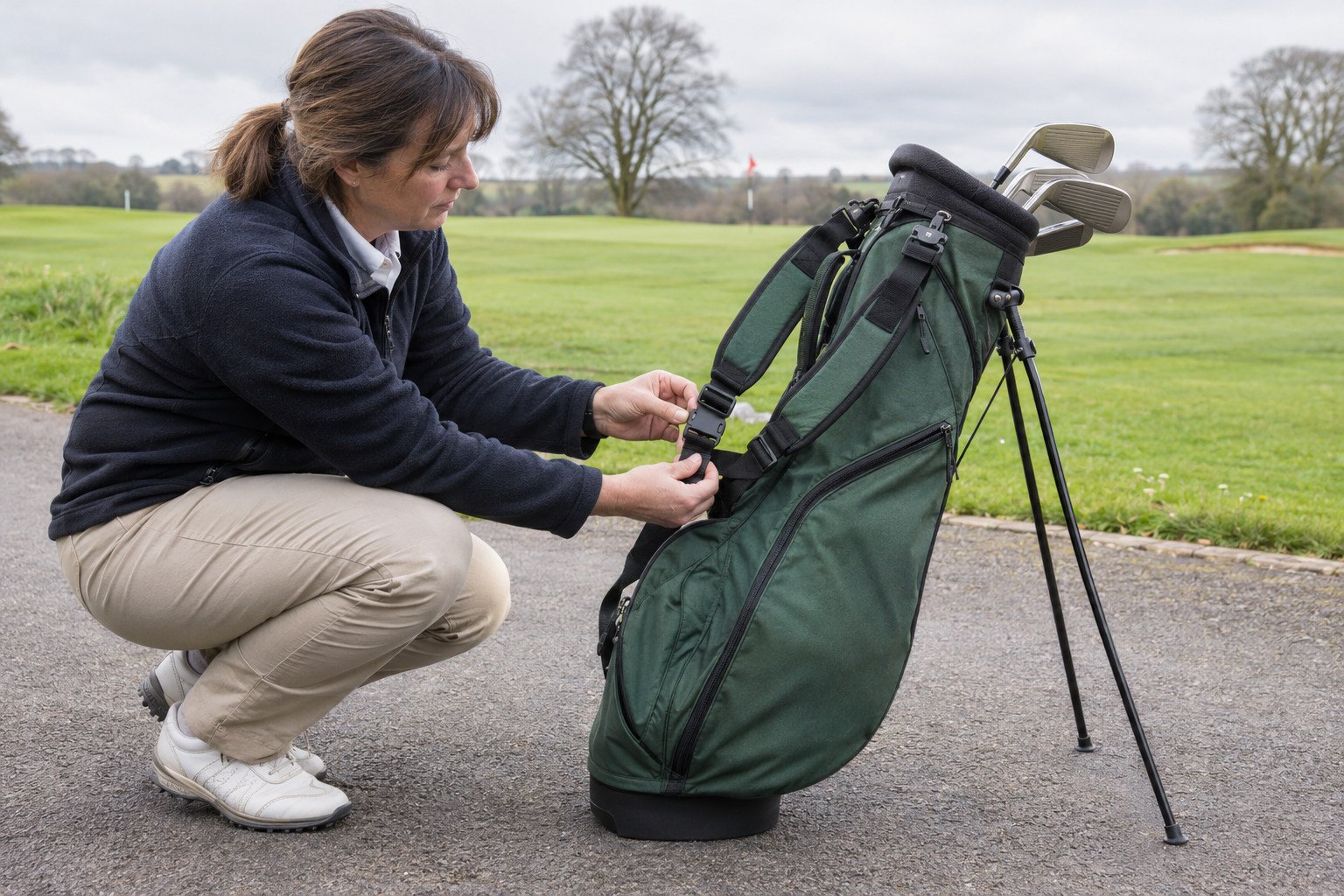
For strap routing, inspection and a cautious walking check, use the existing golf bag carry-harness guide and the exact manufacturer’s instructions. Make adjustments with the bag supported. Do not continue through discomfort or use a weighing exercise to test damaged handles, buckles or stitching.
This guide deliberately gives no universal kilogram limit or percentage-of-body-weight rule. The useful result may be a manageable carrying setup, a reduced equipment list appropriate to a different outing, or a decision to use a trolley or another permitted option. A smaller empty-weight figure does not settle that choice.
Decide whether a lighter bag would solve the actual problem
Use the completed worksheet to identify the change you are buying. If unnecessary contents account for the avoidable load, sort those before paying for a replacement. If the packing list is deliberate and a candidate saves weight while retaining the features you need, compare that candidate with the same load.
For a close decision, keep a short record with five entries: bag and version; empty configuration; contents list; starting total and method; and the unresolved carrying or access issue. That record is more useful than remembering that one bag felt light when it was empty in the shop.
- Keep the current bag when it accommodates the intended load and no specific problem remains after a sensible clear-out.
- Investigate a lighter candidate when the same realistic contents fit and the verified saving matters to your intended use.
- Investigate the harness or layout when the weight is acceptable but the bag slips, presses awkwardly or makes equipment difficult to reach.
- Change the transport plan when the necessary load is unsuitable to carry; do not force a bag comparison to become an endurance test.
Start by emptying one pocket and listing what is in it. Continue until the complete bag has an identifiable load. Only then does the difference between two empty bags become a useful part of the buying decision.
Sources and checks
- Motocaddy UK: HydroFLEX Golf Stand BagThe manufacturer explicitly distinguishes 2.3 kg without the strap from 2.5 kg with it. Used to demonstrate a weight-basis check, not as a universal carry recommendation.Checked 23 November 2026.
- PING UK: HooferManufacturer-published 5.5 lb figure. No unstated inclusion of the hood or accessories inferred.Checked 23 November 2026.
- Callaway UK: 2026 Fairway C Stand Golf BagExact UK model page and published 4 lb figure. No personal weighing, comfort or stock claim.Checked 23 November 2026.
- Clubhouse Golf: PING Hoofer, black, 36414-01Exact UK listing for a conditional buying route. Its pocket counts are inconsistent, so the article does not use them as specifications.Checked 23 November 2026.
Illustrations in this article were created for Taylor’s Trailblazing Golf. Third-party photographs, where used, are credited beside the image or in the source list.