Golf Bags for Push Trolleys: Pocket Access and Stability
A useful push-trolley bag lets you stop, find the right item and carry on without rearranging the whole setup. Choose around that routine, then check the combination with a normal load.
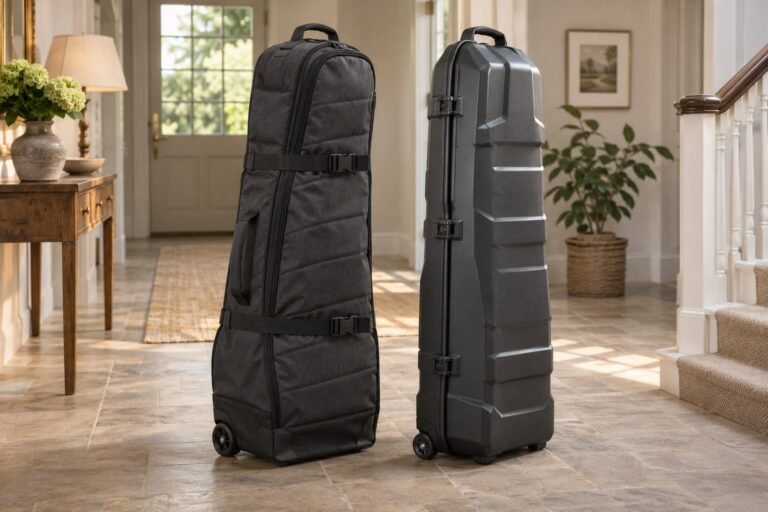
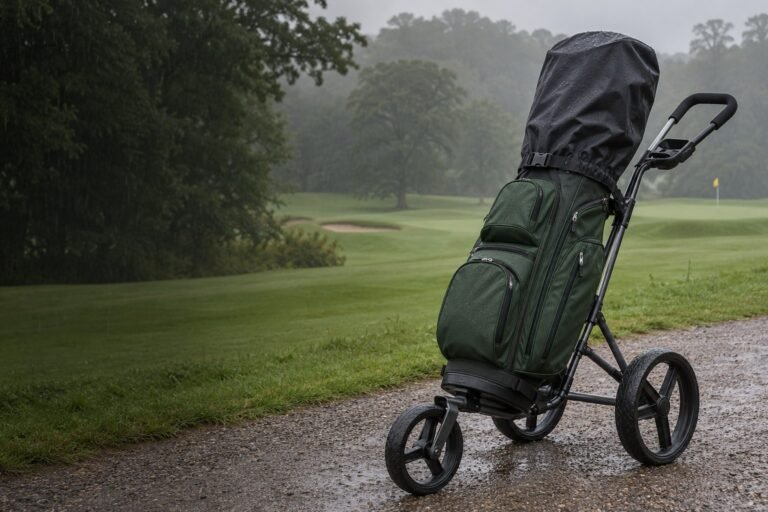
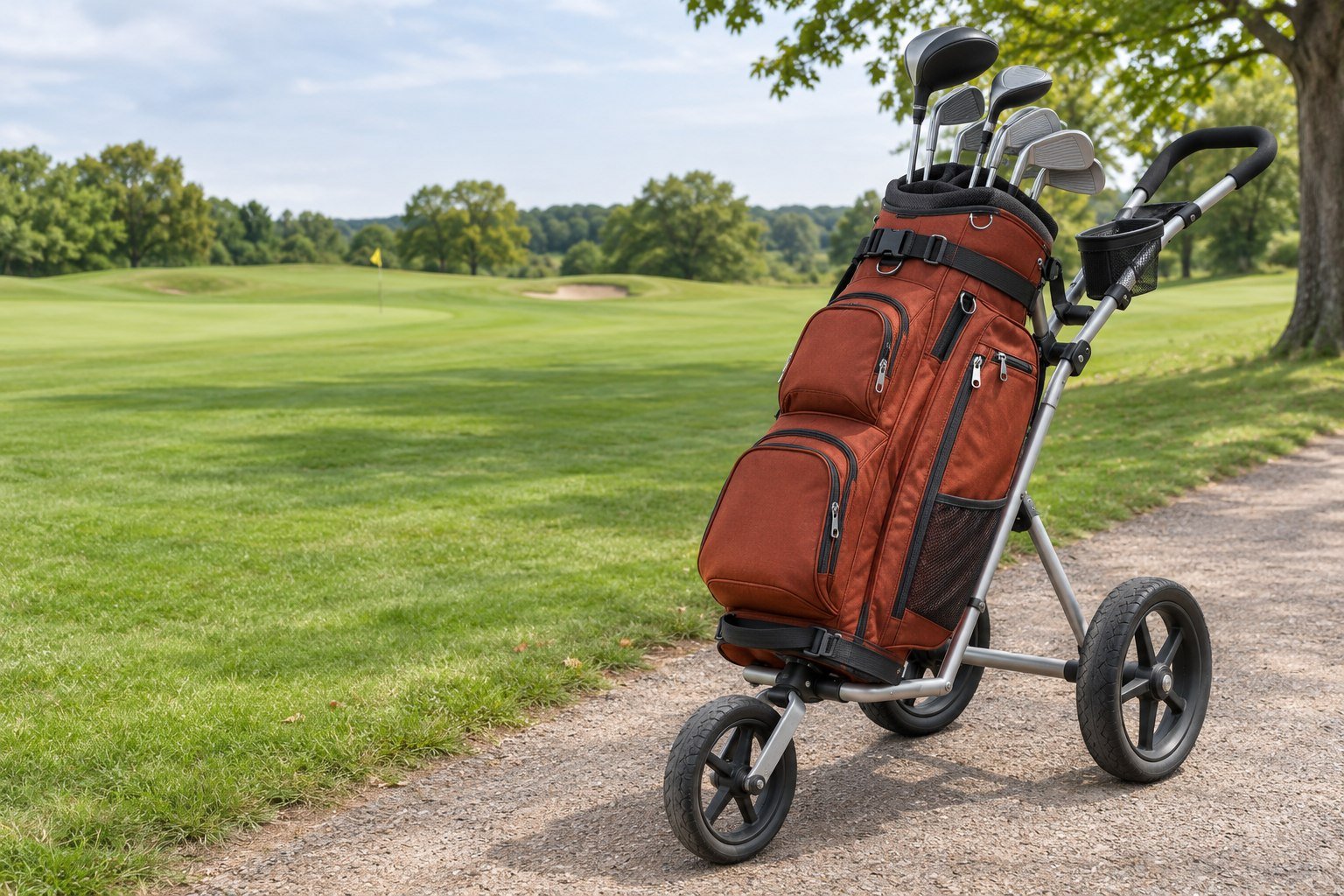
AI illustration of generic equipment. A practical trolley bag keeps everyday kit accessible. No named product or physical test is pictured.
The best layout is the one that lets you stop, reach what you need and keep moving without releasing the bag. Golf bags for push trolleys should be judged with your clubs and everyday kit inside, in the orientation your trolley actually requires.
Research-led guidance for UK golfers. Read how we assess golf equipment for the distinction between documented features and hands-on testing.
This guide contains affiliate links. If you buy through them, Taylor’s Trailblazing Golf may receive a commission at no extra cost to you.
Choose for the mix of pushing, carrying and range visits you really do.
Remove the actual item while the bag stays properly restrained.
Check your own clubs and putter in the fitted bag.
A moving bag, a heavy push and a trolley fault need different answers.
Choose golf bags for push trolleys by their everyday role
Begin with the round you play most often. If the bag lives on a trolley from the car park to the final green, accessible storage deserves more attention than a sophisticated carry harness. If you alternate between carrying and pushing, the harness and stand remain part of the buying decision.
Sun Mountain’s November 2026 push-cart guide highlights pocket access, a suitable base, strap routing and leg clearance as useful design features. Those are sensible questions to investigate. Its brand-specific recommendations do not establish that one divider count, bag direction or bag model suits every trolley.[1]
On a small screen, swipe inside the table to read every column.
| Your routine | Start by comparing | Do not overlook |
|---|---|---|
| Push almost every round | Cart bags with useful storage in the fitted position. | How you lift the packed bag into the car and where the hood opens. |
| Push some days, carry others | Hybrids or compatible stand bags with a usable harness. | Retracted legs on the trolley and actual comfort when carried. |
| Push rounds, practise from a stand | A trolley-oriented hybrid with a stand you will regularly use. | Whether the extra mechanism interferes with the trolley supports. |
| Keep a small spare carry bag | A dedicated main trolley bag plus the existing carry option. | The inconvenience of moving clubs and the space needed for two bags. |
This matrix is a way to set priorities, not a ranking of bag types. The right answer can be an ordinary cart bag, a hybrid, or the stand bag you already own. Rule out configurations that do not meet the manufacturers’ fitting instructions before comparing convenience.
Back to the start ↑Run through four ordinary stops during a round
Mount the bag correctly, fasten every required restraint and put your usual items in their intended pockets. Then rehearse four small jobs with the trolley parked securely on level ground: taking a ball, getting a drink, retrieving a rangefinder and finding a waterproof jacket.
Give each job one of three descriptions: easy; workable with a compromise; or obstructed. Write down the cause. “The jacket catches behind the upper strap” tells you more than “the pockets are poor”. A different packing position may help; a pocket permanently trapped against the frame may need a different bag layout.
Reach, remove, replace and close
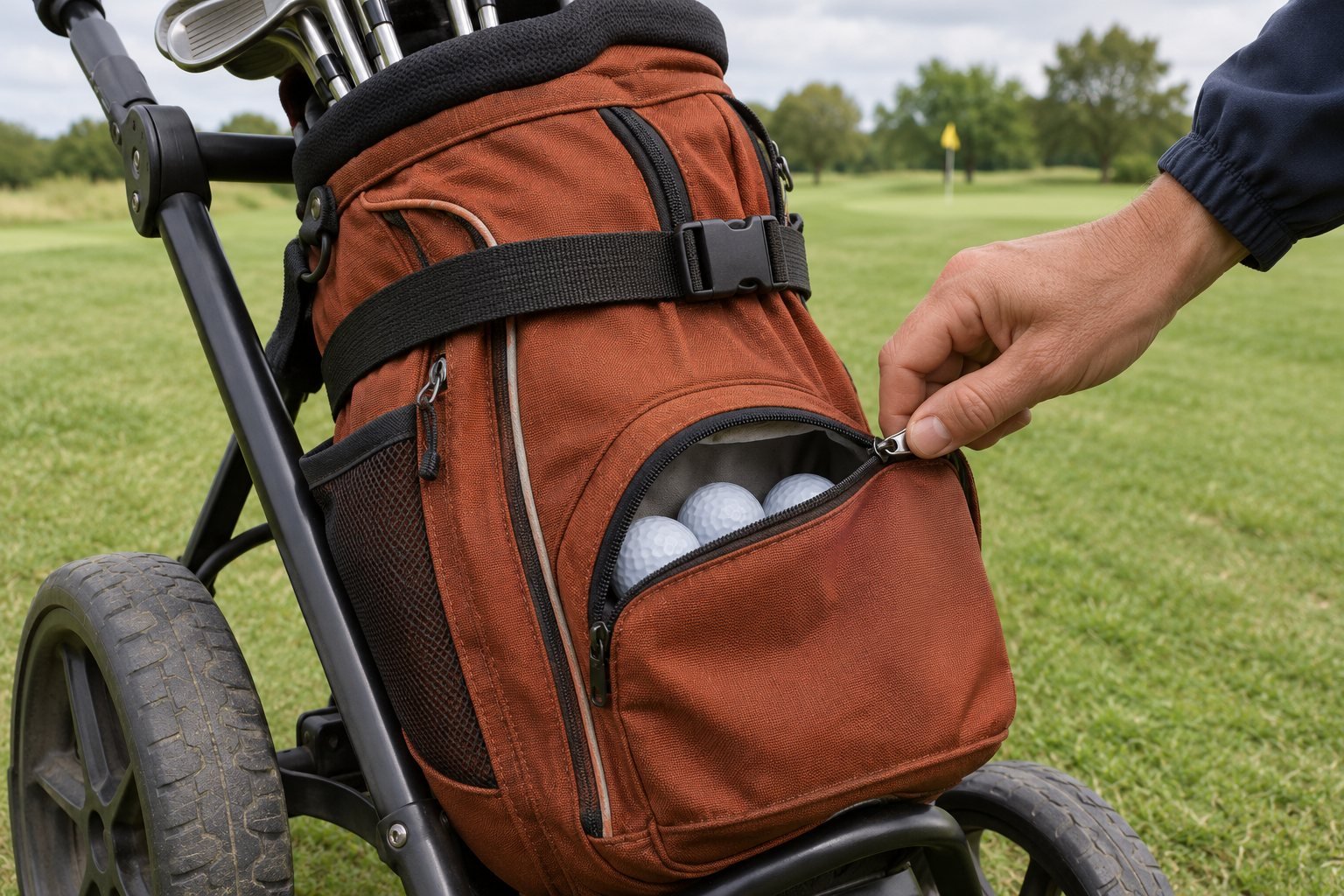
A zip that opens is only the first step. Can you remove the filled bottle without dragging the pocket against the restraint? Can the rangefinder go back into its case? Can the jacket be packed away again without leaving a zip strained or a sleeve hanging out? Check the whole action.
Do not make releasing the retaining strap part of every stop. If you must unfasten the bag repeatedly, identify why before accepting the pairing. Check whether a trolley-approved holder can provide a useful home for one item, but keep it clear of the handle, brake control and walking space.
Place occasional-use items in less convenient compartments and keep essentials in the pockets that work best. That is often enough to improve an existing setup. Avoid choosing a larger bag simply to recreate the same clutter with more room.
Back to the start ↑Check club access from your normal standing position
A photograph of an upright bag hides the way its top sits once it is inclined on a trolley. Stand behind and beside the handle as you normally would, then remove your putter, a short iron and the longest club. Use your own headcovers and grip sizes if you can.
Look for practical obstacles: a tall headcover concealing shorter clubs, a putter grip that catches, or an accessory that occupies the space through which the club must travel. A useful top layout gives you a clear route without forcing you to reach awkwardly across the handle.
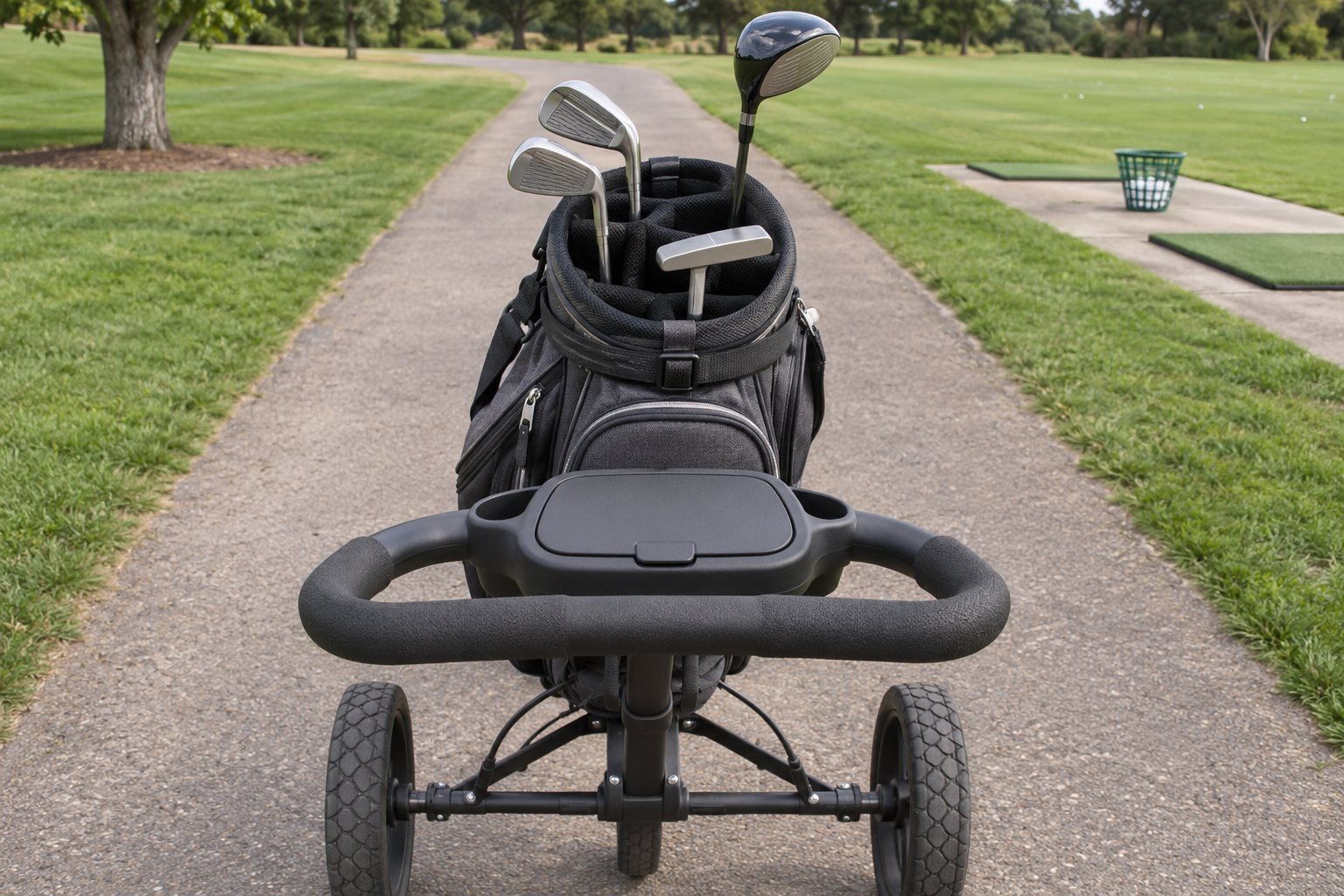
Follow the bag and trolley makers’ intended orientation. There is no need to copy an arrangement that works for someone else’s trolley. If a different approved club arrangement improves access, try it while the bag is stationary. Do not reverse the whole bag just to make one pocket convenient if that compromises its support or attachments.
Fourteen separate top openings are not a prerequisite for push-trolley use. The meaningful question is whether your own clubs can be organised and retrieved sensibly. The published guide to full-length dividers explains the separate issue of what happens below the top opening.
Repeat the reach check with the rain hood fitted. Its opening needs to work with the clubs and trolley in their normal positions, rather than only when the bag is lifted off.
Back to the start ↑Distinguish a moving bag from an awkward trolley
There are three different complaints to separate: the bag shifts within its supports; the loaded trolley is difficult to manoeuvre; or something on the trolley is not working properly. A new bag will not necessarily solve all three.
Clicgear’s support information acknowledges that some bag-bottom shapes do not fit its carts properly. It also treats a bag rubbing the front wheel as a problem requiring attention. Take either symptom seriously; do not assume that repeated rubbing is a harmless feature of walking with a trolley.[2]
- Inspect the setup while stationary. Confirm the bag is attached as instructed, the frame is properly assembled and loose items are clear of moving parts.
- Pack a normal round, within any model-specific limits. Remove forgotten surplus items, but retain the water and clothing you actually need.
- In a clear, level area, make a short, slow walk using the trolley’s prescribed handling method. Stop normally and inspect whether anything has moved or started to rub.
- Record the observation. Repack a misplaced item if appropriate; ask for support if restraints will not hold, the base will not sit correctly or the trolley behaves abnormally.
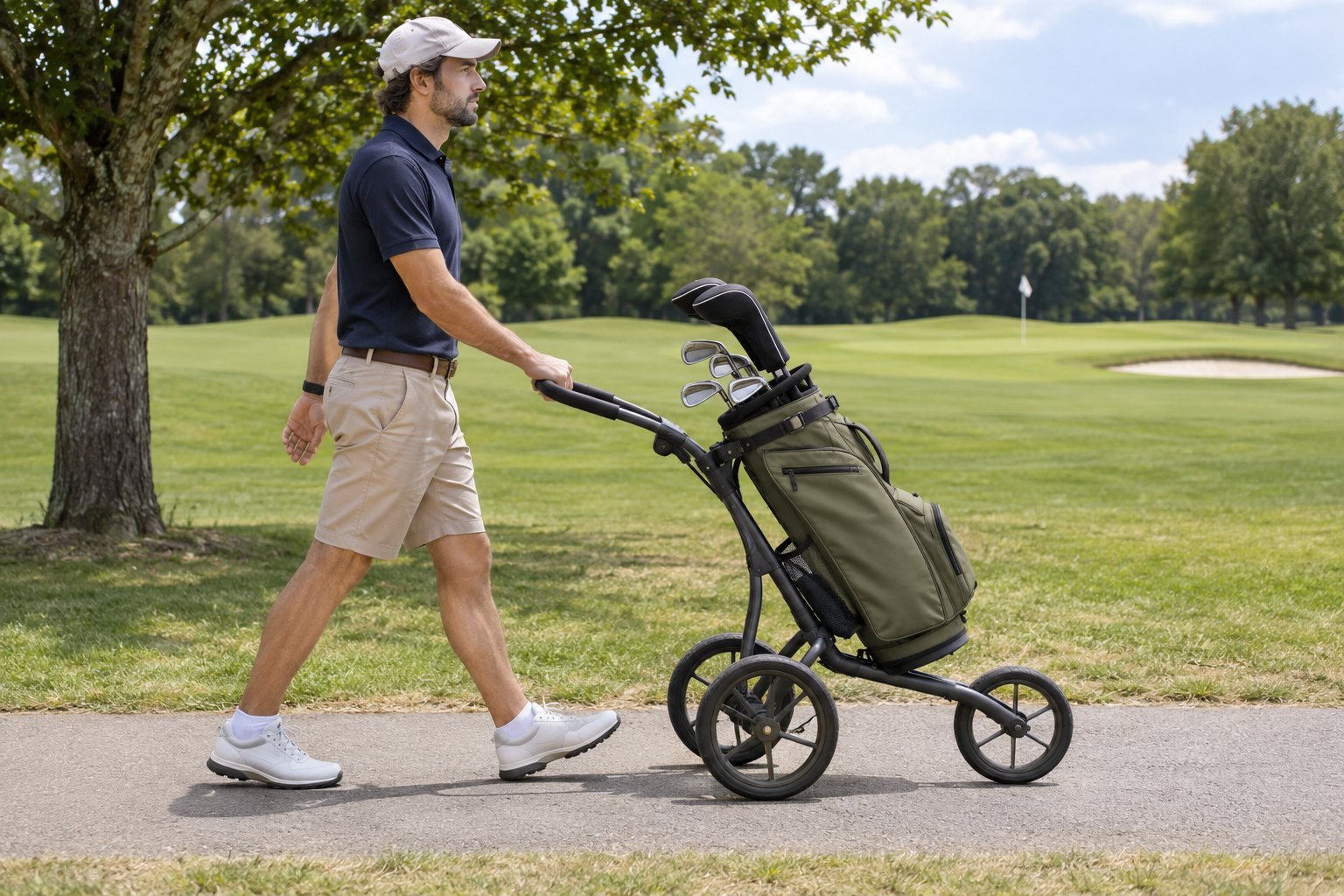
This is a modest usability check, not a stability certification. Do not deliberately tip the trolley, let it run downhill or add weight to see whether it becomes harder to overturn. Follow the exact brake instructions too: Clicgear’s Model 4.0 guide says to apply its brake when parking and warns that forcing the front wheel to turn with the brake engaged can damage the brake components.[3]
If the push feels harder after loading, consider the actual contents and the trolley’s condition before blaming the bag’s shape. Persistent handling difficulty needs a suitable equipment or route decision, not a claim that one bag can make every terrain manageable.
Back to the start ↑Make a hybrid earn its extra role
A hybrid can make sense when you genuinely alternate between a trolley and carrying, or regularly use a stand at the range. The compromise is worthwhile only if both arrangements work for you. “Hybrid” describes an intended combination of uses; it is not a fit certificate.
BIG MAX describes a trolley-compatible base and leg-lock system on the Dri Lite Hybrid Plus. That gives you two specific features to inspect on a candidate bag: how its base sits and whether its intended leg-retention arrangement keeps the stand clear.[4]
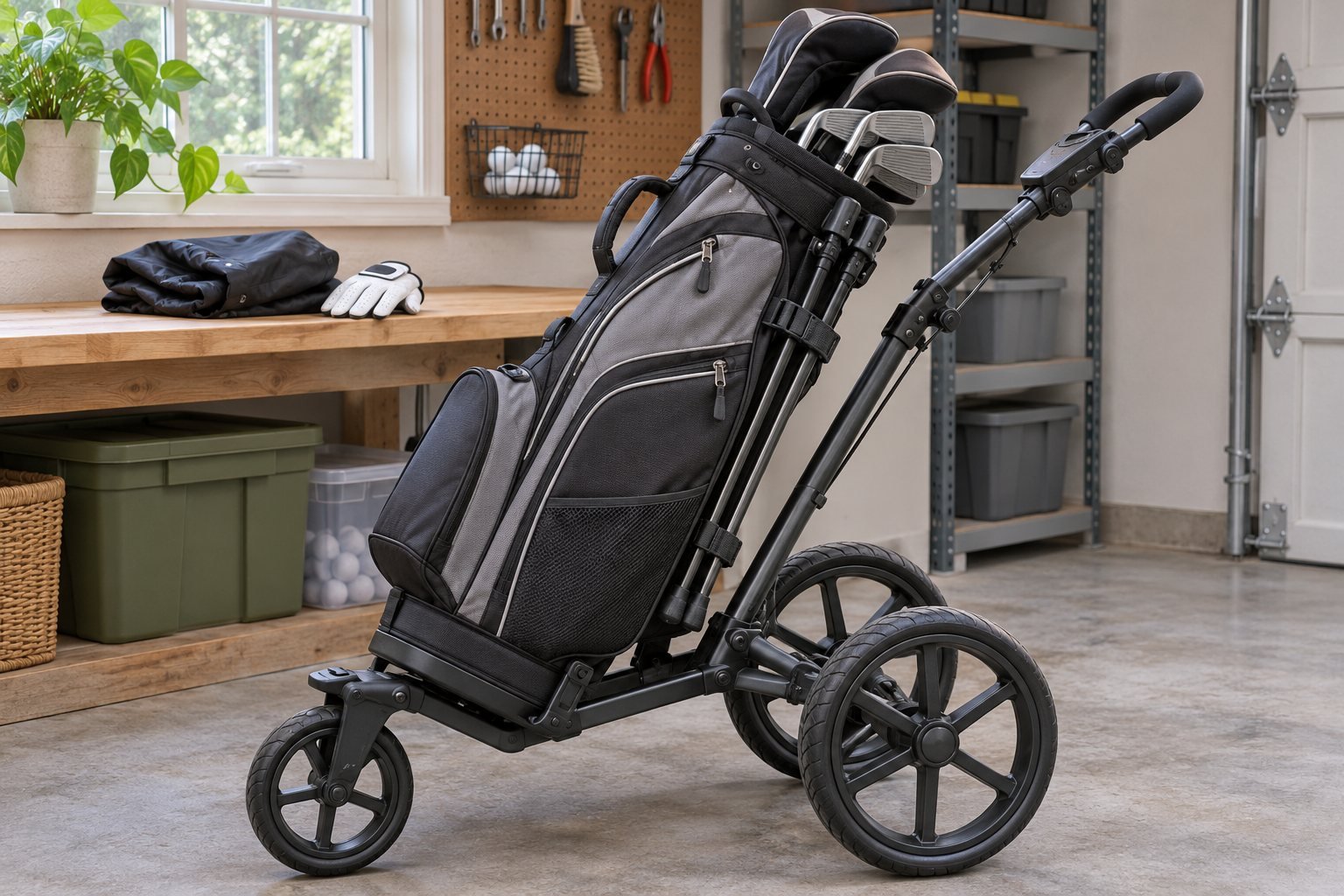
Check the actual folded legs and mechanism on your trolley. They should not be forced against a support or used as a convenient load-bearing surface. Use the maker’s approved retention method rather than tying the legs together with whatever is available.
If your existing stand bag is otherwise suitable, an approved support accessory may deserve consideration before replacing it. Clicgear’s Bag Cozy is specifically described as a stand-bag support accessory and lists compatible cart models. Confirm the version, the particular bag and the intended installation with the supplier; it is not evidence that any adapter will fix any fit.[8]
Then check the carrying role separately. Do you use the stand enough to justify it? Is the packed bag manageable off the trolley? The carry-harness fitting guide is useful if carrying is a regular part of your week. If you never carry and rarely use a stand, a straightforward cart bag may be the simpler choice.
Back to the start ↑Two layouts worth inspecting, for different reasons
Choose a shortlist from the job you need to improve. The following are documented examples to inspect with your trolley, rather than models this site has tested or ranked.
For a dedicated trolley layout: PING Traverse
PING’s current Traverse specification includes tiered pocket organisation and a cart-strap channel. Those features make it a relevant candidate when access is your main complaint. The Black version is listed by Clubhouse Golf as the Traverse 244. View the Traverse 244 Black at Clubhouse Golf.[6][7]
Bring the four ordinary pocket tasks to that comparison. A documented channel is useful, but its location still needs to work with your trolley’s strap and support height.
For mixed carrying and trolley use: Callaway Fairway 14 HD
The official UK Fairway 14 HD listing includes the LOWRIDER LANDING ZONE, an ANAMATIC carrying-strap system and a FLEX POD base. These are manufacturer-described features for a hybrid role; they do not establish personal carrying comfort or compatibility with your specific trolley. View the Fairway 14 HD at Callaway UK.[5]
Check the exact version being supplied, since similar names can span several generations. Compare how its stand clears the supports as carefully as how its pockets open. Neither example is a reason to replace a bag that already works well.
Product pages were checked on 23 November 2026. No current price or stock guarantee is made. Confirm availability, the exact variant and return arrangements before buying, especially if you cannot try the bag on your trolley first.
Back to the start ↑Keep the setup that asks least of you during the round
After the checks, make a short decision record: the trolley and bag models, your normal load, any obstructed task and the change that would solve it. Keep this practical. You are choosing equipment for a walking round, not collecting feature labels.
On a small screen, swipe inside the table to read every column.
| What you find | Sensible next step |
|---|---|
| Secure fit and easy everyday access | Keep the bag. Extra pockets or dividers alone do not justify replacing it. |
| One poorly placed item | Try a better intended compartment or a compatible trolley accessory. |
| Worn restraint or damaged fitting | Obtain the correct repair or replacement part; do not conceal damage with extra tension. |
| Persistent obstruction or incompatible stand/base | Compare another layout with the actual trolley before buying. |
Revisit the arrangement when your load changes substantially, such as adding winter clothing or a different putter. You do not need a new bag for each season, but you should know whether the same pockets remain useful.
The strongest choice is the one that stays correctly attached, leaves essential items accessible and remains manageable in normal use. Browse the wider Golf Bags guides for the individual features that matter to you, and keep the exact trolley instructions alongside any buying advice.
Back to the start ↑Questions before you decide
Will a bag advertised for a three-wheel trolley fit a four-wheel model?
Wheel count does not describe the bag supports, strap routing or clearance. Check the exact trolley model and bag together. A successful pairing with one three-wheel or four-wheel design does not establish compatibility with the others.
Can I leave the bag attached when folding the trolley?
Follow the folding instructions for the specific trolley. Do not assume it is designed to fold while loaded or copy another model’s storage routine. Remove anything the instructions require before releasing frame locks.
Is a magnetic pocket automatically easier to use on a push trolley?
Only if its position, opening and clearance work once the bag is secured. Try retrieving the actual item and closing the pocket again. The closure type alone does not tell you whether a strap, frame tube or full neighbouring pocket gets in the way.
Sources and editorial checks
Manufacturer specifications and instructions inform this guide. The comparison and checklists are editorial decision aids, not results of hands-on product testing.
- Sun Mountain — Best Golf Bags for Push Carts: What Fits, What Does NotManufacturer article dated 6 November 2026; used for design features, not brand rankings or universal orientation/divider requirements. Checked 23 November 2026.
- Clicgear Canada — Cart Q&ABag-support discussion acknowledges base-shape exceptions and wheel-rubbing issues. Repair steps and improvised spacing advice not reproduced. Checked 23 November 2026.
- Clicgear — Model 4.0 user guideOfficial resource-centre PDF, visually inspected. Model-specific instructions on parking and avoiding front-wheel rotation with the brake engaged. Checked 23 November 2026.
- BIG MAX UK — Dri Lite Hybrid PlusDocumented hybrid base and leg-lock features only. Conflicting weather-protection wording deliberately not used. Checked 23 November 2026.
- Callaway UK — Fairway 14 HD, ceu253688Live official UK product destination and documented LOWRIDER LANDING ZONE, ANAMATIC and FLEX POD features. Checked 23 November 2026.
- PING Europe — TraverseManufacturer description of tiered organisation and cart-strap channel. Checked 23 November 2026.
- Clubhouse Golf — PING Traverse 244 BlackVerified UK listing; no price, availability or fit guarantee. Checked 23 November 2026.
- Clicgear — Bag CozyOfficial stand-bag accessory description and compatible-model list; actual pairing still requires checking. Checked 23 November 2026.
Illustrations in this article were created for Taylor’s Trailblazing Golf. Third-party photographs, where used, are credited beside the image or in the source list.