Golf Bag Storage at Home: Damp, Shape and Club Protection
Give the bag a dry, supported place to live between rounds, with enough room to look after the clubs inside.
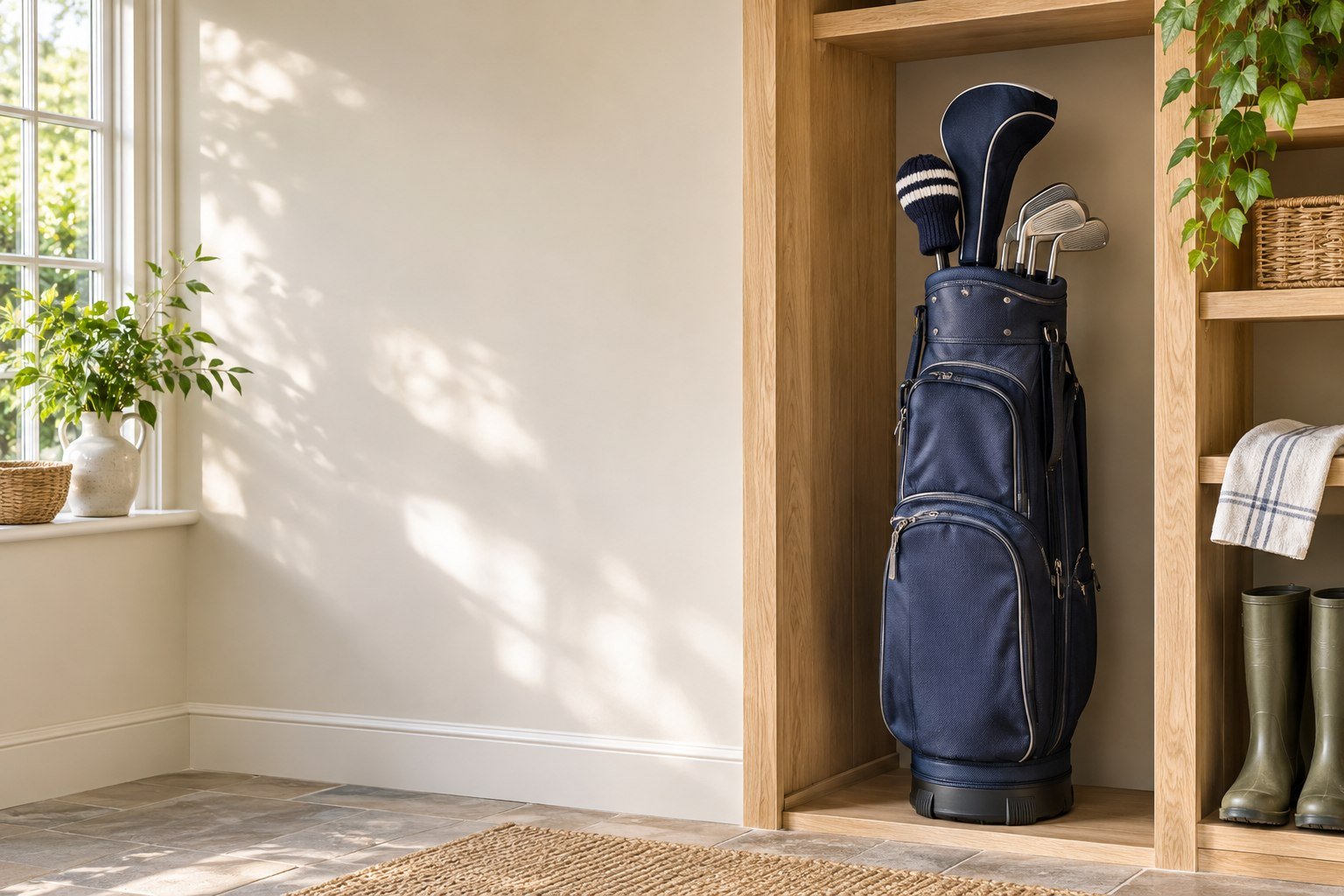
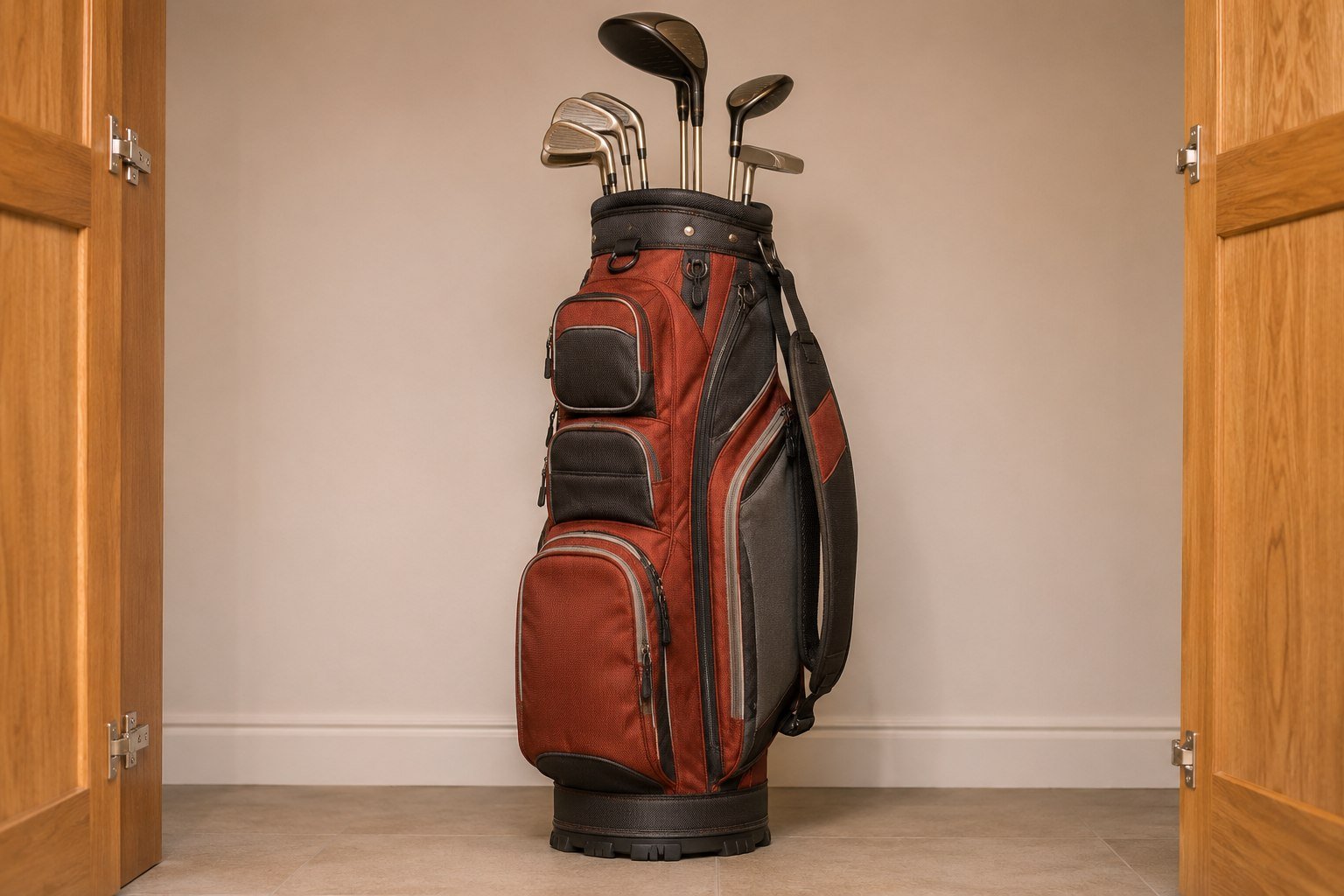
A dry, accessible space makes routine bag care easier. AI-created category illustrations show generic equipment, not the named products or a product test.
Golf bag storage at home works best when putting the kit away is as straightforward as taking it out. A rack squeezed behind the lawnmower may look tidy, but it is a poor solution if you cannot open the pockets, see a leak or remove a club without knocking it against a shelf.
Start with the space you already have. Golf Pride recommends a cool, dry location away from sunlight and heat, with the bag stabilised against tipping. [1] The practical question is whether your chosen corner offers those conditions throughout the time the bag will stay there.
This guide contains affiliate links. If you buy through them, Taylor’s Trailblazing Golf may receive a commission at no extra cost to you.
Choose the storage conditions before buying a rack or cover.
Separate the bag, clubs, headcovers and clothing so each can dry.
Support the base and keep shelves or stored boxes off the bag.
Buy an organiser only when it fixes a specific support or space problem.
Golf bag storage at home: choose the space first
Assess the location on a day when it is actually being used. Open the cupboard after a wet round. Look at the garage floor after rain. Check whether a utility room becomes crowded with drying laundry. A room label tells you less than what happens in that particular space.
VESSEL advises dry, climate-controlled storage and warns against a humid garage or hot car boot. [2] That does not make every garage unsuitable: it makes dryness and temperature control the checks to resolve.
Scroll the table horizontally on a small screen to see every column.
| Possible location | What to check | Decision |
|---|---|---|
| Indoor cupboard or spare-room corner | Can a dry bag stand securely with clearance above the longest club? Can you reach pockets without moving furniture? | A useful option when access and ventilation remain practical. Dry wet kit elsewhere first. |
| Garage or utility area | Look for leaks, damp flooring, condensation and nearby heat sources. Check that bicycles and tools cannot fall against the bag. | Use only if the actual conditions and protection are suitable. A storage rack cannot repair a damp room. |
| Under-stairs space | Measure the usable height where the bag will sit, not the tallest point elsewhere in the cupboard. | Do a careful access trial with your bag before buying shelving. |
| Shed, loft or car boot | Consider exposure to moisture and large temperature changes, as well as access and security. | Prefer another location when you cannot keep conditions appropriate. Treat the car as transport, not the default home for the kit. |
This is an editorial space-assessment checklist, not a survey of your building. Follow the care instructions for your own bag and clubs.
BIG MAX specifically warns about equipment left in vehicles during extreme heat. Its guidance favours a cool, dry, ventilated location away from direct sun and large temperature swings. [3] There is no need to wait for visible damage before choosing a better storage place.
Back to guide contents ↑Use a two-stage routine after a wet round
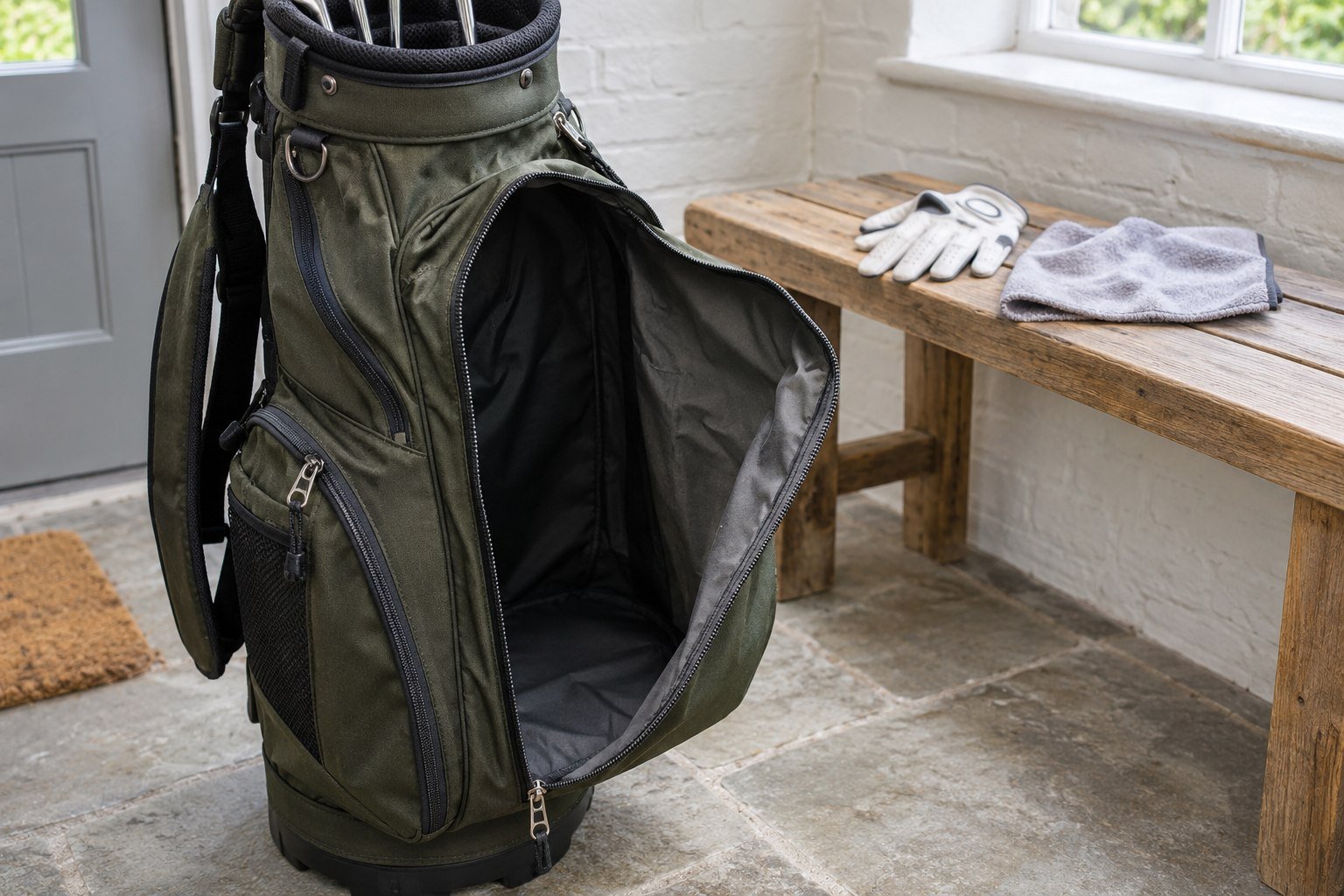
Give wet kit a temporary drying place before moving it to its normal storage position. That removes the temptation to shut everything into a cupboard simply because the rest of the room needs to look tidy.
Sun Mountain recommends removing excess surface moisture with a towel, opening pockets and allowing the bag to dry completely in a ventilated place away from direct sun and heat sources. Avoid soaking the padding during cleaning. [4]
- Take out the towel, rainwear, gloves, food and drink containers. Deal with these separately according to their own care labels.
- Remove clubs and damp headcovers. Put the clubs somewhere supported, where they cannot slide or fall while you work.
- Check accessible pocket corners and the base. Empty loose debris rather than pushing it deeper into the lining.
- Clean only as the maker allows, then let the different items dry before repacking.
- Recheck the bag before closing it away. If a pocket or lining still feels damp, it needs more drying time.
Use the condition of the kit as your finishing check. A universal “leave it overnight” promise is unhelpful because a lightly wet outer panel and saturated padding are different starting points.
Do not use a heater as a shortcut
Move the drying kit away from radiators, fan heaters and strong direct sunlight. Follow the maker’s instructions rather than applying heat to hurry the job. [4]
Protect the clubs before they go back in
Drying the outside of the bag is only half the job. Golf Pride advises drying grips thoroughly and storing clubs away from heat and sunlight. [1] Check the grip ends and the areas that have been sitting inside the bag, as well as the clubheads you can see easily.
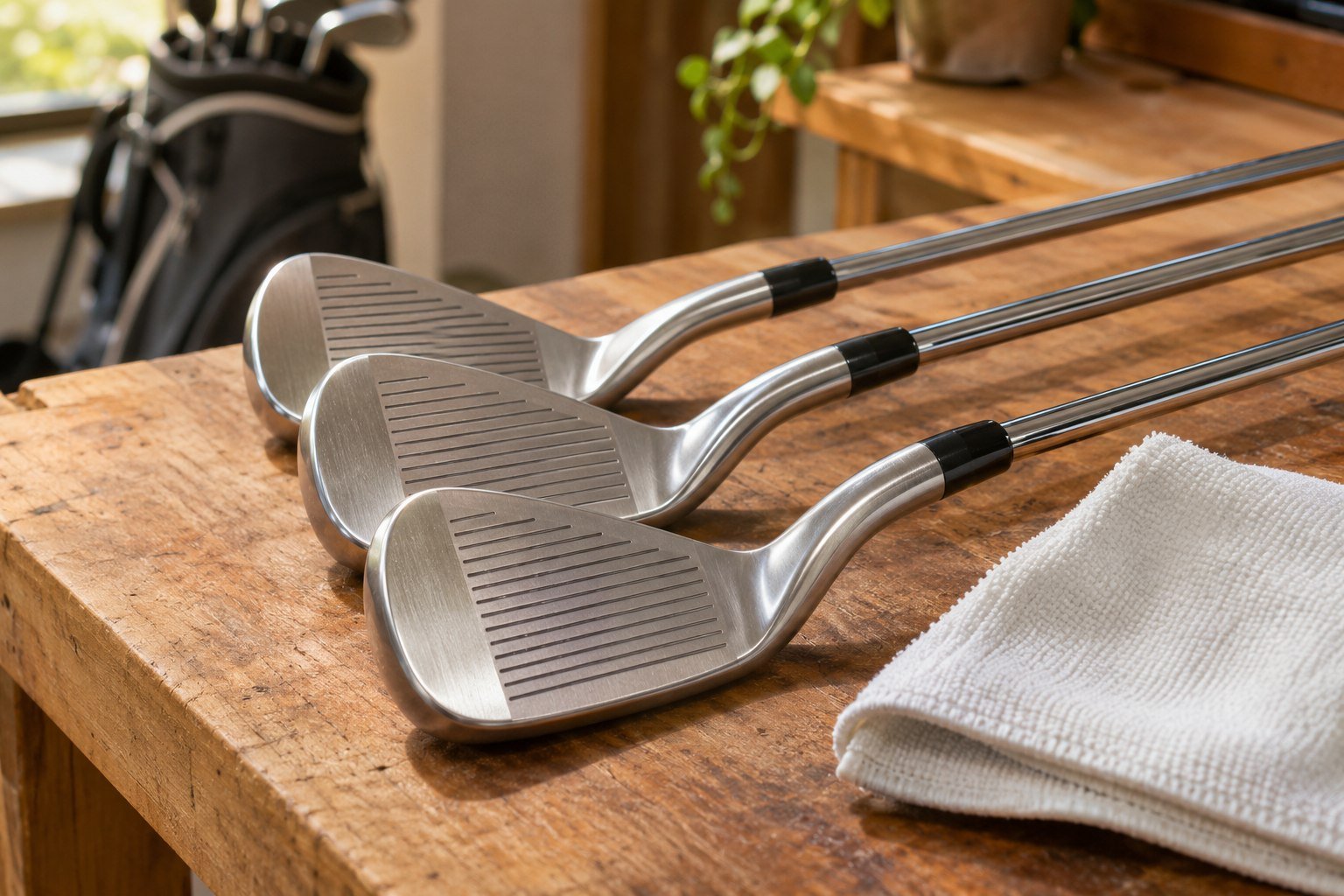
Callaway’s care advice for its wedges says to clean and dry them before off-season storage or after damp use. It also explains that some unplated finishes are intended to develop rust. [5] A change in the appearance of a raw wedge is therefore a different question from an unexplained mark on a shaft or damage to a joint.
Use the instructions for the actual club finish. Do not apply a general household rust remover, abrasive treatment or lubricant across every component simply because it worked on another piece of equipment. If you are unsure about corrosion, a loose head or damaged shaft, ask the manufacturer or a qualified club repairer before using the club again.
When everything is dry, return clubs without forcing grips into tight spaces. If the bag regularly catches the same club, check whether the problem is the internal arrangement rather than the storage position. Our guide to checking full-length divider claims and grip clearance explains that separate fit decision.
Support the bag without squeezing it into shape
A tidy-looking storage arrangement should not depend on a shelf pressing into the collar, a door compressing a pocket or a strap taking the bag’s weight indefinitely. VESSEL specifically advises against hanging a bag from its straps for long periods and against overloading its pockets. [2]
For a conventional bag that is designed to stand upright, start with a firm, level base and suitable support against falling. A soft pencil bag may need a different arrangement, so check its construction rather than forcing the same solution onto every bag.
Scroll the table horizontally on a small screen to see every column.
| Check | How to assess it | What would make the fit unsuitable? |
|---|---|---|
| Height | Measure with your longest club and normal headcover in place; include the room needed to lift it out. | The shelf above clears the bag but catches the club during removal. |
| Width and depth | Use the loaded bag with ordinary pocket contents. Include any support frame. | The door or retaining bar presses on pockets, zips or stand hardware. |
| Base support | Compare the base shape with the support surface and the rack maker’s instructions. | The bag balances on an edge or an unsupported section. |
| Access | Try opening the main pocket, removing the putter and lifting the bag using its intended handle. | Every action requires dragging the bag sideways or levering clubs against a shelf. |
| Installation and load | Check the organiser’s load rating and any required wall fixings against its own instructions. | The rating is unclear or the proposed mounting surface cannot support the specified installation. |
Try the footprint with removable floor markers before ordering. Leave useful access space rather than buying the largest organiser that technically fits. Keep heavy household items off the bag, and keep the storage route clear of children, pets and anything likely to knock the clubs.
Match cleaning to the material
Titleist’s care guidance calls for spot cleaning bag fabric with water and mild detergent, and gently wiping leather trim with a damp cloth. [6] That is a useful reminder that different parts of one bag may need different treatment.
Read the bag’s own label before applying leather conditioner, waterproofing spray or a general cleaner. “Leather look”, coated fabric and genuine leather are not interchangeable care categories. Where a product is approved, follow its directions and check an inconspicuous area first.
Do not keep adding fragrance to a bag that smells damp. Empty it and investigate accessible linings, seams and pockets. Sun Mountain identifies persistent odour and continuing mould problems as reasons to consider whether the bag has reached the point where cleaning is insufficient. [4] Ask the maker about suitable treatment; do not assume that a cosmetic improvement proves hidden padding is clean and dry.
If the room repeatedly makes otherwise dry equipment damp, solve the storage conditions as well. A cover or moisture-absorbing product should not be used to conceal an unresolved leak or persistent dampness.
Back to guide contents ↑Prepare for a longer break from golf
Before leaving the bag unused, take a simple inventory. Remove things that have no useful reason to stay inside it and record any repair you want completed before the next round. Golf Pride’s off-season guidance includes removing liquids and snacks and checking equipment condition. [1]
- Empty drinks bottles, food wrappers and wet-weather leftovers.
- Inspect the bag’s visible seams, handles, zips and stand mechanism without dismantling them.
- Photograph any existing damage for your own comparison and keep purchase or service details somewhere accessible.
- Check the separate storage instructions for a rangefinder, GPS device or other electronics. A golf-bag care guide does not replace their battery instructions.
- Choose an occasional check that fits your routine: look for a leak, new odour, compressed pocket or changed bag position.
A dust cover can be useful for already dry equipment when the bag maker permits it. Keep the arrangement easy to inspect. Before playing again, check the actual bag and clubs rather than assuming that undisturbed storage means everything remains ready to use.

Decide what, if anything, needs buying
The best first purchase may be no purchase. Moving the bag to a better corner, separating wet kit and clearing an access route can solve a storage problem without replacing usable equipment.
Scroll the table horizontally on a small screen to see every column.
| What you have found | Worth considering | Avoid paying for |
|---|---|---|
| A sound bag that keeps falling over | A compatible support or organiser with a suitable load rating and base. | A new golf bag before checking whether the storage arrangement is the cause. |
| A bag that stays damp in its cupboard | A better drying routine and a suitable storage location. | A cosmetic cover presented as a cure for moisture. |
| One faulty zip or replaceable strap | A manufacturer-approved repair quote, including parts and carriage. | A whole replacement before learning whether a sensible repair is available. |
| A failed base, unstable stand or extensive damage | Maker assessment and a replacement comparison if a reliable repair is unavailable. | A rack that hides a structural problem the bag will still have on the course. |
If replacement is warranted, check carrying or trolley fit, access and the dimensions you have just measured. You can Browse golf bags at Clubhouse Golf. This leads to the retailer’s bag range, not a recommendation that a particular model will fit your cupboard. The range was checked on 23 November 2026; compare the exact bag and current terms before buying. [7]
Back to guide contents ↑Make the storage routine easy to repeat
Choose one dry storage position and one practical place for wet kit to dry first. Support the bag properly, keep its pockets accessible and allow room to remove the longest club without a squeeze. Those decisions matter more than the number of shelves on an organiser.
Keep the current bag when it is sound and the storage problem can be corrected. Buy support when it fixes a specific fit problem, and consider replacement when the bag itself cannot reliably do its job. A better home for the equipment should make the next round easier to prepare for.
Back to guide contents ↑Sources
- Golf Pride — Grip Care and end-of-season storage
Grip drying, cool dry storage, bag stability and removal of liquids and snacks. - VESSEL — The Complete Guide to Golf Bag Care
Storage conditions, avoiding prolonged strap suspension and excess pocket loads. - BIG MAX — Recommendation for protecting golf equipment from extreme heat
Manufacturer guidance about vehicles, direct sun and storage conditions. - Sun Mountain — How to Clean a Golf Bag: Steps, Materials and Tips
Drying, care boundaries and persistent odour or damage; dated 24 March 2026. - Callaway — Customer service: wedge finish and storage care
Manufacturer advice on cleaning and drying wedges, including the distinction for raw finishes. - Titleist — Product Care Instructions
Golf-bag fabric and leather-trim cleaning guidance. - Clubhouse Golf — Golf Bags & Luggage
UK retailer category checked for the conditional replacement link; no price or availability promise.
Illustrations in this article were created for Taylor’s Trailblazing Golf. Third-party photographs, where used, are credited beside the image or in the source list.