Golf Travel Bag Weight Limits: Packing Without Overload
Start with the allowance you have booked, weigh the whole travelling bag and leave yourself room to repack.
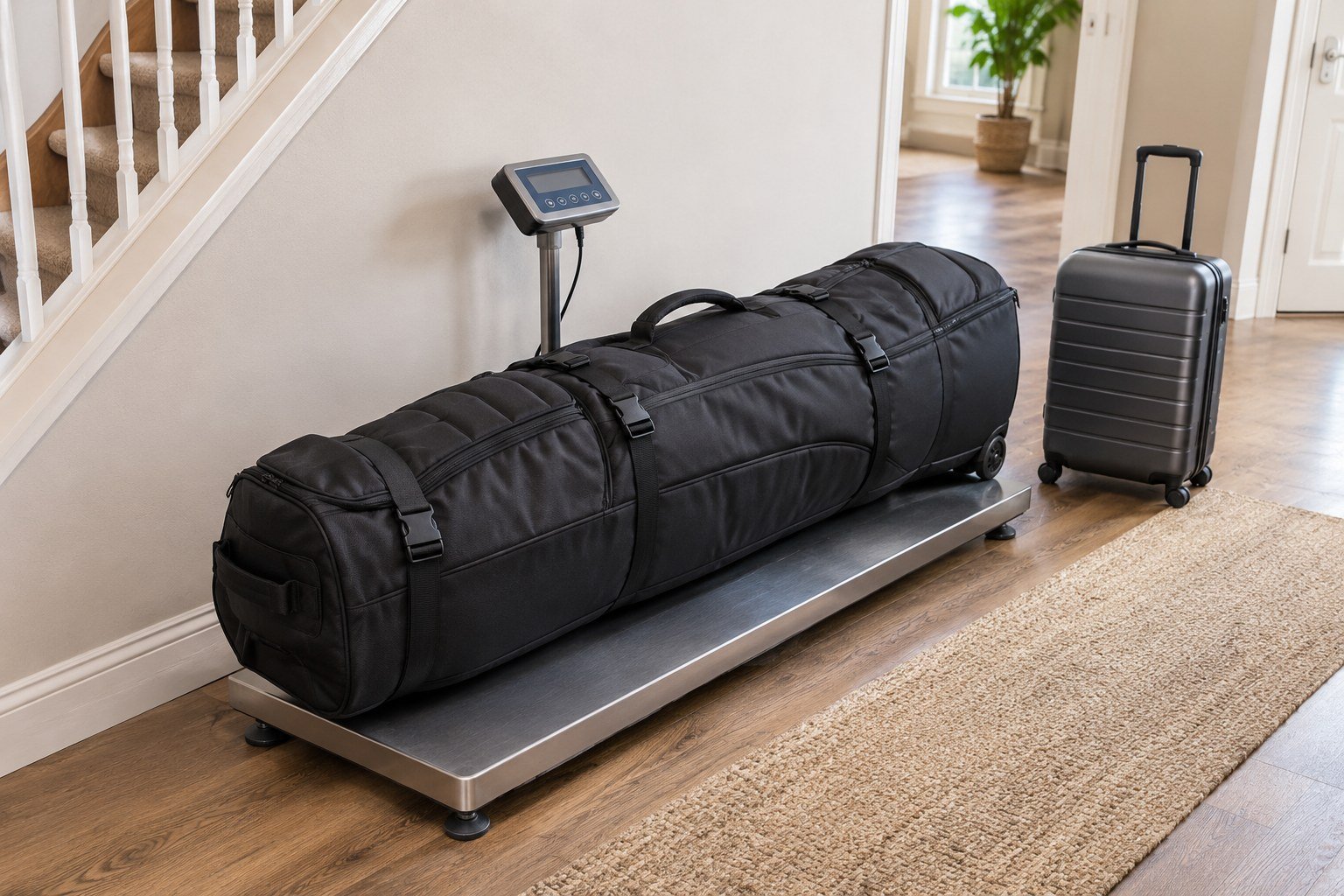
AI illustration of weighing the complete travelling item; no measured result is represented.
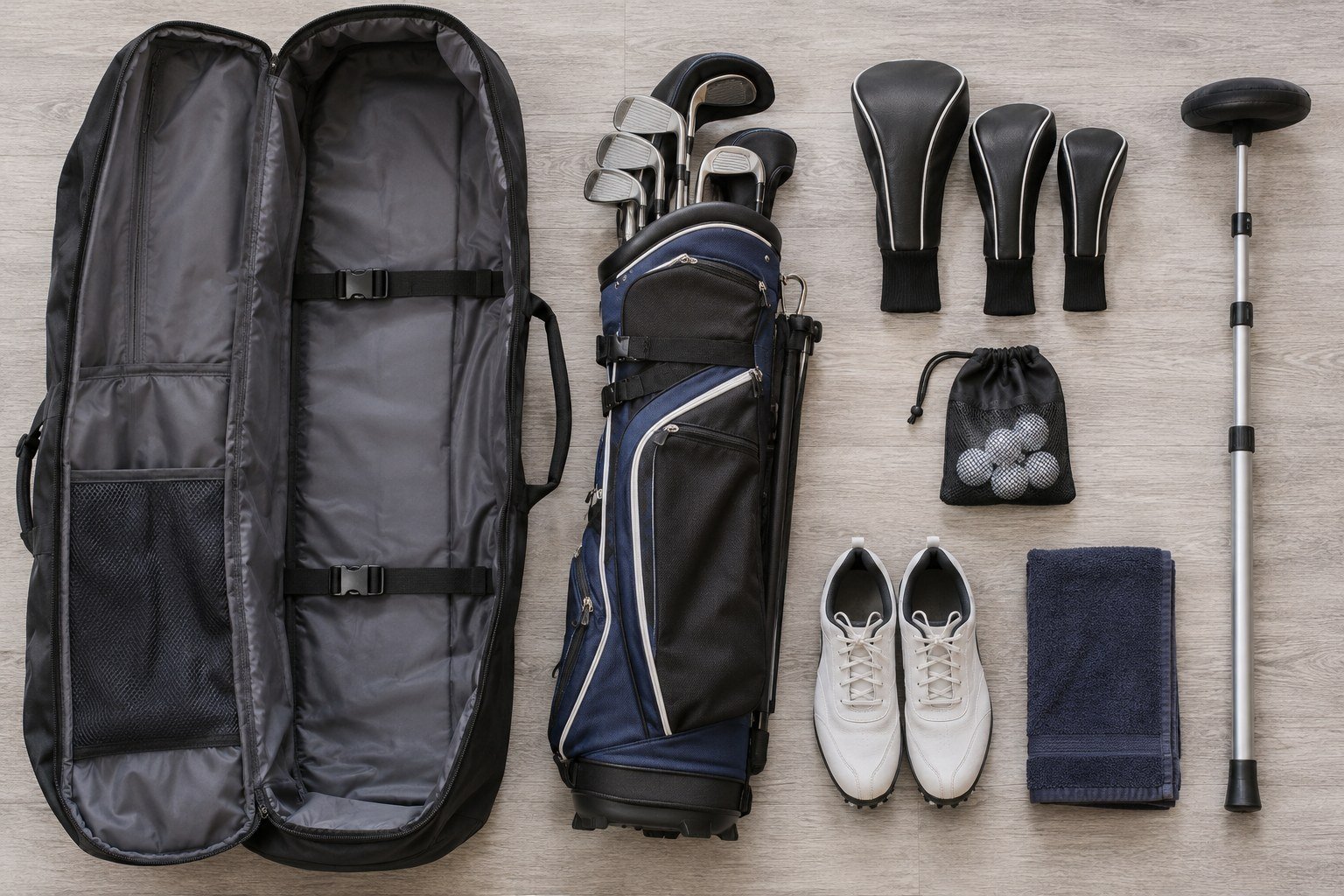
Golf travel bag weight limits apply to the item you hand over at bag drop, so the outer cover, playing bag, clubs, padding and everything hidden in the pockets belong in the calculation. Weighing the clubs on their own leaves out much of the problem.
The other trap is choosing the wrong limit. A golf-equipment allowance, an ordinary checked bag and an airline’s absolute handling ceiling can be different things. This guide puts the published airline rules alongside a practical packing worksheet, then shows where to remove weight without casually stripping away protection.
This is a research-led guide. How we assess golf equipment explains the evidence behind our recommendations.
This guide contains affiliate links. If you buy through them, Taylor’s Trailblazing Golf may earn a commission at no extra cost to you.
The cover and playing bag count alongside the clubs and accessories.
A general maximum weight does not increase a golf-equipment purchase.
Leave room for a different scale or a changed return load; it is not airline tolerance.
Which golf travel bag weight limit applies?
The table summarises official public information checked on 23 November 2026. Use it to identify the rule to confirm, then check the allowance attached to your own booking. It does not promise acceptance on a future date, a connecting airline or a different fare.
| Airline | Published golf arrangement | Check before packing |
|---|---|---|
| easyJet | Golf clubs are classed as small sports equipment, with a 20kg maximum.[1] | Add the correct sports item. Its weight cannot be pooled with purchased hold luggage. |
| Jet2 | The published maximum for a golf bag is 22kg; golf carriage is added for a charge.[2] | Confirm that the sports item has been booked and that the transfer can carry it. |
| Ryanair | Golf clubs use the sports-equipment category with a 20kg allowance. The help page describes per-kilo excess charges above that allowance.[3] | Do not substitute an ordinary checked-bag purchase or assume extra weight is free. |
| British Airways | A suitably protected golf bag can count as an item of checked baggage. The applicable weight depends on your ticket and entitlement; many economy allowances are 23kg.[4][5] | Check your booking, bag count and any connecting operator. A fare without hold baggage does not include the golf bag automatically. |
Ryanair’s wording shows why “allowance” and “absolute limit” should not be used carelessly. Its sports page describes excess-weight charging, while its general baggage guidance sets a 32kg individual-item ceiling.[3][6] That ceiling is not a 32kg golf allowance. Ask about any overweight plan in advance rather than arriving with a bag packed to the general ceiling.
Weight is only one acceptance check. Your packed dimensions, type of contents, protective packaging and any notification requirement must also comply. Buying more ordinary luggage does not, by itself, answer those questions.
Back to top ↑Build a weight budget before adding the extras
Make a short inventory with measured weights. You can weigh groups of items rather than every tee separately, but keep the outer cover and golf bag as separate lines. That makes it easier to see whether a genuine equipment change would help.
The example below is illustrative. These are chosen planning figures, not measurements of a particular golfer’s kit or a claimed average. Replace every line with your own weights.
| Part of the travelling load | Example weight | Your check |
|---|---|---|
| Outer travel cover | 4.1kg | Weigh it empty, including fitted straps and locks. |
| Playing bag | 3.2kg | Empty the pockets before recording this line. |
| Clubs | 6.4kg | Use the exact set you will take. |
| Headcovers, support and padding | 1.0kg | Include the protection that will actually travel. |
| Golf shoes | 1.0kg | Include their pouch if packed here and permitted. |
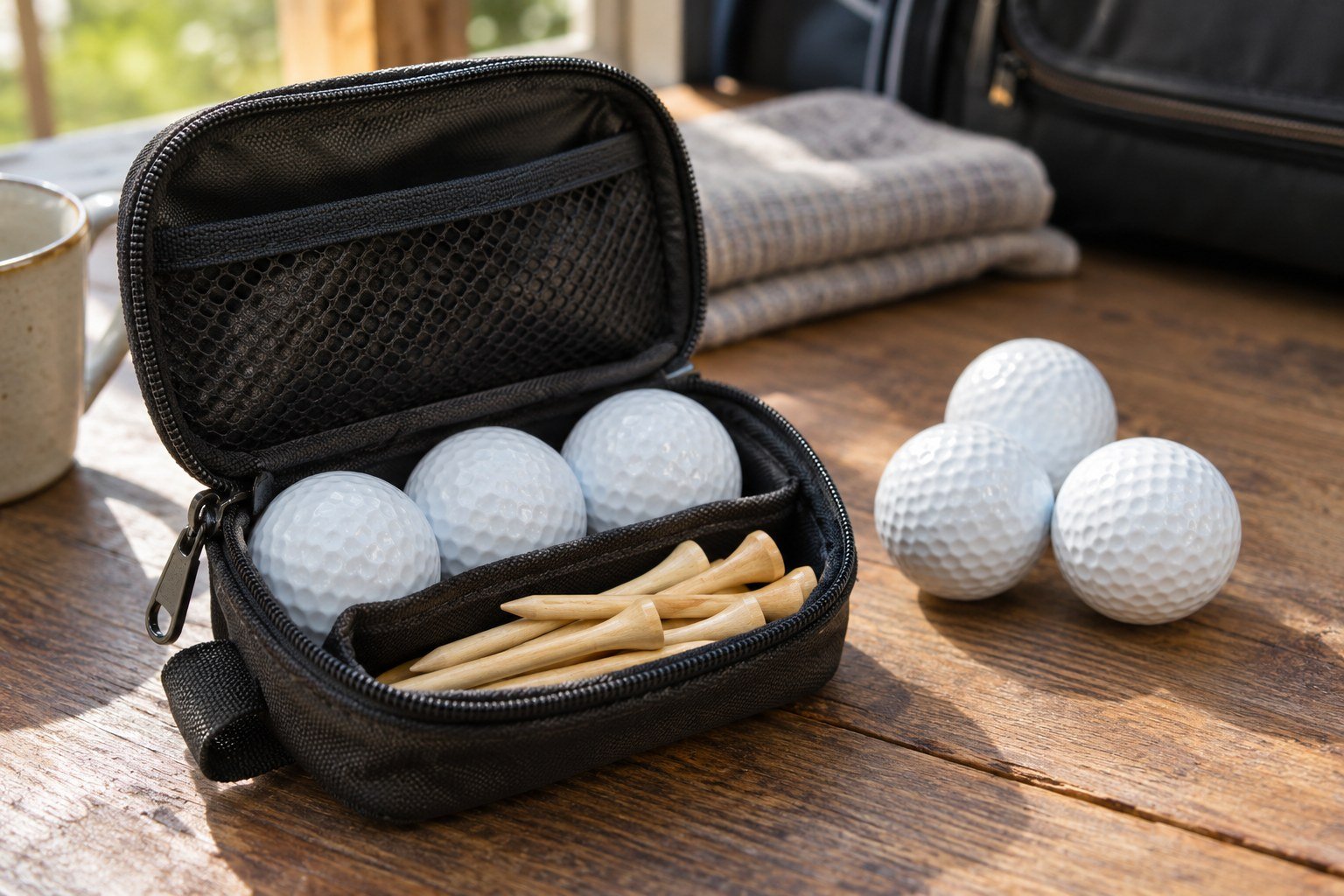
| Balls, tees and other permitted accessories | 1.3kg | Weigh the planned quantity together. |
| Packed total | 17.0kg | Confirm by weighing the complete closed item. |
| Chosen packing margin | 1.0kg | A personal planning choice, not an airline rule. |
| Remaining optional capacity | 2.0kg | 20.0 − 17.0 − 1.0 = 2.0kg. |
The useful calculation is: booked allowance minus complete planned load minus chosen margin. A negative answer means the plan needs changing. A positive answer is space you may choose to leave unused; it is not a reason to fill every pocket.
The 1kg margin here is deliberately labelled as a choice. Airlines do not owe you that much tolerance, and a margin cannot prove a home scale is accurate. Pick sensible headroom for your equipment, the scale you can use and the likelihood that the return load will change.
Weigh the finished bag in a repeatable way
Use a suitable luggage or platform scale with enough capacity for the entire item. Follow its instructions and check that it is displaying kilograms. A partial reading taken while one end of a long cover rests on the floor is not the weight you need.
- Pack every item that will go through bag drop, including the travel cover, straps, lock and any identification holder.
- Close the cover fully. Put it on a level surface before weighing and check that nothing has been left leaning against it.
- Zero the scale as instructed. With a platform scale, ensure the complete load is properly supported and no part rests on a separate surface.
- Take a stable reading, remove the load and repeat. If the readings vary substantially, resolve that before relying on the result.
- Write down the final weight and your chosen limit. Reweigh after any change, even a last-minute pair of shoes.
If using a hanging scale, only lift the load in a way that is safe for you and within the scale’s instructions. Get help or use an appropriate platform scale for a bulky case. There is no benefit in meeting a baggage limit by injuring yourself while checking it.
Weighing yourself and then yourself holding the case can provide a rough cross-check if the scales are suitable, but subtracting two readings adds uncertainty. Do not make an awkward lift or treat a borderline result from this method as confirmation that the bag will pass.
Keep the scale accessible for the return journey if it is practical to take. Otherwise identify somewhere you can weigh the bag before leaving for the airport. The relevant result is the weight after the final round and repack, not the number from a week earlier.
Back to top ↑Remove optional weight before essential protection
Begin with contents you do not need. Empty every pocket onto a clear surface and decide what earns its place for this particular trip. A bag used all season may contain spare balls, duplicate accessories, old packaging and extra towels that were never consciously packed for the flight.
| Priority | Action | Condition |
|---|---|---|
| Remove | Discard rubbish and leave unnecessary duplicate accessories at home. | Keep anything genuinely needed to use or maintain the travelling equipment. |
| Reduce | Choose a realistic quantity of balls and a useful number of towels and other small items. | Plan around your rounds and local replenishment options, not an assumed universal number. |
| Relocate | Move suitable nonessential items to another booked bag if that solves the load. | Confirm that bag’s allowance and the item’s permitted baggage location. |
| Keep in the calculation | Retain the restraints, headcovers and support or padding required by your chosen packing system. | Do not remove protection simply because it is easy to detach. |
| Reconsider the equipment | Assess a lighter playing bag or travel cover only after the simple reductions. | Fit, protection, cost and the new complete weight must still work. |
For an illustrative rescue, suppose the closed bag weighs 21.6kg and your target is 19kg under a 20kg allowance. You need to remove 2.6kg. Your own weighed groups might show 0.8kg of surplus balls, 0.9kg in an unnecessary second pair of shoes, 0.6kg in extra towels and 0.3kg of duplicate accessories. Leaving those groups out reaches 19kg while keeping the planned protective packing.
Those amounts are examples, not predicted savings. If the real removable contents weigh less, the solution may be a different equipment arrangement or a confirmed baggage option. Do not quietly turn the remaining shortfall into an assumed airport tolerance.
Keep separate baggage allowances separate
Imagine a golf bag at 21kg and an ordinary suitcase at 17kg. It is tempting to call that 38kg and stop there. The arithmetic is correct, but it does not establish compliance when the two items use different allowances.
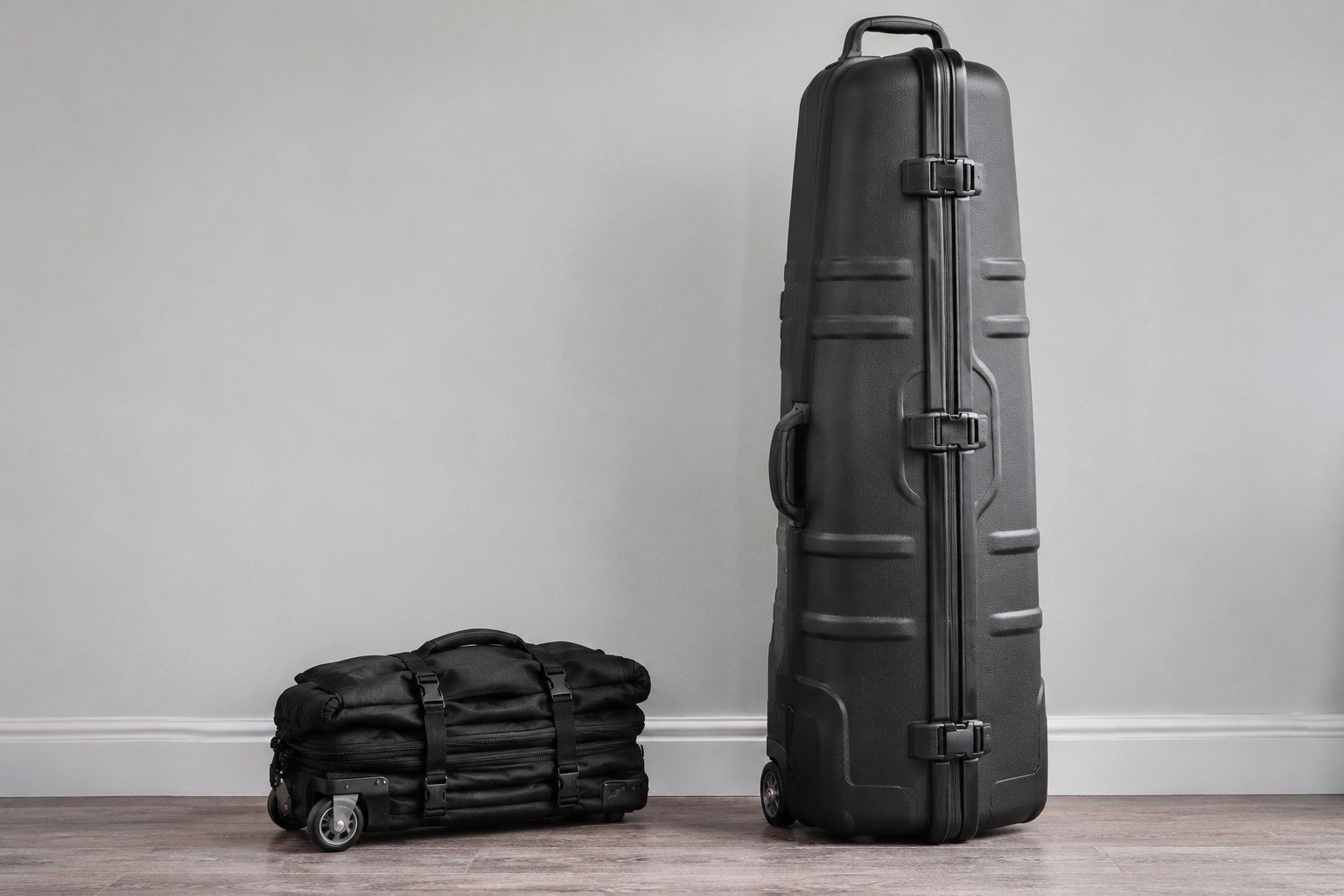
easyJet explicitly prohibits pooling the weight of purchased sports equipment with hold luggage.[1] If the golf item must be within 20kg, an underweight suitcase does not change that maximum. You would need to remove or legitimately relocate contents so each item satisfies its own conditions.
British Airways also states that its 23kg allowance is applied per bag, rather than split across several bags.[4] Ryanair says standard checked-baggage allowances do not apply to the large sports items on its sports-equipment page.[3] These are different booking structures, so do not copy another passenger’s pooling arrangement without checking that it applies to your item.
When moving anything between bags, check both weight and contents rules. A pair of shoes may be straightforward to relocate within your booked luggage; a prohibited or restricted item cannot be made acceptable merely by balancing the kilograms. Keep the final weight of each bag written separately.
Back to top ↑Would a lighter cover make a useful difference?
Changing the cover is worth investigating when its own weight is a large part of the problem. Do the subtraction first, then check whether the alternative still suits the packed equipment and the carrier’s packaging requirement.
For a concrete specification example, Sun Mountain lists the Kube Travel Cover at 6.8lb, approximately 3.08kg, and describes a design that folds into a compact package for storage.[7] It is a compact folding design; those figures do not prove that your bag fits or that it provides equivalent protection to a different cover.
Replacing the illustrative 4.1kg cover in the earlier budget with a 3.08kg cover would save 1.02kg on paper. The planned 17kg total would become 15.98kg if nothing else changed. In practice, reweigh the complete load, including any different padding or support that the replacement needs.
UK readers comparing that option can check the Sun Mountain Kube at Clubhouse Golf. The listing was verified, but the recommendation is to compare its fit and complete packed weight, not to buy it solely because of one specification.
If leaving a few unneeded items at home solves the issue, keep a serviceable existing cover. A replacement has to improve the whole arrangement enough to justify its cost. The lightest outer bag is not automatically the most suitable choice for the clubs, transport and storage you have.
Check restricted items and the return load
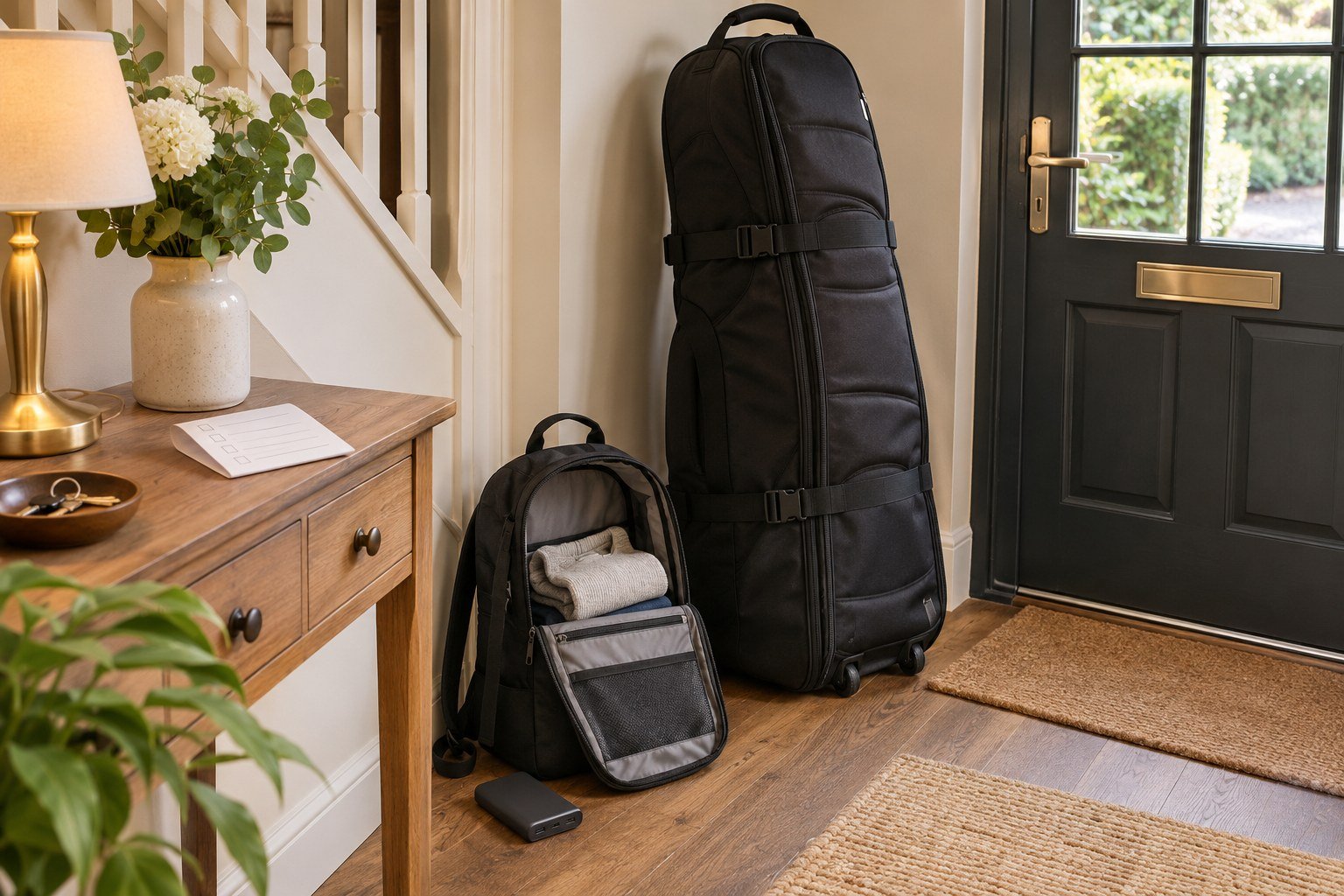
Do not use the golf travel bag as a place to move a power bank when your cabin bag becomes heavy. The UK Civil Aviation Authority says power banks and spare batteries belong in the cabin, subject to the applicable restrictions and airline rules. It also advises checking dangerous goods and keeping essential items in carry-on baggage.[8]
If you normally keep a power bank in the golf bag for a phone or GPS, remove it before closing the flight cover. Check separately before taking an electric trolley battery; a sports-equipment booking does not establish that a particular battery can travel. Where cabin baggage is taken for the hold at the gate, follow the airline’s instructions for removing batteries and devices.
Prepare for the return trip while the packing list is still fresh. New purchases, replacement balls and damp kit can change the load. Dry and clean equipment as its maker recommends, then repeat the complete-bag check. Do not assume that using some balls during the trip will offset everything added afterwards.
Keep a simple record: outbound packed weight, items added or removed, and final return weight. The last figure is the one to act on. If a group is sharing a scale, check each golf bag separately rather than dividing the combined weight by the number of players.
Finish with a bag-drop-ready check
- The golf item is included or correctly added for every sector.
- The complete closed bag is below the relevant allowance with the margin you chose.
- Its external dimensions, contents and packaging meet the carrier’s conditions.
- Required protection remains fitted and the contents are restrained.
- Restricted items are in the permitted place, with any approval obtained.
- The transport and airport drop-off arrangements can handle the item.
Allow time for any separate sports or out-of-gauge process. For example, BA’s golf-specific guidance asks for out-of-gauge drop-off no later than three hours before a long-haul departure or two hours before a short-haul departure, and recommends telling the airline in advance.[5] Use the instructions for your airport and flight rather than assuming ordinary suitcase timings apply.
The most useful packing target is a repeatable, correctly booked load that carries the equipment you need. Once the bag is comfortably within that plan, resist adding extras simply because there is still a pocket empty.
Back to top ↑Frequently asked questions
Does the outer travel cover count towards the allowance?
Include it in the total of the packed item, together with the playing bag, clubs, protective accessories and anything inside. Weigh the bag exactly as you intend to hand it over rather than subtracting the cover’s advertised weight.
Can I buy a 32kg suitcase allowance and use it for golf clubs?
Do not assume that an ordinary checked-bag purchase replaces the carrier’s golf-equipment booking. Ask the airline which category applies. The sports rules and the ordinary-baggage options are distinct on several of the official pages above.
Is 500g overweight usually accepted?
Do not plan around an unwritten tolerance. Resolve an overweight result before departure or obtain the airline’s confirmed options. Staff, scales and operational conditions are not a reliable substitute for the published allowance.
What if the home scale and airport scale disagree?
A personal margin reduces the chance of a borderline result but cannot guarantee agreement. Repeat unstable readings at home, check units and use a suitable scale. If the airport finds the bag overweight, follow the airline’s repacking or charge process; a home reading does not establish acceptance.
Sources and checks
Sources consulted on 23 November 2026. Manufacturer and retailer descriptions are attributed claims; illustrations do not show tested products. Recheck changing specifications and travel terms before purchase or departure.
- easyJet — Sports equipment
- Jet2 — Baggage and sports equipment
- Ryanair — What sports equipment can I bring on board?
- British Airways — Baggage essentials
- British Airways — Sports equipment: golf
- Ryanair — Bags exceeding the allowance at check-in
- Sun Mountain — Kube Travel Cover
- UK Civil Aviation Authority — Pack right. Safe flight.
Illustrations in this article were created for Taylor’s Trailblazing Golf. Third-party photographs, where used, are credited beside the image or in the source list.