Putter Head Weight: Feel, Counterweights and Distance Control
Compare the complete build, then give longer putts their own test.
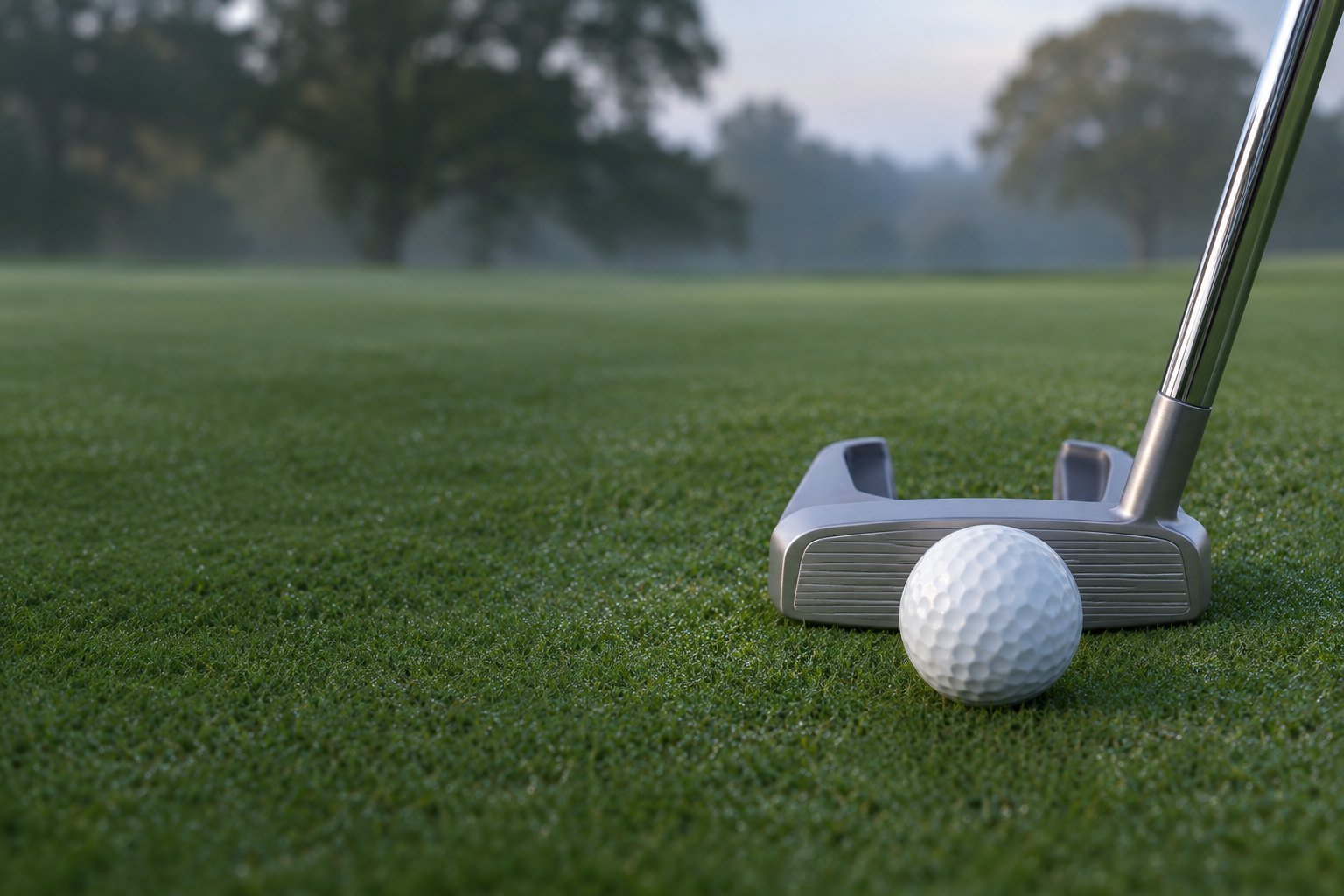
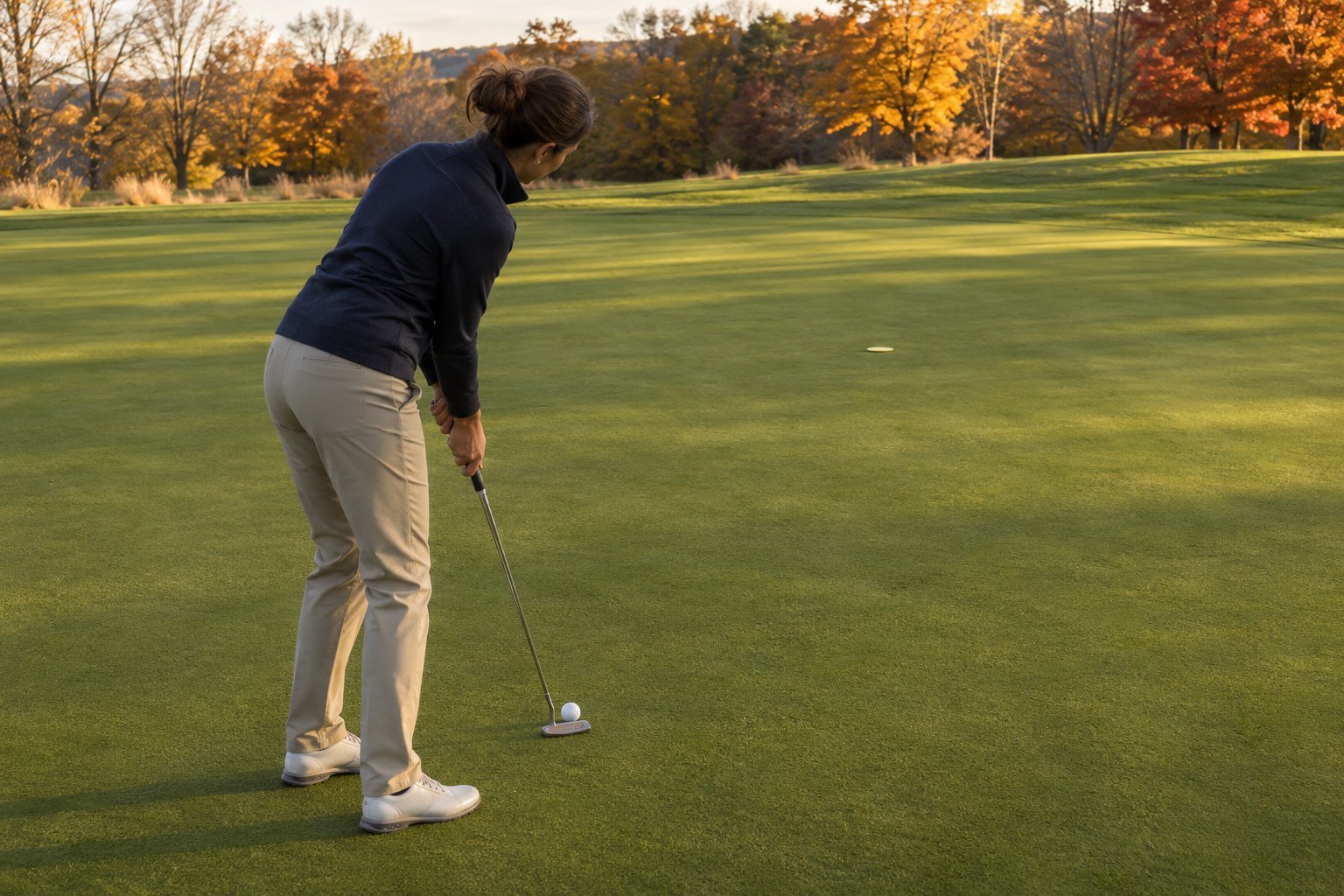
AI-generated illustration of a generic putter; no named model or product test is pictured.
Putter head weight is easy to compare on a specification sheet and surprisingly easy to misunderstand in your hands. A heavier head, a heavier grip and a longer putter can all change the sensation of the stroke. They do not make the same change to the club.
The useful question is whether a particular complete build helps you control both the start and the finishing distance of the ball. This research-led guide explains what to record, how to compare two setups fairly and when to keep the putter you already own. It does not rank putters by an assumed ideal weight or claim that any have been personally tested.
Ad – includes affiliate links. Taylor’s Trailblazing Golf may earn a commission from qualifying purchases. Our recommendations follow the reader’s needs and the available evidence. Read our disclosure.
Name the number
Head grams, total mass and swingweight describe different things.
Keep a baseline
Use your current build as the comparison, including its grip.
Include longer putts
Short-putt comfort cannot settle the distance-control question.
Spend in order
Try a suitable adjustment before replacing a club that already fits.
Putter head weight: know which number you are comparing
Start by separating the mass of the head from the mass and balance of the finished club. Scotty Cameron’s design guidance explicitly connects head weighting with shaft length and grip choice. Its published length-to-weight table is a model-dependent design reference, rather than a prescription for every putter. [1]
Swipe or scroll the table to see all columns.
| Term | What it describes | What to check |
|---|---|---|
| Head weight | The head’s mass, normally quoted in grams. | Whether the quoted figure includes its fitted sole weights. |
| Total club weight | Everything assembled: head, shaft, grip and any additional weights. | Compare complete clubs; a head-only figure is insufficient. |
| Swingweight | A balance-scale reading influenced by where mass sits along the club. | It is not another way of expressing the total grams. |
| Counterweight | Mass added towards the grip end, or incorporated into the grip system. | Its location, actual mass and compatibility with the grip and shaft. |
Head weight also differs from moment of inertia, commonly shortened to MOI. MOI describes resistance to rotation about an axis; where the head’s mass is distributed matters. Two heads with the same mass need not offer the same resistance to twisting on an off-centre strike. Scotty Cameron discusses that distinction when explaining perimeter weighting and centre-of-gravity position. [2]
For a used putter, treat the original specification as a starting point. A previous owner may have changed the grip, sole weights or shaft length. Ask what was altered and have the actual build checked if that information is missing.

Adding weight at the head and grip creates different choices
A heavier head
When the rest of the build stays the same, adding head mass changes the balance and the effort needed to move the club. Some golfers may prefer the stronger sensation of the head; others may struggle to produce a comfortable longer stroke. Those are things to compare, rather than results that a gram figure can promise.
Replacing two 10 g sole weights with two 15 g weights adds 10 g to the head. Check that the manufacturer approves those replacement weights for your exact putter before trying the change.
A heavier grip or an added counterweight
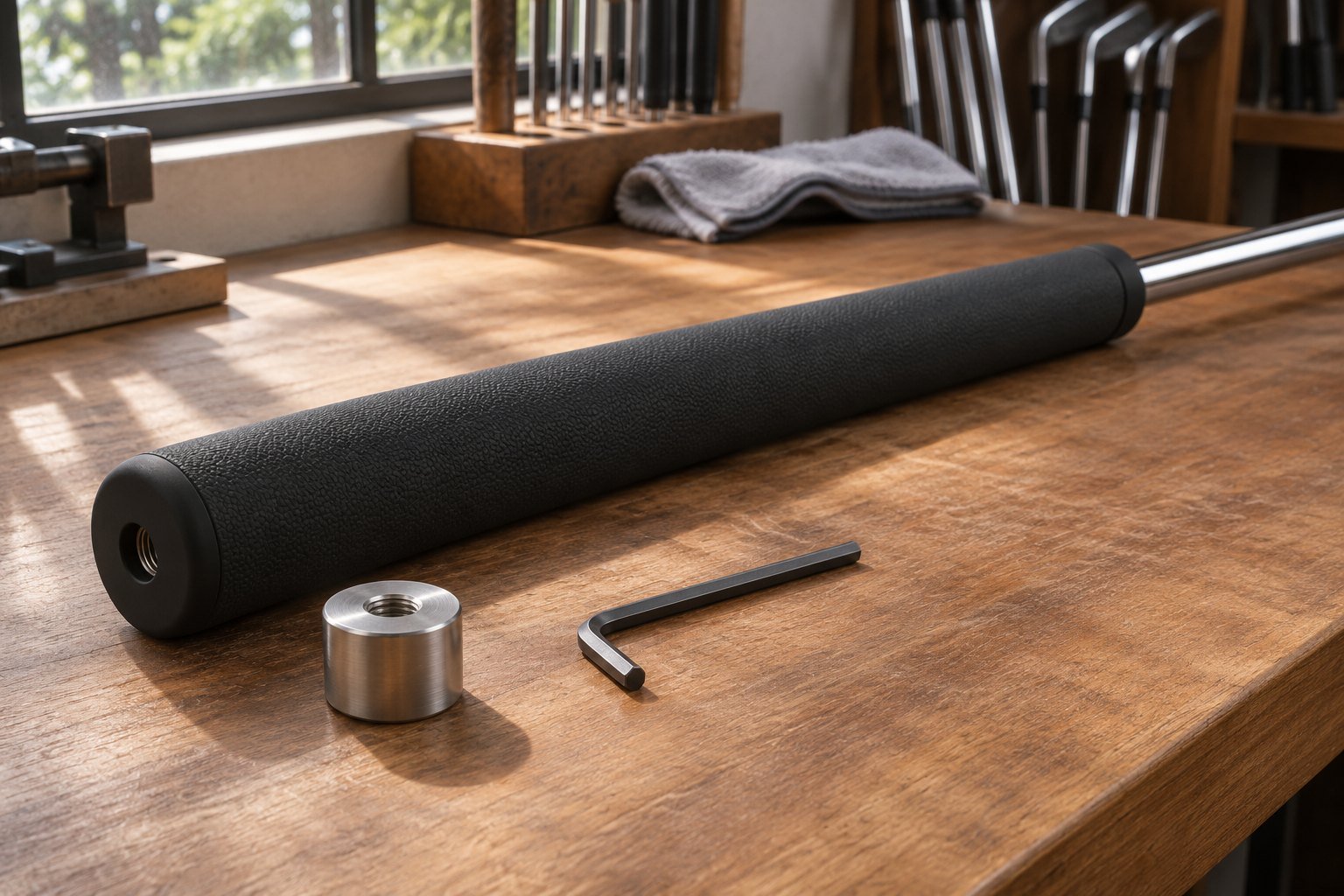
A grip-end weight adds to total club mass while shifting its balance towards the hands. SuperStroke describes its CounterCore system as reducing swingweight through this arrangement. That does not mean the head itself has become lighter. The manufacturer lists compatible Tech Port grips and a 50 g weight kit; check the exact grip before ordering. [3][4]
A new grip can also change shape, thickness, taper and hand placement. If you replace all of those at once, a better result cannot confidently be attributed to its weight alone. Our guide to oversized putter grips helps separate comfort and shape from the weight question.
A purpose-built longer configuration
A longer putter with a substantial grip is more than a standard model with extra grams. For example, Odyssey specifies the 2024 Ai-ONE Double Wide CRUISER with a 380 g head, a 38-inch build and a 17-inch grip intended to be held below the top. Those linked specifications explain the concept; they are not a recommendation to copy the build or a statement of current UK stock. [5]
Record where your hands sit when comparing it. Gripping a longer handle lower down does not recreate every feature of a shorter putter. Length, mass above the hands, grip shape and the complete balance remain part of the trial.
Judge distance control separately from a reassuring feel
A putter can feel calm on a short shop putt yet leave you uncertain over a long one. Distance control needs enough attention of its own. Trackman identifies strike location, delivered loft and the relationship between putter and ball mass among the factors affecting how club speed becomes ball speed. Head weight is one part of that interaction. [6]
A rule such as “heavier for fast greens” cannot tell you how your stroke will respond. Treat the green you normally play as a reason to include a relevant trial, rather than a reason to order a particular weight unseen. When the surface changes, allow time to judge its pace before deciding that the equipment is wrong.
Swipe or scroll the table to see all columns.
| What you notice | A useful next check | An unhelpful shortcut |
|---|---|---|
| The head is hard to sense | Compare an approved head-weight change while retaining the grip and length. | Buying the heaviest putter available. |
| The club feels different after regripping | Compare the old and new grip specifications and check the finished balance. | Assuming that a thicker grip must also be heavier. |
| Short putts feel comfortable; long putts need a forced hit | Include longer targets and look at pace, strike and comfort together. | Choosing solely by the short-putt result. |
| Misses are both well short and well long | Keep a record of ordinary putts and ask a fitter or coach to separate strike from speed delivery. | Calling every pace error a head-weight problem. |
This table is a way to choose the next question. It cannot diagnose a stroke from the direction of a miss.
A practical comparison you can take to a fitting
The following session is an original recording plan for comparing two setups. It is not a validated fitting test. Its purpose is to make an equipment decision less dependent on the last good putt you remember.
Define A and B before hitting a ball
Use your current putter as A. B can be the same model with a manufacturer-approved weight change arranged by a fitter, or a different complete putter you are considering. If head shape, face, grip or length also changes, write that down. You are then comparing complete clubs, not isolating head weight.
Use matching clean balls, the same target and an unchanging surface for each comparison. Begin with a clear practice area and allow room for every ball to stop. Ask before placing markers on a shared green, and keep them out of other golfers’ way.
Use a short target and a pace target
- Warm up with both setups for the same number of putts. Record immediate comfort separately from the results.
- Choose a short target, perhaps around 2 metres, and a longer finishing line, perhaps around 8 metres where space permits. These are convenient session choices, not required fitting distances.
- At each distance, play a block of five with A, five with B, then repeat A and B. Rebuild your usual setup for each putt.
- For the longer putts, record where each ball stops relative to the target line. Keep short and long results separate and note sideways misses.
- Repeat on another occasion, starting with B. A preference that reverses with the order or only appears once deserves another look.
Use a target line without a hole when recording finishing distance, so a holed ball does not hide how far it might otherwise have run. On a sloping green, keep the direction the same within a comparison. Treat an uphill and a downhill trial as separate sessions.
Keep the ordinary misses in the record
Do not remove a mishit simply because it makes the preferred option look worse. Mark it as a mishit and retain it. A clear outside interruption, such as another ball crossing the path, can be recorded separately. Decide that rule before looking at the scores.
Count short-putt successes, but also record how far the longer putts finish from their target and whether you have to force the stroke. If one build improves a single result while creating discomfort or a much wider spread elsewhere, the trade-off matters.
Use a small record that exposes the trade-off
Swipe or scroll the table to see all columns.
| Record | Setup A | Setup B |
|---|---|---|
| Exact build | Model, length, grip, head weights, counterweight | Same details; identify every difference |
| Hand position | Usual position on the grip | Usual position on the grip |
| Short target | Successes out of attempts; miss pattern | Successes out of attempts; miss pattern |
| Longer target | Each short/long finishing error; largest misses | Each short/long finishing error; largest misses |
| Comfort and effort | Natural, forced or uncertain; brief reason | Natural, forced or uncertain; brief reason |
| Repeat session | Did the same pattern return? | Did the same pattern return? |
When summarising pace, do not let short and long errors cancel each other. A putt 60 cm short and another 60 cm long average to zero signed error, despite both missing the intended finishing distance. Their average distance from that target is 60 cm. Keep the direction as a separate note.
Compare the size of the usual miss as well as the worst miss. With only a small number of putts, one result can dominate an average. If two setups perform similarly and one costs money, keeping the current build is a sensible outcome.
Adjust, buy or leave it alone?
Give a fitter the build record and the question you want answered. Science & Motion includes weighting in dynamic putter fitting alongside other features of the club and stroke. That broader assessment is useful when a weight preference seems to solve one issue while creating another. [7]
- Keep the putter if the preference is small, inconsistent or mainly cosmetic.
- Investigate an approved weight change if the current length, grip and head already suit you and a repeatable trial supports it.
- Try a purpose-built alternative if the whole longer or counterbalanced configuration is what you prefer.
- Review the setup first if comfortable hand height or length is still unsettled. Our putter-length setup check explains useful observations to bring to that conversation.
Before any alteration, confirm the exact model, authorised components, correct tool and manufacturer instructions. Do not force an uncertain sole weight, add an improvised internal weight or assume a removable cap makes a grip compatible. Shaft cutting, extensions and structural changes belong with a suitable technician.
The useful result is a repeatable preference
Start with your current build, compare one deliberate change and give longer putts equal attention. Choose the setup that produces a convincing balance of pace, start line and comfort across more than one session. If the result remains unclear, keep your money and take the notes to a fitting. A weight number is helpful when it describes a club you can use consistently; it is a poor substitute for that evidence.
For the surrounding equipment questions, browse the Irons, Wedges & Putters guides.
Sources
Manufacturer documentation and fitting-system guidance checked on 23 November 2026. Product examples explain build differences; no personal testing or current-price comparison is claimed.
- Scotty Cameron: Design Thoughts — Adjustable Weighting Technology. Published in 2017; used for the relationship between length, sole weights and feel, not as a universal current compatibility chart.
- Scotty Cameron: Austie Rollinson, Senior Director Putter R&D. Manufacturer explanation of mass distribution, MOI, grip weight and length.
- SuperStroke: Frequently Asked Questions. CounterCore balance explanation and Tech Port compatibility.
- SuperStroke: CounterCore Putter Weight — 50 g. Component identity and compatible grip families; US page used for technical information.
- Odyssey UK: Ai-ONE Double Wide CRUISER. Exact 2024 model’s stated head weight, length and grip configuration.
- Trackman: Smash Factor — Putting. Factors affecting the relationship between club speed and ball speed.
- Science & Motion: Tips and Tricks for Accurate Putter Fitting. Static and dynamic fitting, including weighting.
Illustrations in this article were created for Taylor’s Trailblazing Golf. Third-party photographs, where used, are credited beside the image or in the source list.