14-Way vs 5-Way Golf Bag Tops: Access and Organisation
Choose an organisation routine that works with your clubs and the position in which you use the bag.
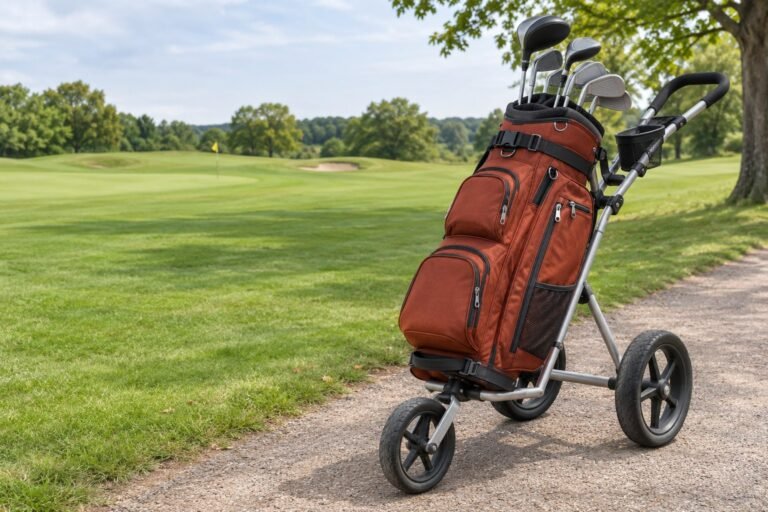
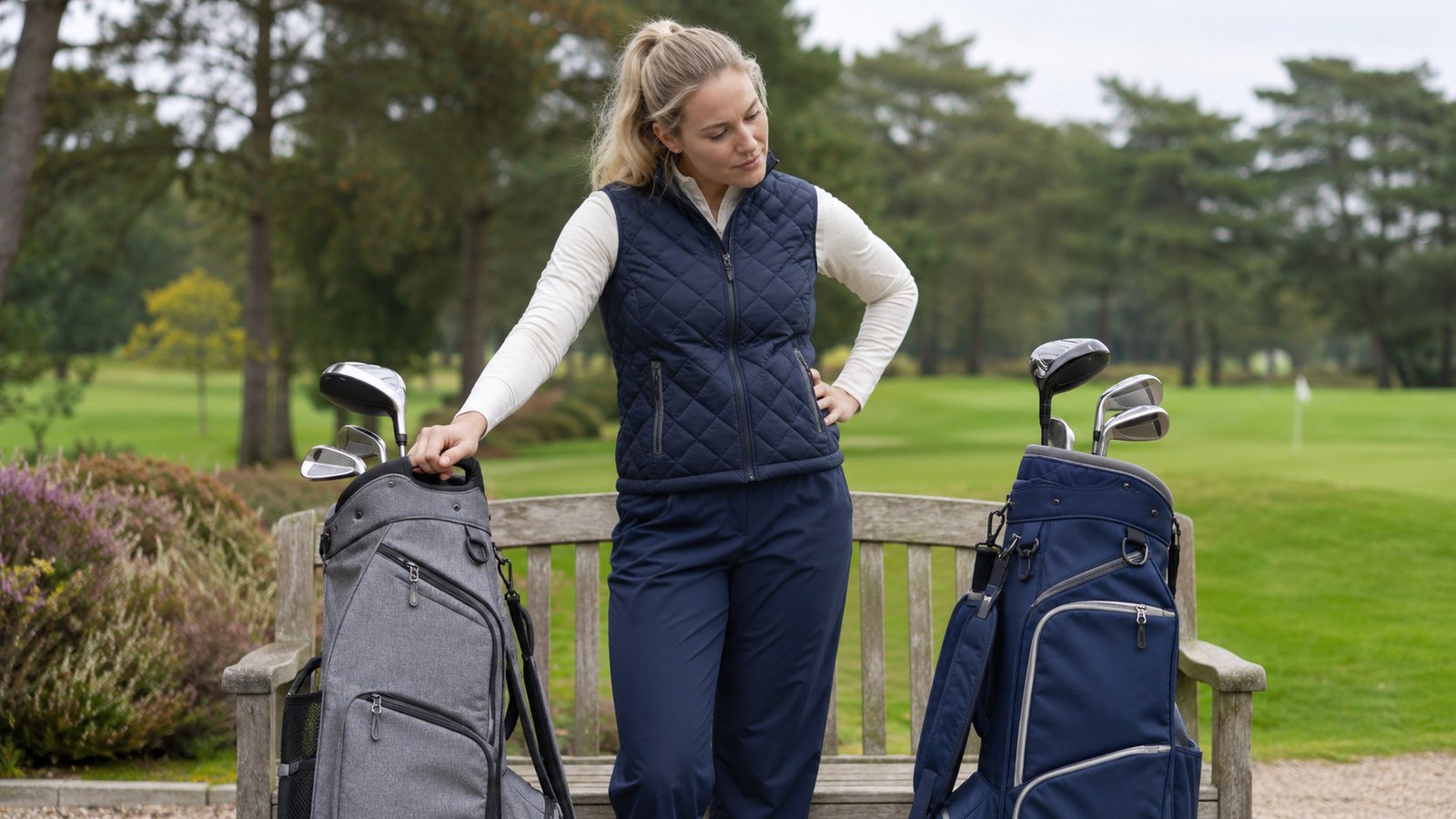
AI illustration: compare generic bags by the organisation routine you need; no exact model or divider count is represented.
Some links in this guide are affiliate links. If you buy through them, Taylor’s Trailblazing Golf may earn a commission at no extra cost to you.
The useful question in a 14-way vs 5-way golf bag tops comparison is how you want to find and replace a club. Fourteen openings can give each club an assigned position. Five openings let you organise several clubs into shared groups. Neither number establishes how easily your putter will come out or how the lower interior is divided.
Start with the set you actually carry and the actions that currently annoy you. This guide compares organisation choices and provides a paired shopping check. It is a research-led comparison, not a claim that the pictured bags or named models have been tested.
A 14-way layout can support a consistent club-by-club map, provided you keep using the intended positions.
A 5-way layout lets several clubs share each section; test the busiest group with the whole set present.
The grip, neighbouring headcovers, internal construction and bag angle matter beyond the number printed on the label.
14-way vs 5-way golf bag tops: compare the routine
Think of the top as an organisation system before treating it as a quality ranking. The comparison below describes possible advantages and the checks they need. It does not promise that every bag with the same number of openings behaves alike.
Swipe within the table to see all columns.
| Your priority | 14-way layout | 5-way layout |
|---|---|---|
| Returning each club to a known place | Assign a position to each club and keep the map consistent. | Assign a group to each section, then use an order within that group. |
| Checking the set before leaving a green | An unexpectedly empty assigned position can prompt a check. | Count the clubs in each group; an empty section is not a club-by-club inventory. |
| Changing the set for practice | Unused openings are acceptable; record which ones are intentionally empty. | Shared groups can be rearranged for a smaller or changing set. |
| Taking a club from a crowded area | Try the exact opening with the neighbouring positions occupied. | Try the most crowded group, including its largest grips. |
| A large or unusually shaped putter grip | Check the intended putter route; a dedicated position is not proof of clearance. | Check which group or well can accept it without making nearby clubs awkward. |
| Avoiding snagging | Confirm lower separation and test access; top count alone cannot guarantee it. | Check how groups share the lower space and whether the actual combination is convenient. |
A five-way top is not a five-club capacity limit. It describes shared sections. Equally, fourteen openings do not require you to fill all of them. The sensible choice depends on your normal set and whether you want individual assigned positions or a grouped arrangement.
If your present bag already gives you clear, dependable access, a different top count may offer little benefit. Identify an action you want to improve before replacing it.
Plan the same set in both layouts
Write down your clubs rather than beginning with a showroom bag full of someone else’s equipment. Include the putter, headcovers and any grip that is noticeably wider or differently shaped. This makes the organisation choice concrete.
Here is an illustrative twelve-club set: driver, 5-wood, hybrid, 5–9 irons, pitching wedge, gap wedge, sand wedge and putter. It is an example for arranging a bag, not a recommendation about which clubs you should play.
Swipe within the table to see all columns.
| Five shared groups | Example contents | Equivalent fourteen-way plan |
|---|---|---|
| Group A | Driver, 5-wood, hybrid: three clubs | Give these three clubs separate assigned positions. |
| Group B | 5-, 6- and 7-irons: three clubs | Give these three irons separate assigned positions. |
| Group C | 8- and 9-irons: two clubs | Use two assigned positions. |
| Group D | Pitching, gap and sand wedges: three clubs | Use three assigned positions. |
| Group E | Putter: one club | Use an appropriate assigned putter position. |
| Expected occupancy | Twelve clubs across five groups | Twelve occupied positions and two deliberately empty ones. |
This is a list of groups, not a universal top-down diagram. The actual bag’s opening sizes, handles, putter provision and working angle determine where those groups can go. Do not force three clubs into a section merely because the paper plan puts them together.
Decide how you will notice an absent club
With assigned positions, the useful signal is a space that should be occupied. Two planned empty openings in the example are normal, so remember which they are. With shared groups, count or identify the clubs within each group. Both methods still depend on a habit of checking; neither top design automatically prevents a club being left behind.
If you often change between a practice set and your normal set, make two short maps. That prevents an intentionally missing club from being confused with an accidentally missing one.
Check the published top and the lower construction separately
Current manufacturer pages provide useful examples of the labels. PING lists a five-way top for the Hoofer and a fourteen-way top for the Hoofer 14. Callaway’s UK Fairway+ HD ’25 page specifies a five-way top with full-length dividers. [1] [2] [3]
Swipe within the table to see all columns.
| Named bag | Verified top description | Do not infer |
|---|---|---|
| PING Hoofer [1] | Five-way top | That the top count establishes a separately enclosed channel for every club. |
| PING Hoofer 14 [2] | Fourteen-way top | That fourteen openings alone guarantee fourteen individually enclosed full-length channels. |
| Callaway Fairway+ HD ’25 [3] | Five-way top with full-length dividers | That grouped clubs cannot touch, or that every oversize grip will fit. |
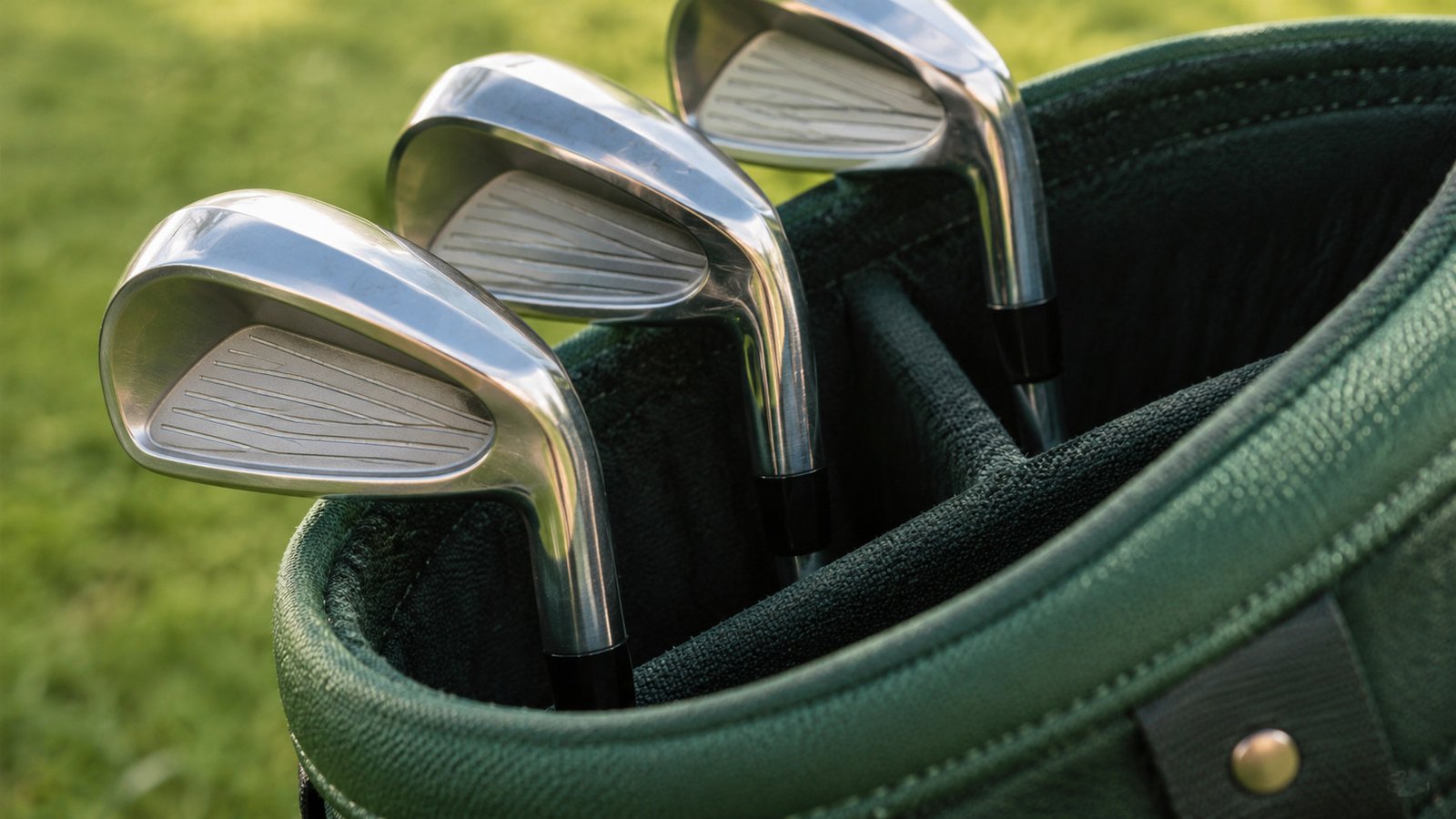
Top openings, long internal partitions and individually enclosed channels describe different things. A top photograph can help you understand the organisation, but it cannot establish the complete route below the collar. Nor does separation lower down stop headcovers or clubheads meeting above it.
Use the existing full-length-divider claim guide when you need to establish the internal construction. For this comparison, record the answer against the exact candidate and return to the organisation question. Unclear internal wording should stay an unresolved item, not become an assumed benefit for the higher top count.
Do not assume that fourteen-way bags are always heavier or that five-way bags are always smaller. The entire bag design determines the published weight, pocket layout and dimensions. Compare the exact options rather than assigning those properties to the number of openings.

Run the same four access tasks with both candidates
Ask permission to use clean clubs in a shop and keep an online purchase within the seller’s permitted inspection conditions. Bring the normal set where practical. A test with one slim demonstration grip cannot answer how your complete equipment fits.
Use each bag in its intended position on a stable surface. For a stand bag, that includes normal stand deployment; for trolley use, include the actual compatible cradle and approved strap route. Do not judge one bag upright and the other tilted, then attribute every difference to the top.
Record the results in words. “Straightforward”, “needed a neighbour moved” and “stopped because of resistance” describe useful observations. A personal speed contest or a score out of ten adds little.
Swipe within the table to see all columns.
| Task | Fourteen-way candidate | Five-way candidate | Detail worth recording |
|---|---|---|---|
| Remove and replace a frequently used iron | Record the observation. | Record the observation. | Which neighbours or headcovers had to move? |
| Take out and return the putter | Record the observation. | Record the observation. | Did the actual grip pass without force, in both directions? |
| Return two clubs used for a practice task | Record the observation. | Record the observation. | Was each intended destination obvious and accessible? |
| Check the set against your plan | Record the observation. | Record the observation. | Could you account for the clubs and any deliberately empty positions? |
Keep ordinary headcovers and realistic pocket contents in place. If you remove them to make a candidate pass, record the change. You have learned about a different arrangement, not necessarily the one you intend to use.
Give the putter a complete movement
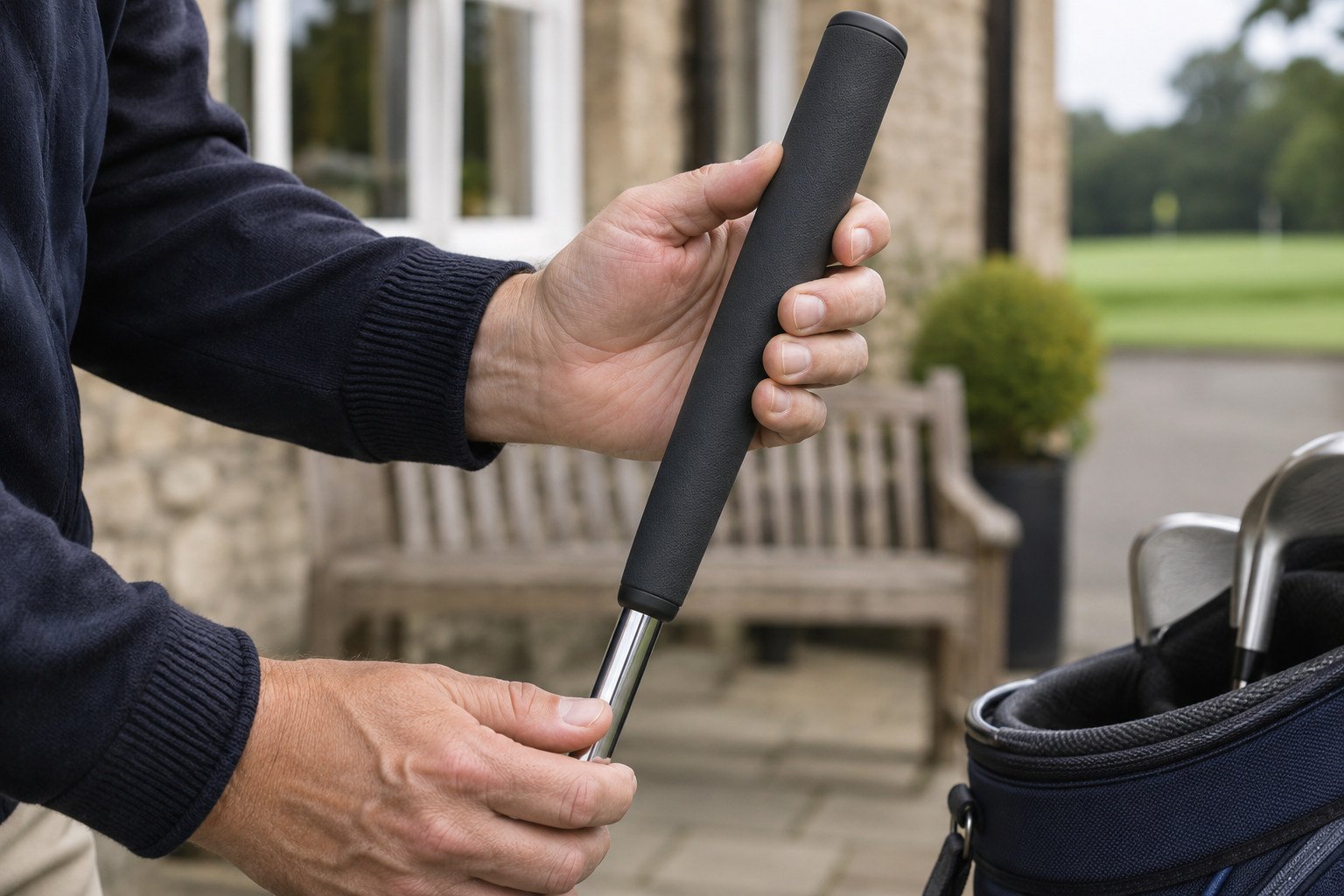
Check the grip’s passage into the bag and back out, rather than merely resting the shaft in the top. Use its actual shape, not just a label such as “midsize”. Stop if it requires force, catches hard or pulls the lining with it. The result may rule out that particular bag without proving that every fourteen-way or five-way layout is unsuitable.
Interpret the inconvenience before choosing a different number
A crowded cluster above the top is a different observation from resistance lower inside the bag. Note where the difficulty begins. If you cannot tell, keep it unresolved and ask the retailer rather than diagnosing the hidden construction from a tug.
Try one sensible rearrangement that you would be willing to keep using. For example, a headcover may obstruct access to a shorter neighbouring club. If moving that club to another appropriate position resolves the problem, the improvement belongs to the arrangement you tried. It is not evidence that the bag’s divider count changed.
Conversely, do not create a complicated removal order just to justify an attractive bag. If the putter comes out only after two other clubs have been removed, record the inconvenience plainly. An organisation system should suit ordinary use, including the moments when you have two clubs to return.
Repeat the task at the working angle
Stand and trolley positions change the direction from which your hand approaches the top. Keep the bag properly supported and secured as its instructions require, then repeat the troublesome action. A problem that appears only on a trolley needs investigation of that complete arrangement; a higher top count is not an automatic fix.
If you intend to carry, assess the harness separately. The loaded carry-harness guide addresses that task. Good club access does not certify carrying comfort, just as a comfortable harness does not resolve a putter that will not pass through its intended route.

Match the actual UK listing before buying
Use the exact name, top option and product reference when checking a shortlisted bag. Similar names can appear beside older descriptions, revised designs or different colour stock. A buying link identifies a listing; it does not make conflicting specifications disappear.
Five-way examples
Clubhouse Golf’s black Hoofer listing identifies 36414-01 and a five-way top. Its description and specification box disagree on pocket count, so ask for confirmation if that affects the choice. [4]
Check Hoofer listing details at Clubhouse Golf
Callaway’s official UK Fairway+ HD ’25 listing is another five-way option. Keep the ’25 HD identity attached to the comparison; do not transfer specifications from the separate US 2026 Fairway+ merely because the family name is similar. [3]
View Fairway+ HD ’25 at Callaway
A fourteen-way listing needing a version check
Clubhouse Golf’s black Hoofer 14 listing describes eleven pockets and 2.8 kg. PING’s current UK Hoofer 14 page lists seventeen pockets and 5.9 lb. Both describe fourteen-way tops, but that does not resolve the other differences. Ask the retailer which exact version will be supplied before using the manufacturer’s current specification as its description. [5] [2]
Check Hoofer 14 version details at Clubhouse Golf
These routes support a specific comparison, not a ranking of winners. Confirm the selected variant, current price and permitted inspection or return arrangements. When the seller cannot resolve a detail essential to your choice, postpone that purchase rather than filling the gap with assumptions.
Choose the routine you will keep using
Prefer the fourteen-way candidate when the assigned positions make your set easy to account for and the actual clubs pass the access tasks in the intended position. That is a practical organisation benefit, even without a claim that it improves every aspect of the bag.
Prefer the five-way candidate when the groups remain clear, the busiest sections work with your grips and returning clubs feels straightforward. Shared sections are a valid arrangement; they do not need to imitate individual slots to be useful.
Choose neither when both candidates leave an important problem unresolved. That may mean looking for a different top shape, putter opening or bag design, rather than accepting the less awkward of two unsuitable options. If your existing bag already does the job, keeping it is also a complete decision.
Finish the comparison with one sentence: “I prefer this layout because this ordinary task is easier, and the other required tasks still work.” If you cannot complete that sentence with an observation about your clubs, the top count has not yet earned the purchase.
Sources and checks
- PING UK: HooferCurrent manufacturer page confirms the five-way top. No individual full-length-channel count is inferred from that headline specification.Checked 23 November 2026.
- PING UK: Hoofer 14Current manufacturer page confirms a fourteen-way top, 17 pockets and 5.9 lb. The latter details are used only to expose a retailer-description mismatch.Checked 23 November 2026.
- Callaway UK: Fairway+ HD ’25 Stand BagExact UK listing describes a five-way top with full-length dividers. The wording is not expanded into an unsupported count of individually enclosed channels.Checked 23 November 2026.
- Clubhouse Golf: PING Hoofer, black, 36414-01Verified five-way buying route. The retailer’s conflicting pocket counts are flagged rather than silently resolved.Checked 23 November 2026.
- Clubhouse Golf: PING Hoofer 14, blackVerified fourteen-way listing whose 11-pocket and 2.8 kg description differs from PING’s current page. The exact supplied generation needs confirmation before buying.Checked 23 November 2026.
Illustrations in this article were created for Taylor’s Trailblazing Golf. Third-party photographs, where used, are credited beside the image or in the source list.