Golf Bags for Older Golfers: Lifting, Storage and Transport Choices
Choose around the hardest transfer in your day, then check what happens once the bag is loaded.
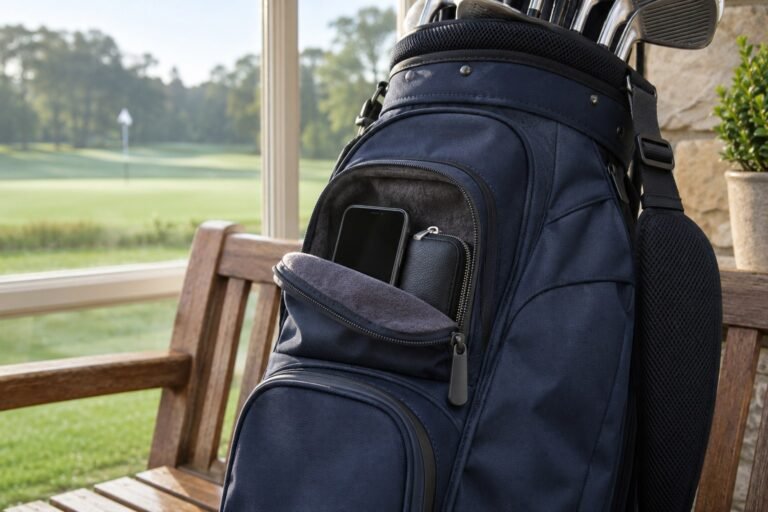
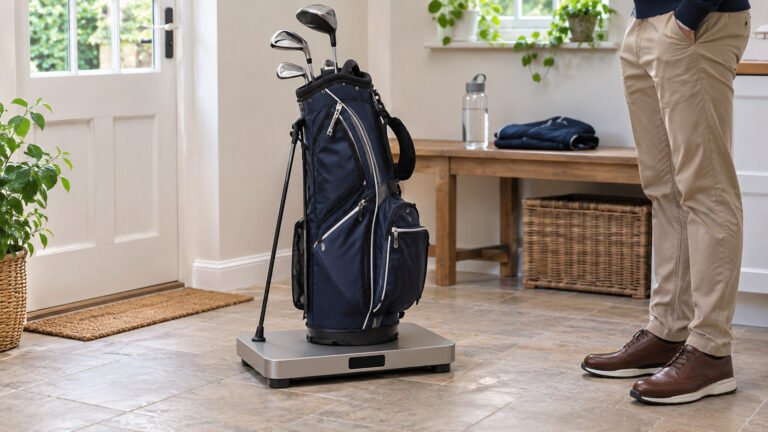
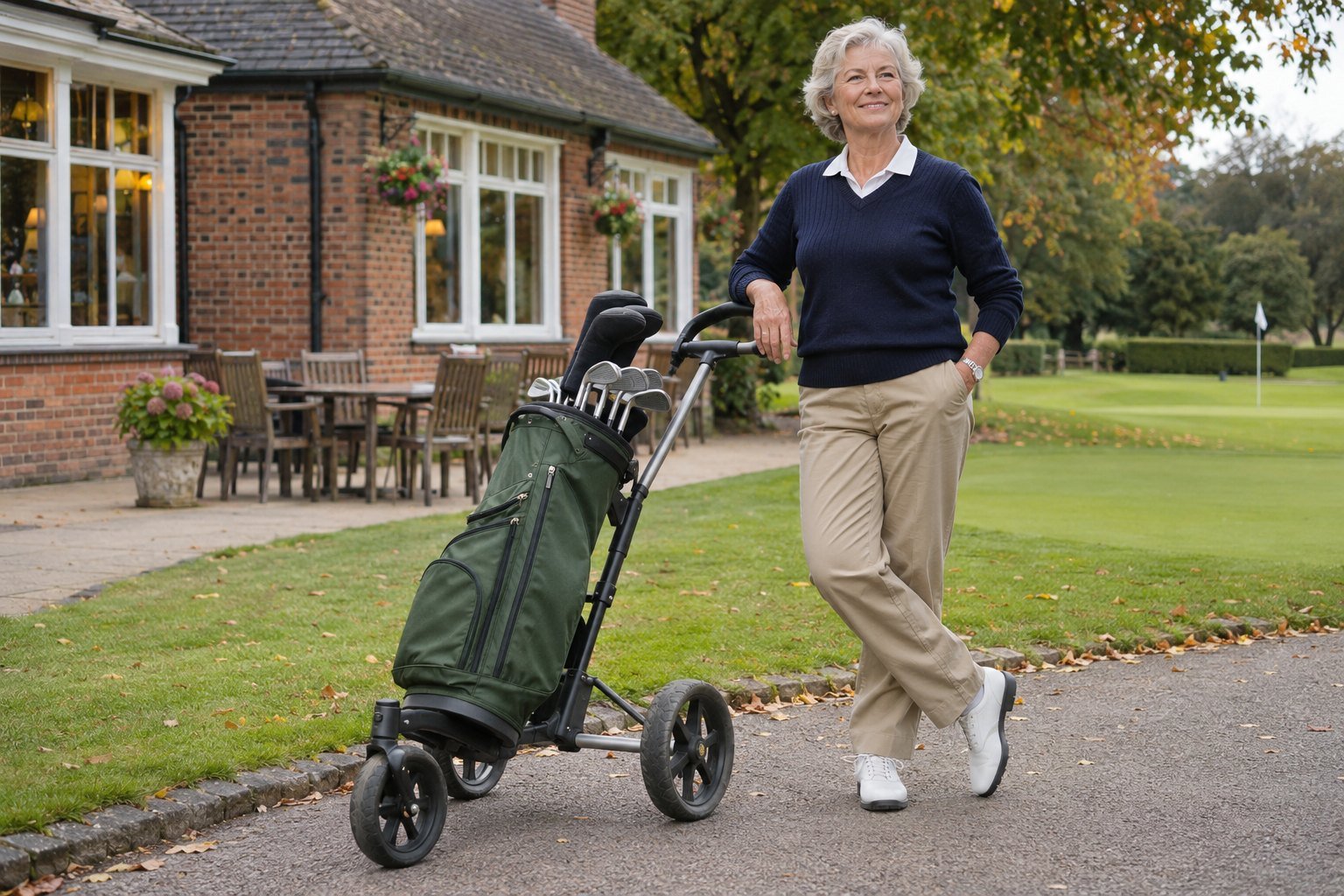
Choose equipment around the routine you enjoy. AI-generated illustration of a generic golfer and bag.
Golf bags for older golfers need to suit the person and the way they play. Age alone tells you little about whether someone prefers carrying a half set, pushing a trolley or riding in a buggy. The awkward part may be getting the clubs out of a cupboard or over a high boot lip, even when moving them around the course is straightforward.
Start with that awkward moment. This research-led guide combines current manufacturer specifications with a practical comparison worksheet. It does not rank comfort from a distance or claim that any bag has been personally tested.
Ad – includes affiliate links. If you buy through these links, Taylor’s Trailblazing Golf may earn a commission. Recommendations are based on the equipment decision and the available evidence.
A bag that sits neatly on a trolley still has to reach the car and come home again.
Compare bags with the same clubs, water, weather layers and accessories.
Placement and access matter alongside the stated empty weight.
A storage change or smaller load may help more than another pocket.
Golf bags for older golfers: map the whole journey
Use the route below as a shopping brief. Mark each stage as straightforward, awkward or requiring help. These are personal observations, not a lifting assessment or a score you need to beat. One difficult stage deserves attention even if everything else works.
On a phone, swipe within the table to see all columns.
| Stage | What to check | A useful change to consider |
|---|---|---|
| Storage to doorway | Room to reach the handles, turn and remove the bag without snagging clubs. | Accessible storage with a clear route; fewer loose items around the base. |
| Into the car | Boot opening, lip height and where the bag can rest while you reposition your hands. | A smaller body or better-placed handles; packing some equipment separately if practical. |
| Car to trolley or buggy | Whether attachment points and pockets remain reachable. | A compatible base and sensible strap routing. |
| During the round | Getting clubs, water and rainwear out without repeatedly turning the bag. | Pockets facing the user and sufficient club clearance. |
| Returning home | Whether the same routine still works when equipment is wet and you are ready to finish. | A convenient drying space and a consistent unloading routine. |
A trolley solves the job of transporting a bag over the course. It does not remove the bag-to-car transfer, and the trolley itself also needs transporting. Write down both jobs before deciding that changing the bag alone is enough.
Back to top ↑Compare the same load, not just the label
Record the bag’s empty mass, then the total with the equipment you actually take. Weigh items only in a way you can manage comfortably; ask for help with awkward loads. Use one consistent set of contents when comparing options so that a smaller supply of balls does not make one bag appear lighter than another.
For illustration, a 2.2 kg bag plus 7.0 kg of equipment totals 9.2 kg. Swapping to a 1.8 kg bag would make that same load 8.8 kg: a 0.4 kg difference. Removing 1.0 kg of genuinely unnecessary contents from the original would instead give 8.2 kg. These are arithmetic examples, not measured product tests or recommended lifting limits.
Start by removing old scorecards, duplicate accessories and balls you do not expect to use. Keep the water, weather protection and other essentials appropriate to your round. A smaller bag is no bargain if you end up juggling extra items in your hands.
Make your own comparison card
Record: empty bag mass; complete playing load; items carried separately; storage location; car used; main transport method; and the one task that remains awkward. Do not turn an uncomfortable lift into a test of determination.
Check the handles and the car together
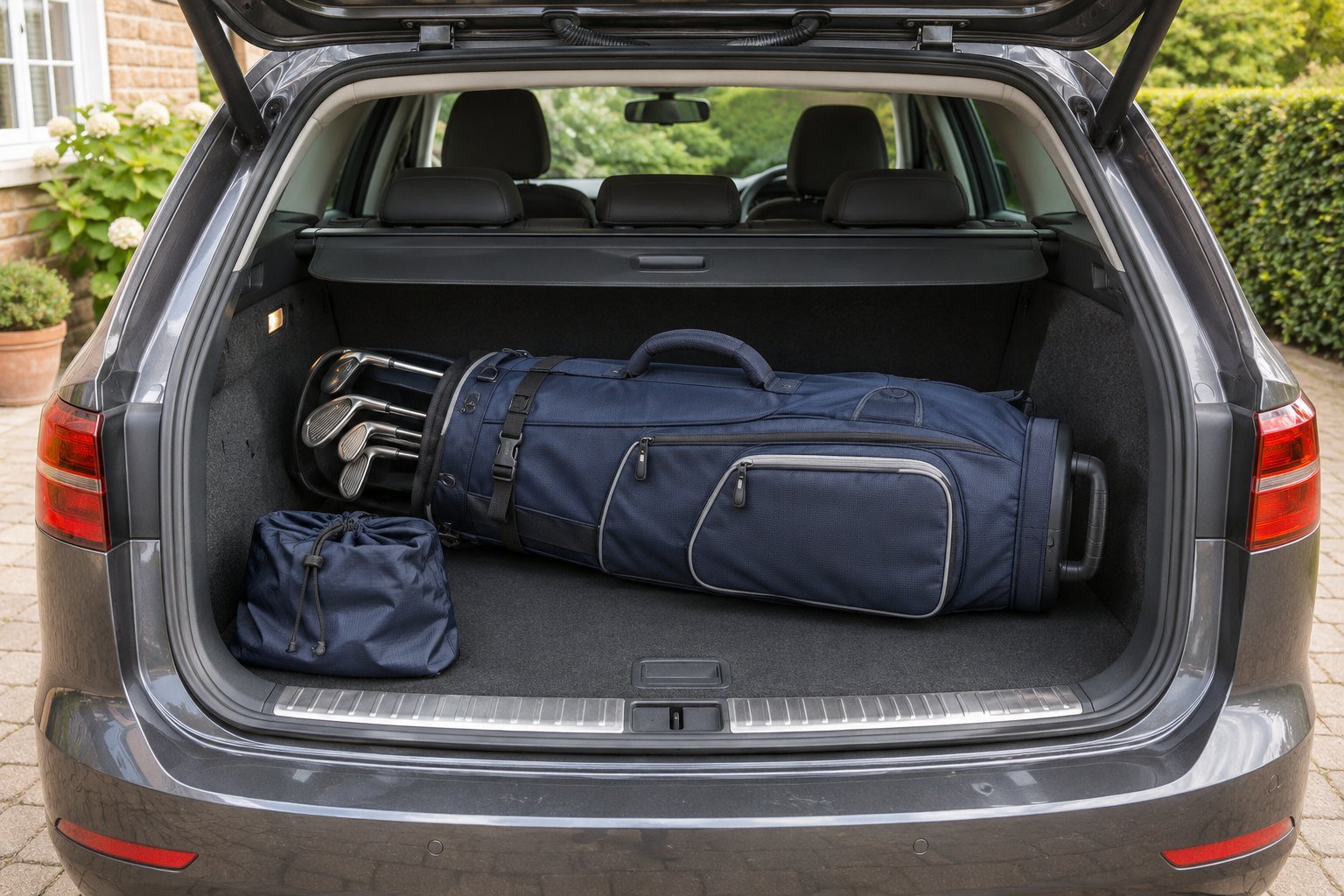
Look for a top handle that you can reach with clubs and a rain hood in place, plus a lower handle if you normally need one for car loading. A handle hidden underneath the loaded bag may be less useful to you than one visible in the showroom. Inspect its attachment and ask which parts the manufacturer intends you to lift by.
Measure the available opening and the bag’s widest point with pockets filled. Check the space above the bag as well as its length: protruding clubheads, an umbrella or a folded trolley can make the arrangement less convenient than the empty boot suggests. Keep equipment secured for the journey, following the vehicle’s guidance.
At a retailer, start with the empty bag. With permission, add a representative load only if you can handle it comfortably, or have someone help demonstrate. Check where your hands can go before committing to a lift. Do not grab stand legs, pocket fabric or an umbrella loop as substitute handles.
If ordinary handling causes pain, a loss of balance or an insecure grip, stop. Choose a different arrangement or appropriate help; a bag specification cannot establish what is safe for an individual. The aim is a routine you can repeat comfortably, including after the round.
Back to top ↑Two current examples show why the bag’s role matters
These examples illustrate a carrying option and a trolley option. They are not a ranking, a medical recommendation or proof of comfort. Specifications were checked on 23 November 2026; confirm the exact version before ordering.
On a phone, swipe within the table to see all columns.
| Example | Maker’s stated details | Useful question to ask |
|---|---|---|
| Callaway Fairway C, 2026 stand bag | 4 lb, approximately 1.81 kg; four full-length dividers; eight pockets. [1] | Does this carrying layout suit your loaded harness fit and the equipment you need? |
| Motocaddy Lite-Series, 2026 cart bag | 2.2 kg; 14 dividers; seven pockets; top and bottom carry handles; EASILOCK compatibility. [2] | Do the handles, body and base work for your car and trolley? |
The Motocaddy’s additional empty mass does not automatically make it the worse choice: you may value its trolley layout and handles. Equally, a lower stated mass does not prove the Callaway will be comfortable on your shoulders. Compare the jobs you need each bag to do. Confirm whether each published weight includes the straps and rain hood before relying on a small difference.
View the Fairway C at Callaway UK if carrying remains part of your routine. For a compact trolley option, view the 2026 Lite-Series Black/Red at Clubhouse Golf. The retailer listing identifies that variant as BG26LIBKRE. [4] Check current price and availability on the destination page; no continuing stock or discount is assumed here.
There is also a published weight discrepancy: Motocaddy states 2.2 kg, while the linked Clubhouse Black/Red listing quotes 2.3 kg. [2][4] Ask the retailer to confirm the exact version and what is included before ordering; the reason for the difference has not been established.
Back to top ↑Try the bag on the trolley you actually use
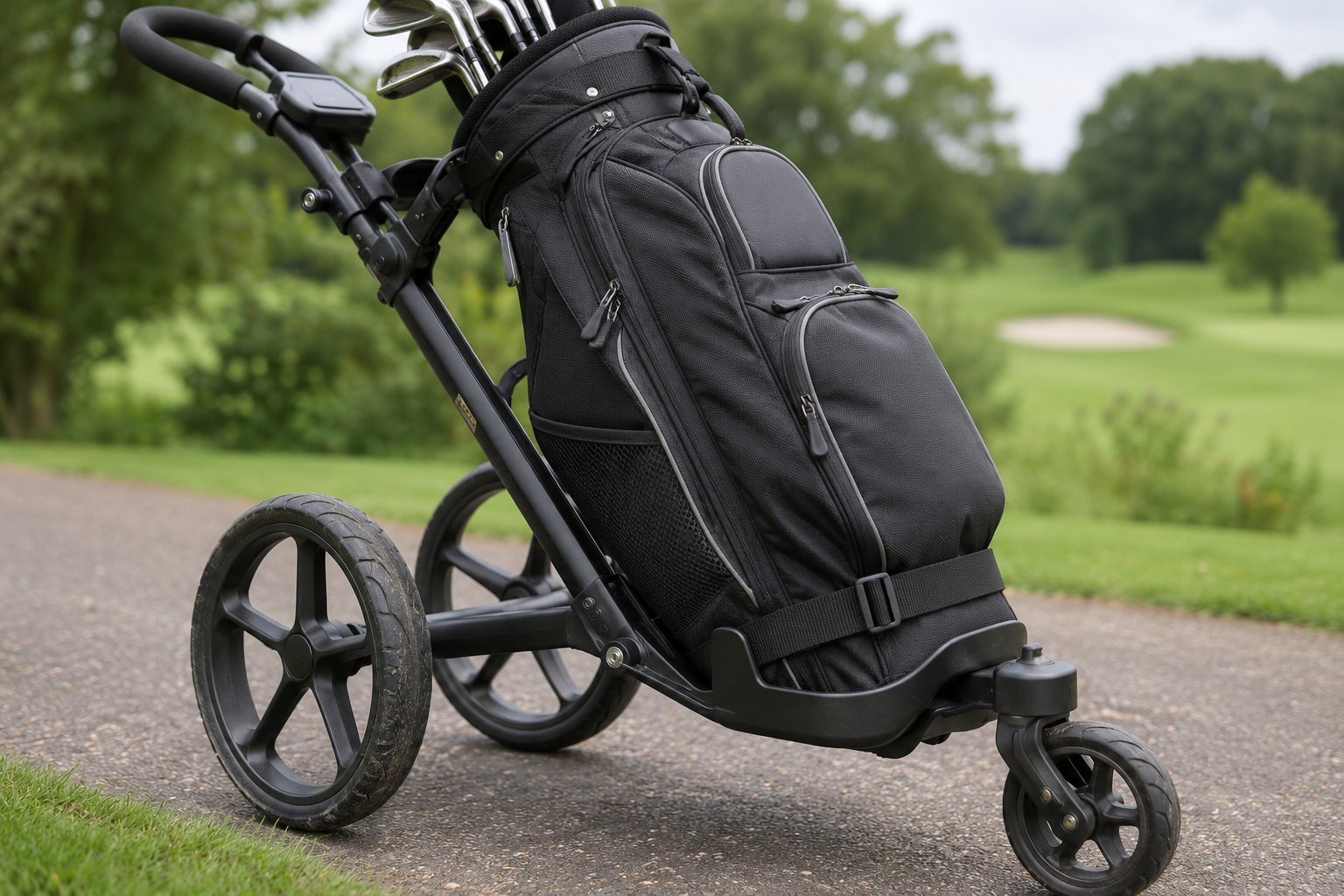
Bring the trolley, or confirm its exact model with the retailer. Check that the bag base rests where intended, the upper support meets the bag correctly and straps reach their proper fixing points without covering an important pocket. A vague “fits most trolleys” description is less useful than a demonstration of your combination.
Follow the specific attachment instructions. For example, Motocaddy’s 2026 QB2 manual distinguishes an EASILOCK bag secured through its base pins from a non-EASILOCK bag using the lower straps. That is a model-specific arrangement, not permission to remove straps from another trolley. [3]
With the combination correctly assembled, check pocket access and club removal on level ground. If the bag twists, the base will not seat or the stand mechanism interferes with the supports, ask the retailer or maker to resolve it. Do not improvise by drilling the base or tightening straps until the body distorts.
For a buggy, check the strap route and access to frequently used pockets once the bag is secured. For occasional carrying, assess the harness separately using the loaded carry-harness check. A bag can suit one transport method better than another.
Back to top ↑Give storage the same attention as the purchase
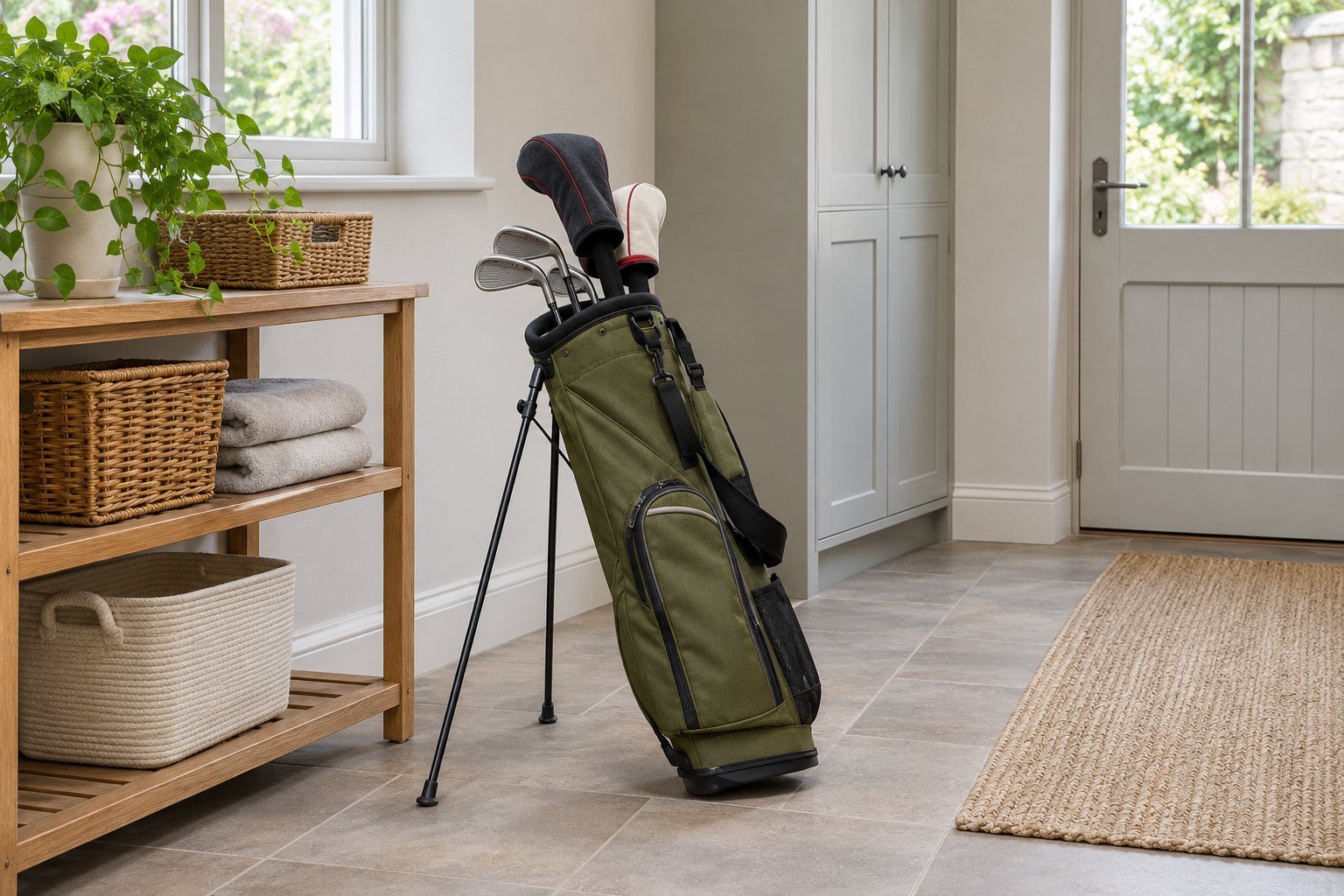
Measure where the bag will live. Include room to remove a club, open a pocket and reach the intended handles. A tall, narrow cupboard may technically accommodate the bag but still make every outing inconvenient.
Think about the end of a wet round. Choose an accessible place where the bag and removable contents can dry according to their care instructions. Avoid storing it where you must reach around other heavy equipment or stand on something to retrieve it.
If a wall rack or stand is part of the plan, use a product suitable for the bag and load, installed as its maker directs. Do not hang a full bag from an unverified hook or fabric loop. A change to accessible floor-level storage may be enough to keep an otherwise suitable bag in service.
Back to top ↑Choose by the task you want to improve
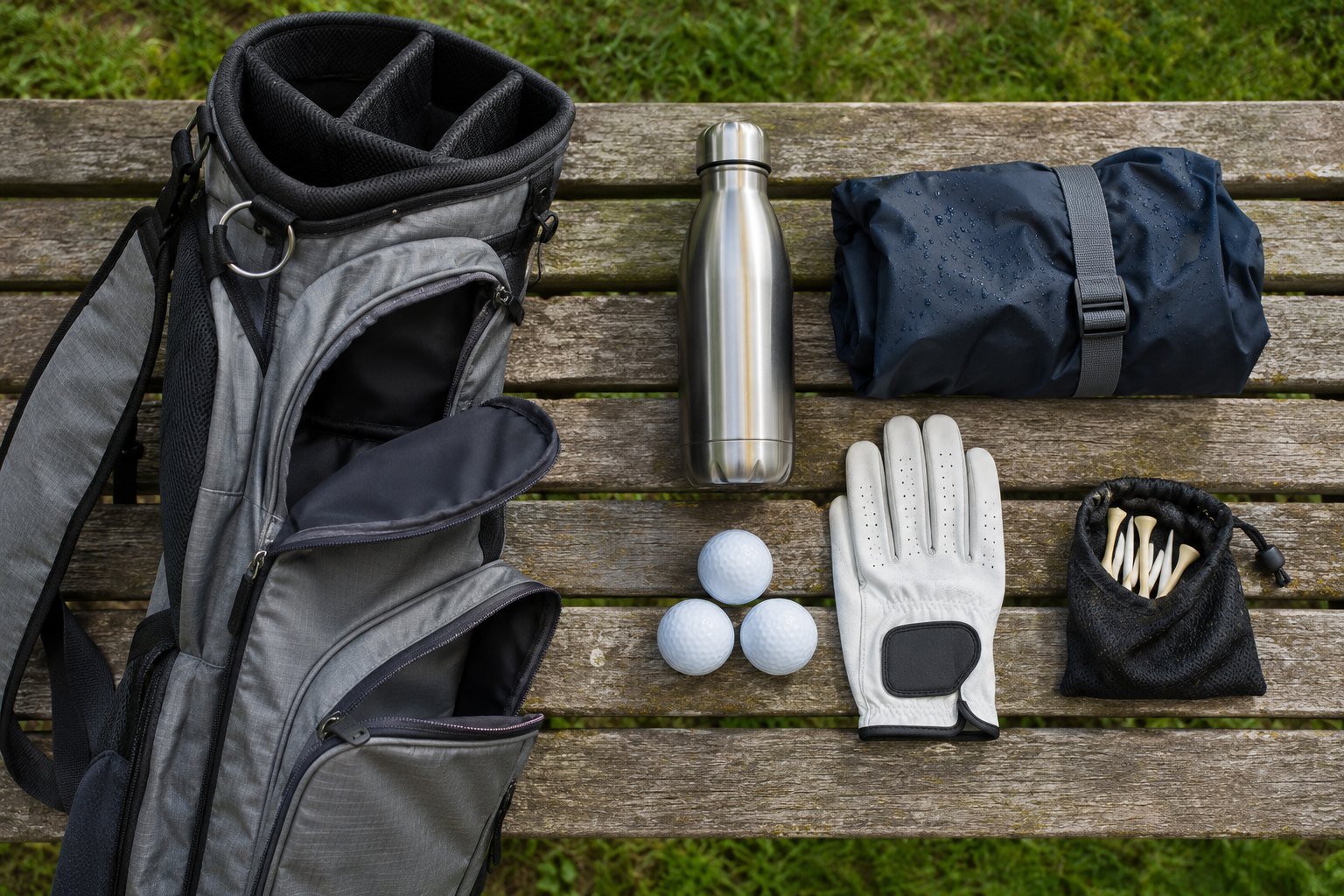
If carrying is comfortable and you enjoy it, look for a bag that works with your normal load and harness fit. If pushing or riding is your preference, prioritise attachment, access and the transfers you still make. Neither choice needs justifying by age.
- If the present bag works after a clear-out, keep it and reassess after a few ordinary outings.
- If boot loading is the problem, reject a replacement that fails that check even if it has excellent storage.
- If carrying is the problem but car loading is fine, explore a compatible trolley or different transport arrangement alongside changing bags.
- If several stages remain difficult, discuss the complete routine with the retailer and whoever normally helps you transport your equipment.
Before buying, ask about the return conditions for a fit check, what accessories are included and how replacement straps or other parts are obtained. Record what the replacement improves. A clear answer to that question is more useful than a “senior” label.
Back to top ↑Questions worth settling before you buy
Should I automatically choose the lightest bag?
No. Use empty mass to narrow the field, then compare loaded access, handles and transport fit. A modest weight saving may be less useful to you than an easier transfer, and the reverse may also be true.
Is a cart bag unsuitable if I occasionally walk without a trolley?
Check its intended carrying arrangement and try the actual load. Briefly moving it from the car is a different task from carrying it around a course. A suitable stand bag may be the more flexible compromise if both uses are regular.
Do more dividers make clubs easier to remove?
Not necessarily for your club set. Try the putter and any larger grips with all the intended clubs in place. Our guide to full-length dividers explains the distinction between the number of top openings and the arrangement below them.
Back to top ↑Sources and checks
Research and specifications checked on 23 November 2026. Manufacturer descriptions are identified in the text; practical checklists and worked examples are editorial guidance, not product testing.
- Callaway UK — Fairway C Stand Golf Bag, 2026 model — checked 23 November 2026
- Motocaddy UK — 2026 Lite-Series Golf Bag — checked 23 November 2026
- Motocaddy — 2026 QB2 Push Cart instruction manual, lower bag supports — checked 23 November 2026
- Clubhouse Golf — Motocaddy Lite Series Black/Red, BG26LIBKRE — checked 23 November 2026
Illustrations in this article were created for Taylor’s Trailblazing Golf. Third-party photographs, where used, are credited beside the image or in the source list.